Phone number
Email address
Lever Release Shotguns
- Firearms Manufacturer
- Lever Release Shotguns
Our Lever Release Shotgun Model
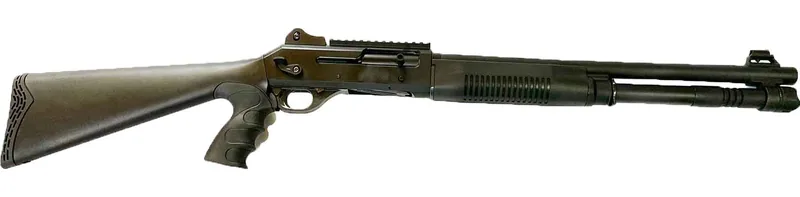
IEU-LR-01
A lever release shotgun is a manually operated repeater built on a semi-automatic-style platform. It does not chamber the next shell by itself. After each shot, the shooter operates a release lever to send the bolt forward and load the next shell from the magazine. Demand for these shotguns comes mainly from Australia.
Lever Release Shotgun Specifications (IEU-LR-01)
| Specification | IEU-LR-01 |
|---|---|
| Operation | Lever release, where the next shell is chambered only when the shooter operates the release lever |
| Layout | M4-style tactical layout, pistol-grip stock, tube magazine under the barrel (as pictured) |
| Gauge, barrel lengths, capacity, chokes | Confirmed on the technical sheet supplied with each quotation |
| Australian configuration | Magazine capacity and configuration agreed with the importer to match the category confirmed by the state or territory registry |
| Supply | Licensed importers, distributors and dealers only |
Full specifications for the IEU-LR-01 are provided on request.

Lever Release vs Lever Action vs Pump
A lever action is cycled by swinging a finger lever, a pump by sliding the forend, and a lever release by operating a lever that sends the bolt forward on a self-loading-style receiver. Australian categories for lever and pump actions are fixed; lever release designs are classified by each state or territory. Compare Iber’s lever action shotguns and pump action shotguns.
Lever Release Shotgun Manufacturer in Türkiye
Iber Arms has manufactured shotguns in Beyşehir, Konya, Türkiye’s main shotgun-making region, since 2000 and has exported since 2010. Barrels are made from 4140 steel, the factory runs its own hard-chrome and finishing lines, and guns are assembled and test-fired in-house.
We supply licensed importers, distributors and dealers, never private buyers. For Australia, we work with the importer to match capacity and configuration to the category the state or territory registry confirms. Samples, orders of any quantity and private-label options are available.
Use the inquiry form to request the IEU-LR-01 technical sheet and a quotation.
INQUIRY FORM
Lever Release Shotgun FAQ
What is a lever release shotgun?
A lever release shotgun is a manually operated repeater built on a semi-automatic-style platform. It does not chamber the next shell by itself. After each shot, the shooter operates a release lever that sends the bolt forward to load the next shell from the magazine. The design is popular mainly in Australia.
How does a lever release shotgun work?
The shooter loads the magazine and chambers a shell by operating the release lever. One trigger pull fires one shell. Depending on the design, the bolt is then drawn back by hand or held open, and the next shell is chambered only when the shooter operates the release lever again. Always follow the manual for the exact model.
Is a lever release shotgun the same as a lever action?
No. A lever action is cycled by swinging a finger lever under the receiver, which opens and closes the action by hand. A lever release uses a self-loading-style receiver and a small lever that only releases the bolt. They are different actions and are classified differently in Australia, so do not assume a lever action category applies.
What is the difference between a lever release and a pump action?
A pump is cycled by sliding the forend back and forward with the support hand. A lever release is cycled by operating a release lever near the firing hand on a semi-auto-style receiver. In Australia, pump shotguns are Category C or D depending on capacity, while lever release classification is decided by each state or territory.
What category is a lever release shotgun in NSW?
It depends on the current position of the NSW Police Force Firearms Registry for the specific model and its magazine capacity. Lever-release firearms have been reviewed in recent years, so older answers online may be out of date. Ask the Registry or a licensed NSW dealer for written confirmation before buying. This is general information, not legal advice.
What category is a lever release shotgun in Queensland?
Queensland Police Service Weapons Licensing decides how a specific lever release model is categorized, taking into account the action and magazine capacity. Positions have been reviewed, so confirm the current classification of the exact model with Weapons Licensing or a licensed Queensland dealer before you buy. This is general information, not legal advice.
Are lever release shotguns legal in Australia?
They can be owned by licensed shooters, but the category, and therefore the license and genuine reason required, varies by state and territory and has changed over time. Some jurisdictions treat them more strictly than others. Get the current classification in writing from your registry before buying or importing.
Is a lever release shotgun semi-automatic?
By design, no. A semi-automatic chambers the next shell using the energy of the shot; a lever release requires the shooter to operate a lever before each new shell is chambered. Because the platform resembles a self-loader and follow-up shots can be quick, regulators assess each design individually.
What is the best lever release shotgun?
The best one is the model your registry clearly classifies in a category your license covers, with a capacity that matches. After that, look at build quality (barrel steel, chrome-lined bore, finish), release-lever ergonomics for your hand, interchangeable chokes, and an importer who can supply spare parts and service.
Can Australian importers buy the IEU-LR-01?
Yes. We supply licensed Australian importers and dealers, never private buyers. We provide the technical sheet and photos needed for the import permission and police certification, and we agree magazine capacity and configuration with the importer to match the category confirmed by the state or territory registry.
Where can I find the IEU-LR-01 specifications?
Specifications such as gauge, barrel length and magazine capacity are confirmed on the technical sheet sent with each quotation, because the Australian configuration depends on classification. Request it through the inquiry form or by emailing info@iberarms.com with your state and license category.
Do you offer samples and private-label lever release shotguns?
Yes. Evaluation samples are available, subject to Australian import permissions, and we accept orders of any quantity. Private-label versions with your logo and preferred finish can be built for importers developing their own brand in the Australian market, with packaging and markings agreed in advance.
Lever Release Shotgun Guide for Australian Buyers
Lever release shotguns at a glance
- What it is a manually operated shotgun on a semi-auto-style platform; every new shell is chambered by operating a release lever.
- Not self-loading one trigger pull fires one shell, and the next shell is not chambered without a deliberate manual action.
- Main market Australia, where action type decides the license category.
- Classification differs by state and territory and has been reviewed; always confirm with the registry.
- Iber model IEU-LR-01, M4-style tactical layout; specifications on request.
How does a lever release shotgun work?
On a self-loading shotgun, the energy of each shot opens the action, ejects the empty shell and chambers the next one automatically. A lever release shotgun deliberately breaks that chain. Designs differ in how the bolt gets to the rear. On some it is drawn back by hand, while on others the action opens and is then held open. In every case, the next shell is chambered only when the shooter operates the release lever.
- Load fill the magazine with shells of the correct gauge and length.
- Chamber with the bolt to the rear, operate the release lever; the bolt runs forward and chambers a shell.
- Fire one trigger pull fires one shell.
- Reload with the bolt to the rear again, as the design requires, operate the release lever to chamber the next shell.
Because the release lever usually sits close to the firing hand, follow-up shots can be quick, which is one reason regulators have looked closely at these guns. Loading, unloading and safety procedures depend on the model, so train with the manual for the specific gun.
Lever release vs lever action vs pump action
| Feature | Lever release | Lever action | Pump action |
|---|---|---|---|
| How the next shell is chambered | Bolt released by a lever after each shot | Finger lever swung down and back up | Forend slid back and forward |
| Receiver platform | Self-loading-style receiver, not self-loading | Dedicated lever-action receiver | Dedicated pump receiver |
| Shooter’s movement | Small lever movement near the firing hand | Firing hand works the lever | Support hand works the forend |
| Typical layout | Tactical or field stock, often M4-style | Traditional or tactical | Field, tactical or compact |
| Australian category (general) | Set by each state or territory; verify | Category B (5 rounds or fewer) or D (more than 5) | Category C (5 or fewer) or D (more than 5) |
| Iber range | IEU-LR-01 | Lever action shotguns | Pump action shotguns |
How does lever release differ from lever action?
A lever action is cycled entirely by hand. Swinging the lever opens the action, ejects the shell and cocks the hammer, and closing it chambers the next shell. A lever release does not use a swinging lever at all. It is built on a self-loading-style receiver, and the release lever only sends the bolt forward. The two are different actions and are classified differently in Australia. Our guide to lever action vs pump shotguns covers the lever action in detail.
Should you choose a lever release or a pump?
A pump is the simpler, more universal manual action, with a settled category in every Australian jurisdiction. A lever release keeps the ergonomics of a modern semi-auto-style gun, but its category depends on the state or territory. If the category your license allows is clear for a pump and uncertain for a lever release, the pump is the lower-risk purchase.
Lever release shotgun classification by Australian state
Australia’s firearm categories come from the National Firearms Agreement, implemented through separate state and territory laws. Single and double-barrel break actions are Category A. Following the 2017 to 18 review, lever-action shotguns holding five rounds or fewer are Category B and those holding more are Category D. Pump-action and self-loading shotguns are Category C (five rounds or fewer) or Category D (more than five), and Category C is available only for limited genuine reasons such as primary production.
Lever release designs do not fit neatly into those definitions. Each jurisdiction decides how to treat them, and registries have reviewed lever-release firearms in recent years, so a category reported in a forum post or an old retailer listing may no longer apply. The questions a registry typically considers are how the action is operated, magazine capacity and the configuration of the exact model.
General information only, current to October 2026 and not legal advice. Before buying, selling or importing, get the current classification of the exact model and configuration in writing from the firearms registry or licensing branch of the relevant state or territory police.
Lever release shotguns in NSW and Queensland
Many buyers ask specifically about New South Wales and Queensland. In both states the answer depends on how the registry characterizes the specific action and on its magazine capacity. Contact the NSW Police Force Firearms Registry or Queensland Police Service Weapons Licensing for the current position on the exact model before you commit. In Victoria, Western Australia, South Australia, Tasmania and the territories, the police firearms licensing body for that jurisdiction makes the call.
Importing into Australia
Australian importers need import permission under the Customs (Prohibited Imports) Regulations, supported by police certification of the importer’s license and the category of the firearm. We provide the technical sheet, photos and description the importer needs for that process.
How to choose a lever release shotgun
- Category first confirm in writing which category your registry assigns to the exact model and capacity, and that your license covers it.
- Capacity choose the magazine capacity your category allows; the configuration should match the paperwork.
- Controls check the position of the release lever and safety for your hand, including left-handed use.
- Build look for a quality barrel steel such as 4140, a chrome-lined bore and a well-finished receiver.
- Chokes and barrel interchangeable chokes add versatility for hunting and pest control.
- Support buy through an importer who can supply spare parts and a clear manual.
Iber IEU-LR-01 lever release shotgun
The IEU-LR-01 is Iber’s lever release model for the Australian market. It uses an M4-style tactical layout, pictured in olive green with a pistol-grip stock and a tube magazine under the barrel. Because classification depends on configuration, gauge, barrel length, capacity and other specifications are confirmed with each importer on the technical sheet, and magazine capacity can be set to match the category confirmed by the registry. Related platforms include M4-style semi-autos and tactical shotguns.
Lever release shotguns in other markets
Outside Australia, lever release shotguns are a niche. In Great Britain, a manually operated shotgun whose magazine holds more than two cartridges requires a Section 1 firearm certificate. In the United States and Canada, classification follows the action and configuration, and Canadian models need an RCMP classification. Verify with the competent authority in every case.
Request the IEU-LR-01 technical sheet
If you are an Australian importer or dealer, tell us your state, license category and required capacity. Send your inquiry, see our catalogs or email info@iberarms.com.
Reviewed by the Iber Arms technical & export team, October 2026.
MOST EXPORTED FIREARMS
OTHER FIREARMS MODELS
Find below the firearms models that we manufacture. If you need any custom firearms, do not hesitate to inform us.
LEVER ACTION
Magazine Fed