Phone number
Email address
Over Under Shotguns in 12, 20, 28 Gauge and .410
- Firearms Manufacturer
- Over Under Shotguns
Our Over Under Shotgun Models
Four boxlock over/unders built at our Beyşehir factory, each available in 12, 20, 28 gauge or .410 bore (36 gauge) with ejectors or extractors. Select a model for photos and specifications.
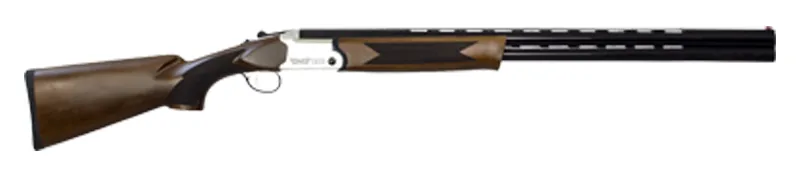
IB-OU01
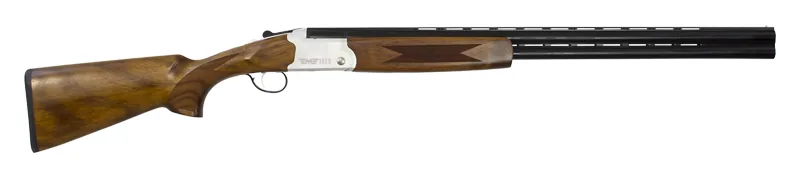
IB-OU02
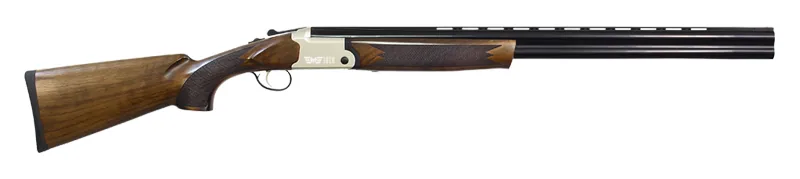
IB-OU03
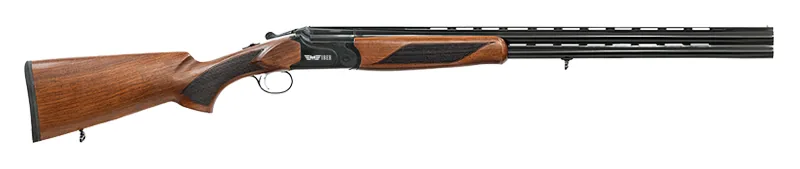
IB-OU04
Over Under Shotgun Specifications (IB-OU Series)
| Specification | IB-OU series |
|---|---|
| Action | Break-action over/under, boxlock |
| Gauges | 12, 20, 28 gauge and .410 bore (36 gauge) |
| Chamber | 76 mm (3″) listed; chamber length per gauge confirmed on the technical sheet |
| Shell removal | Ejector or extractor versions |
| Barrels | 4140 steel; 47 cm (18.5″), 51 cm (20″), 55 cm (21.7″), 61 cm (24″) |
| Rib | Ventilated top rib |
| Chokes | Mobil-type interchangeable choke tubes; slug option |
| Stock and forend | Turkish walnut |
| Receiver finish | Silver (IB-OU01 to OU03) or black (IB-OU04) |
| Trigger | Confirmed per configuration on the technical sheet |
| OEM options | Private-label logo, receiver finish, barrel length, wood and shell-removal choice |

What Is an Over Under Shotgun?
An over under shotgun (O/U) is a break-action double-barrel shotgun with one barrel stacked above the other. It gives two quick shots, usually with a different choke in each barrel, and its single sighting plane and slim profile make it the standard choice for clay shooting and a favorite for upland hunting.
- Iber IB-OU series four boxlock over/unders with walnut stocks and a ventilated rib.
- Gauges 12, 20, 28 and .410 bore (36 gauge).
- Shell removal ejector or extractor versions.
- Barrels 47 to 61 cm (18.5 to 24″), 4140 steel, Mobil-type interchangeable chokes.
Factory-direct supply
Over Under Shotgun Manufacturer in Türkiye
Iber Arms has manufactured shotguns in Beyşehir, Konya, the heart of Türkiye’s shotgun industry, since 2000 and has exported since 2010. Our over/unders use 4140 steel barrels, Turkish walnut stocks prepared and finished in-house, and are assembled and test-fired at the factory.
We work only with importers, distributors, licensed dealers and government buyers. Orders of any quantity, evaluation samples and private-label builds with your logo and preferred finish are all available.
Use the inquiry form to tell us your market, gauges and quantities; our export team will send the technical sheet and a quotation.
INQUIRY FORM
Over Under Shotgun FAQ
Which barrel of an over/under fires first?
On most over/unders the lower barrel fires first by default. It sits closer to the line of the stock, so it causes less muzzle rise, and it usually carries the more open choke for the first, closer shot. A single selective trigger lets you choose the upper barrel first; with double triggers each trigger fires its own barrel. Check the manual for your model.
How does an over under shotgun work?
Two barrels are stacked vertically and hinged to the receiver. Pushing the top lever lets the barrels drop so you can load both chambers; opening the gun also cocks the hammers on most designs. The trigger fires one barrel and then switches to the other. On opening, extractors lift the shells or ejectors throw out the fired hulls.
What is the difference between an over/under and a side-by-side?
Both are two-shot break actions. An over/under stacks the barrels vertically, giving a single narrow sighting plane and recoil that comes more straight back, which is why it dominates clay shooting. A side-by-side places the barrels next to each other, is often lighter and opens with a shorter arc, and is traditional for upland and driven game.
Are over/unders better than semi-autos?
Neither is better for everything. An over/under offers two instant choke choices, works with any load up to its chamber length and shows its safe status when open. A semi-auto offers more shots where legal, softer recoil with gas operation and usually costs less, which is why many waterfowlers prefer it. Clay shooters mostly choose over/unders.
What is the best barrel length for an over/under?
For general field use, 66 to 71 cm (26 to 28″) is common; for sporting clays and trap, 76 to 81 cm (30 to 32″) gives a smoother swing. Shorter barrels handle faster in woodland, for turkey and around vehicles. Iber’s IB-OU models are built in compact field lengths of 47, 51, 55 and 61 cm (18.5 to 24″).
Are over under shotguns good for waterfowl hunting?
They work, but they need care. Use only choke tubes rated for steel shot, choose a 76 mm (3″) chamber for heavier loads, and dry and oil walnut and steel after wet days. You also have two shots instead of the three many waterfowlers use with a semi-auto. Ask which proof marks are available for steel-shot use in your market.
Are Turkish over under shotguns any good?
Many are good value and some are poor; quality depends on the factory, not the country. Common problems on budget O/Us of any origin, such as broken firing pins, doubling and badly timed ejectors, trace back to heat treatment, fitting and inspection. Ask any supplier about those points and test a sample before you order.
What gauges are available in Iber over/unders?
Every IB-OU model is offered in 12, 20 and 28 gauge and .410 bore, which European and Turkish catalogs list as “36 gauge”. The chamber is listed as 76 mm (3″); the exact chamber length for each gauge is confirmed on the technical sheet.
Is an over under shotgun a good first shotgun?
It can be. An over/under is easy to check when open, works with any load up to its chamber length and gives a second shot. It costs more than a single barrel or pump and is often heavier. For a new shooter, a 20 gauge over/under or a 12 gauge with light target loads is a sensible start.
Does Iber Arms sell over/unders to individuals?
No. Iber Arms is a B2B manufacturer and supplies importers, distributors, licensed dealers and government buyers only. Private buyers should contact a licensed dealer or importer in their country, who can order through their own supply chain and handle the registration and legal transfer.
Can we buy Iber over/unders under our own brand?
Yes. We build private-label over/unders with your logo, receiver finish, barrel length, wood choice and ejector or extractor configuration. Samples are available for evaluation and we accept orders of any quantity. Send your specification through the inquiry form and our export team will confirm the options.
Which documents do you supply for export?
Requirements depend on the destination, and the importer normally needs its own import permit before we can ship. Tell our export team the destination country and we will explain the export paperwork and which proof marks and certificates are available for your market.
How Over Under Shotguns Work, with Notes on Configurations and Quality
Over under shotguns at a glance
- What it is a break-action shotgun with two barrels stacked vertically, giving two shots before reloading.
- Why shooters choose it a single narrow sighting plane, two instantly available chokes, and a hinged action that is easy to check and reload.
- Main limits two shots only, more weight than a side-by-side of similar build, and a deeper opening arc for reloading.
- Typical uses trap, skeet and sporting clays, upland hunting, driven and walked-up game.
- Iber IB-OU series four boxlock models in 12, 20, 28 gauge and .410 bore (36 gauge), ejector or extractor, 47 to 61 cm barrels, Turkish walnut.
How does an over under shotgun work?
The two barrels are joined at the breech in a block called the monobloc and run parallel to the muzzle. The barrels pivot on a hinge in the receiver. Pushing the top lever withdraws the locking bolt, the barrels drop, and both chambers are exposed for loading or unloading.
- Open push the top lever and let the barrels pivot down. Closing the gun after loading re-engages the lock.
- Cock on most designs, opening the gun cocks both hammers inside the receiver through cocking rods or levers.
- Select and fire the trigger releases the first hammer; the trigger mechanism then shifts to the second barrel for the next pull (single trigger) or the second trigger fires it (double triggers).
- Extract or eject opening the gun lifts the shells (extractor) or kicks out only the fired hulls (selective ejectors).
Boxlock vs sidelock
In a boxlock, the hammers, springs and sears sit inside a box-shaped receiver. The modern boxlock descends from a design patented in 1875. It has fewer parts, is robust and costs less to make. In a sidelock, the lockwork is mounted on detachable side plates, a traditional premium construction that is more expensive to build. All Iber IB-OU models are boxlocks, which is the norm for field and budget-to-mid-priced over/unders.
Which barrel of an over/under fires first?
On most over/unders the lower barrel fires first by default. It sits closer to the line of the stock, so it produces less muzzle rise, and it is usually fitted with the more open choke for the nearer first shot. With a single selective trigger, a selector (often combined with the tang safety) lets you choose the upper barrel first, for example for incoming targets where the second shot is closer. With double triggers, each trigger fires its own barrel. Check the manual, because the default order is set by the design.
Single selective trigger vs double triggers
A single selective trigger (SST) fires both barrels with one trigger and lets you choose the order. Some SSTs are inertia triggers, which use the recoil of the first shot to switch to the second barrel, so a misfire or a very light load may not switch it; mechanical triggers switch without relying on recoil. Double triggers give an instant choice of barrel and choke and have a simple mechanism, but require moving the finger between triggers. Trigger type varies by configuration, so ask for the technical sheet of the exact model.
Ejectors vs extractors on an over/under
Extractors lift both shells so you remove them by hand, which is quiet and lets hunters keep their hulls. Selective automatic ejectors throw out only the fired hull and lift an unfired shell, which speeds up reloading on a clay course. Ejectors add springs and need correct timing, while extractors are simpler and cheaper. Every IB-OU model is offered in both versions.
A brief history of the over/under shotgun
Barrels stacked one above the other appeared on muzzle-loaders centuries ago, but the modern over/under is a 20th-century gun. London makers built refined, expensive O/Us from 1909, and a design introduced in 1931 made the layout widely available. After the Second World War, Italian, Belgian and Japanese factories turned the over/under into the dominant clay-shooting gun. In recent decades, Turkish factories, many of them in Konya province around Beyşehir, have become major producers of affordable over/unders, often sold under importers’ brand names.
Advantages and disadvantages of an over under shotgun
Advantages
- Single narrow sighting plane, which many shooters find easier for clays.
- Two chokes available instantly, open for the first shot and tighter for the second.
- Recoil comes more straight back than with a side-by-side, helping fast second shots.
- Breaks open for an instantly visible safe status, which ranges and shoots require.
- Works with any shell length up to the chamber size, with no cycling issues.
Disadvantages
- Two shots only before reloading.
- The deeper receiver usually makes it heavier than a side-by-side of similar quality.
- Barrels must open further to clear the lower chamber.
- Regulating two barrels to the same point of impact adds manufacturing cost.
- Walnut and blued or black-finished steel need more care in wet weather than synthetic guns.
Over/under gauges in 12, 20, 28 and .410 bore
Iber builds every IB-OU model in four bores. Skeet shooting has classes for exactly these four, which is why many O/U ranges cover them.
| Gauge | Bore diameter | Typical payload | Best suited to |
|---|---|---|---|
| 12 gauge | 18.5 mm (0.729″) | 24 to 36 g (⅞, 1¼ oz) | Trap, sporting clays, waterfowl, all-round hunting |
| 20 gauge | 15.6 mm (0.615″) | 21 to 28 g (¾, 1 oz) | Upland hunting, skeet, lighter shooters |
| 28 gauge | 14.0 mm (0.550″) | About 21 g (¾ oz) | Skeet, quail, doves, low-recoil upland guns |
| .410 bore (36 gauge) | 10.4 mm (0.410″) | 14 to 19 g (½, 11/16 oz) | Skeet, small game, pest control at short range |
The .410 is a bore measurement in inches, not a true gauge; in Europe and Türkiye it is commonly labeled “36 gauge”. Our .410 shotgun guide explains the naming and the shells.
Barrel length and chokes for each barrel
Longer barrels swing more smoothly and give a longer sight plane; shorter barrels handle faster in cover. As a rule of thumb, field O/Us use 66 to 71 cm (26 to 28″) barrels and sporting guns 76 to 81 cm (30 to 32″). The IB-OU series is built in compact field lengths of 47 cm (18.5″), 51 cm (20″), 55 cm (21.7″) and 61 cm (24″), which suit woodland, turkey and walked-up hunting, vehicles and farm use. If your market needs longer sporting barrels, raise it with our export team as an OEM request.
With interchangeable choke tubes, each barrel can carry a different constriction. Common pairings are listed below, lower barrel first.
| Use | Lower barrel (first shot) | Upper barrel (second shot) |
|---|---|---|
| Close-range upland, woodland birds | Cylinder or skeet | Improved cylinder |
| General upland, pheasant over dogs | Improved cylinder | Modified |
| Skeet | Skeet | Skeet |
| Trap and going-away sporting targets | Modified or improved modified | Improved modified or full |
| Pass shooting, late-season birds | Modified | Full |
| Turkey | Full or turkey tube | Full or turkey tube |
With slugs, the two barrels of an over/under rarely shoot to exactly the same point, so check each barrel on paper. With steel shot, use only choke tubes marked as suitable and ask which proof marks are available for your market.
Field vs sporting over/under configurations
| Feature | Field O/U | Sporting O/U | Iber IB-OU |
|---|---|---|---|
| Barrel length | 66 to 71 cm (26 to 28″); shorter for cover | 76 to 81 cm (30 to 32″) | 47 to 61 cm (18.5 to 24″), compact field lengths |
| Weight | Lighter, for carrying all day | Heavier, for a smooth swing and less felt recoil | On the technical sheet per configuration |
| Rib | Narrow, flat | Wider, sometimes tapered or adjustable | Ventilated rib |
| Chokes | Flush tubes | Extended tubes, wider range | Mobil-type interchangeable tubes |
| Shell removal | Extractors common | Ejectors standard | Ejector or extractor |
| Stock | Standard comb | Adjustable comb common | Turkish walnut |
Over/under vs side-by-side vs semi-auto
| Feature | Over/under | Side-by-side | Semi-auto |
|---|---|---|---|
| Shots before reloading | 2 | 2 | Magazine + 1 (often limited to 2+1 for hunting) |
| Sighting plane | Single narrow barrel | Broad, two barrels side by side | Single barrel and rib |
| Felt recoil | Moderate, straight back | Moderate, often lighter guns | Softest with gas operation |
| Choke choice | Two, selected instantly | Two, selected instantly | One at a time |
| Shell compatibility | Any load up to chamber length | Any load up to chamber length | Must cycle reliably with chosen loads |
| Safe status on the range | Open action, obvious | Open action, obvious | Locked-open bolt, less obvious |
| Typical use | Clays, upland | Upland, driven game, tradition | Waterfowl, high-volume shooting |
| Iber range | IB-OU series | Not in the current catalog | Gas semi-autos and inertia semi-autos |
Looking for a simpler break action? See our single barrel shotguns. Note that Iber’s double barrel shotguns are pump-action tactical guns, not side-by-side game guns.
Are Turkish over under shotguns good? Common complaints and what a manufacturer checks
Turkish over/unders range from very good value to poor, and the difference lies in materials, heat treatment, fitting and inspection rather than the country of origin. Owners’ complaints about budget O/Us from any country tend to cluster around a few problems. Here is what causes them and what should be checked before a gun leaves the factory, which is also what an importer should ask any supplier to demonstrate.
| Complaint | Typical causes | What should be checked |
|---|---|---|
| Broken firing pins | Incorrect hardness or heat treatment, poor pin or bushing fit, repeated dry-firing without snap caps | Material and heat treatment of pins, protrusion and fit, function test with live shells; owners should dry-fire only on snap caps |
| Doubling (both barrels fire on one pull) | Sear engagement worn or out of specification, trigger pulls set too light, inertia block resetting too early | Sear engagement and trigger-pull weight on each barrel, and a live-fire test of the trigger’s barrel change |
| Second barrel will not fire | Inertia trigger not switching with light loads, misfire on the first barrel, safety or selector problems | Function test with the lightest loads the market uses; clear explanation in the manual |
| Ejectors out of time or weak | Ejector sear or spring tolerances, wear, dirt | Both ejectors firing together when both barrels are fired, and only one when one is fired; hulls clearing the gun |
| Action loosening (gun “off the face”) | Soft or poorly fitted hinge and locking surfaces | Lock-up and breech-face gap at assembly; tight closing without play |
| Barrels shooting to different points | Barrel regulation (convergence) not checked | Patterning or point-of-impact check of both barrels |
| Wood-to-metal gaps, finish wear | Rushed inletting and finishing | Stock inletting, finish quality and final inspection |
At Iber, barrels are made from 4140 steel, the factory runs its own hard-chrome line, stocks are prepared and finished in-house, and guns are assembled and test-fired at our Beyşehir plant. We do not publish test statistics we cannot document. Instead, we invite importers to request evaluation samples and put them through their own function tests and patterning before ordering. Read more in Are Turkish shotguns good? and how our shotguns are made.
Iber IB-OU over/under models
All four share the boxlock action, ventilated rib, Turkish walnut stock, 4140 steel barrels in 47 to 61 cm (18.5 to 24″), Mobil-type interchangeable chokes and a choice of ejectors or extractors, in 12, 20, 28 gauge or .410 bore (36 gauge).
| Model | Receiver | Stock | Gauges | Shell removal | Barrels |
|---|---|---|---|---|---|
| IB-OU01 | Silver boxlock | Turkish walnut | 12, 20, 28, .410 | Ejector or extractor | 47 / 51 / 55 / 61 cm |
| IB-OU02 | Silver boxlock | Turkish walnut | 12, 20, 28, .410 | Ejector or extractor | 47 / 51 / 55 / 61 cm |
| IB-OU03 | Silver boxlock | Darker Turkish walnut | 12, 20, 28, .410 | Ejector or extractor | 47 / 51 / 55 / 61 cm |
| IB-OU04 | Black boxlock | Turkish walnut | 12, 20, 28, .410 | Ejector or extractor | 47 / 51 / 55 / 61 cm |
How to choose an over under shotgun
- Purpose first clays favor heavier guns with longer barrels and ejectors; hunting favors lighter guns, shorter barrels and often extractors.
- Gauge 12 for versatility and waterfowl, 20 for upland, 28 and .410 for skeet and small game.
- Fit length of pull, comb height and grip size decide whether you hit consistently. Try before you buy.
- Trigger single selective or double; mechanical or inertia. Ask which one the gun has.
- Chokes interchangeable tubes are far more flexible than fixed chokes.
- Chamber 76 mm (3″) chambers allow heavier hunting loads.
What to look for in a budget over/under
A budget O/U can be a sound gun if the essentials are right, meaning lock-up that stays tight, a trigger that reliably changes barrels, barrels that shoot to the same point, ejectors that are timed, and wood-to-metal fit without gaps. What you usually give up is engraving, wood grade and hand finishing, not function. Buy from a supplier that can provide spare parts such as firing pins and springs and a clear manual. For dealers and importers, a sample and your own range test are worth more than any brochure.
Care and maintenance
- After shooting, wipe the breech face, clean both bores and the choke tubes, and lightly oil exposed metal.
- Grease the hinge and the forend iron bearing surfaces sparingly. These are the wear points of any break action.
- Never dry-fire without snap caps, as dry-firing is a leading cause of broken firing pins on any over/under.
- Remove choke tubes regularly, clean the threads and apply choke grease so they do not seize.
- Store the gun with the muzzles pointing down or horizontally, so oil does not drain into the action and soak the stock head.
- Have the gun checked by a gunsmith if it starts to open too easily, shows a gap at the breech or the ejectors throw unevenly.
Over under shotgun laws by country (general information)
Over/unders are usually in the least restricted shotgun category. This is general information as of October 2026, not legal advice; verify with the competent authority before buying, importing or exporting.
| Country | Usual treatment of break-action over/unders | Points to check |
|---|---|---|
| United States | Ordinary long gun with barrels of at least 18″ and overall length of at least 26″; all IB-OU barrel lengths (18.5 to 24″) exceed 18″. | Imports need a licensed importer and an ATF Form 6 permit; state and local rules vary. |
| Canada | Generally non-restricted; buyers need a PAL. | Model classification by the RCMP (Firearms Reference Table); import permits. |
| Australia | Category A (double-barrel shotguns that are not pump-action or self-loading). | License, genuine reason and, in most states, a permit to acquire. |
| United Kingdom (Great Britain) | Section 2 shotgun certificate with barrels of at least 24″. | Only the 61 cm (24″) IB-OU barrels reach the minimum; confirm the measured length. Shorter barrels need a Section 1 certificate. |
| South Africa | Firearms Control Act 60 of 2000; non-semi-automatic shotguns can be licensed for self-defense (s13), hunting or sport shooting. | Competency certificate; imports need a SAPS import permit. |
Iber Arms sells only to licensed importers, distributors, dealers and government buyers. Private buyers should contact a licensed dealer in their own country.
OEM and private-label over/unders
For importers building their own brand, we offer the IB-OU platform with your logo, choice of receiver finish, barrel length per market (for example 61 cm for British Section 2 buyers), wood selection and ejector or extractor configuration. Samples are available for evaluation and we accept orders of any quantity. Ask our export team which proof marks and certificates are available for your market. See private label shotguns, Turkish shotgun manufacturers and how to import shotguns from Turkey.
Get the IB-OU technical sheet and a quotation
Tell us your gauges, barrel lengths, quantities and destination country. Send your inquiry, download our catalogs or email info@iberarms.com.
Reviewed by the Iber Arms technical & export team, October 2026.
MOST EXPORTED FIREARMS
OTHER FIREARMS MODELS
Find below the firearms models that we manufacture. If you need any custom firearms, do not hesitate to inform us.
LEVER ACTION
Magazine Fed