
Phone number
Email address
Bullpup Shotguns in 12 Gauge
- Firearms Manufacturer
- Bullpup Shotgun Manufacturer
Our Bullpup Shotgun Models
Both models share the same gas-operated 12 gauge action and differ in finish. Magazine capacity and barrel length are chosen per order.
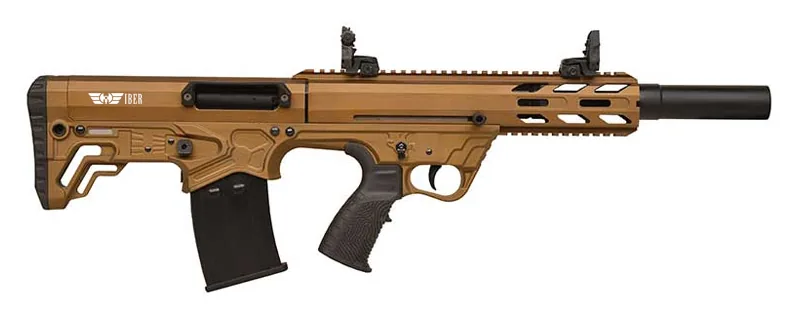
IB-BP01
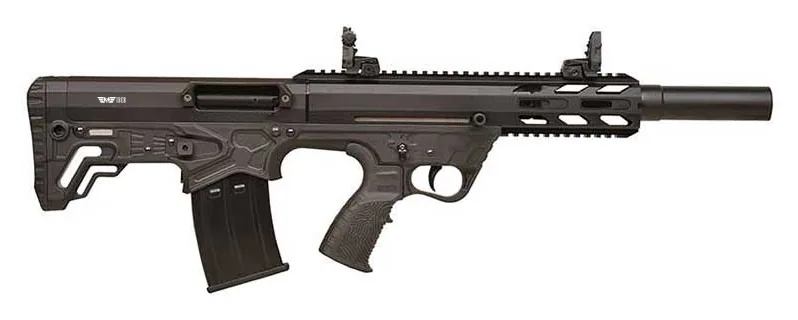
IB-BP02
Compare all models
| Model | Finish | Action | Magazine | Barrel | Sights and rail |
|---|---|---|---|---|---|
| IB-BP01 | FDE/bronze | Gas-operated semi-auto, 12 ga, 76 mm (3″) chamber | Detachable box in 2+1, 5+1 or 10+1 | 47 cm (18.5″) or 51 cm (20″) | Flip-up sights, Picatinny rail |
| IB-BP02 | Black | Gas-operated semi-auto, 12 ga, 76 mm (3″) chamber | Detachable box in 2+1, 5+1 or 10+1 | 47 cm (18.5″) or 51 cm (20″) | Flip-up sights, Picatinny rail |
Prefer a conventional layout with the same box magazines? See our magazine fed shotguns in 12, 20 and .410 gauge, including the compact IBMF-21.
Bullpup Shotgun Specifications
| Gauge | 12 gauge |
|---|---|
| Chamber | 76 mm (3″); accepts 70 mm (2¾”) and 76 mm (3″) shells |
| Layout | Bullpup, with action and magazine behind the pistol grip |
| Operation | Gas-operated semi-automatic |
| Feed | Detachable box magazine |
| Capacity | 2+1, 5+1, 10+1 |
| Barrel | 4140 steel, chrome-lined; 47 cm (18.5″) or 51 cm (20″) |
| Receiver | Aluminum with polymer lower |
| Chokes | Mobil-type interchangeable tubes; slug configuration |
| Sights and mounting | Flip-up sights; Picatinny rail for optics |
| Finishes | FDE/bronze, black; custom colors on OEM orders |
Overall length, weight and trigger pull vary with barrel and configuration. We supply measured data for the configuration you quote.

What Is a Bullpup Shotgun?
A bullpup shotgun is a shotgun whose action, and usually its magazine, sits behind the trigger inside the buttstock instead of in front of it. Moving the action back keeps the same barrel length while cutting overall length by roughly a quarter to a third, so the gun handles like a carbine in vehicles, doorways and other tight spaces.
Iber Arms manufactures two 12 gauge, gas-operated semi-automatic bullpups, the IB-BP01 (FDE/bronze) and IB-BP02 (black), with detachable box magazines (2+1, 5+1 or 10+1), 47 cm (18.5″) or 51 cm (20″) barrels, flip-up sights and a Picatinny rail. We supply importers, distributors, licensed dealers and government buyers.
Key facts about Iber bullpup shotguns
- Layout bullpup, with the action and box magazine behind the pistol grip
- Action gas-operated semi-automatic
- Gauge and chamber 12 gauge, 76 mm (3″); fires 70 mm (2¾”) and 76 mm (3″) shells
- Magazine detachable box, 2+1, 5+1 or 10+1
- Barrels 47 cm (18.5″) or 51 cm (20″), chrome-lined 4140 steel
- Receiver aluminum with polymer lower
- Chokes Mobil-type interchangeable tubes; slug configuration
- Sights flip-up sights and a Picatinny rail for optics
- Finishes FDE/bronze (IB-BP01), black (IB-BP02); other colors on OEM orders
- Supply B2B only, covering wholesale, OEM/private label, samples and orders of any quantity
Pros and cons
Advantages and Disadvantages of a Bullpup Shotgun
Advantages
- Short gun, full barrel. An 18.5-inch barrel in a gun far shorter overall than a conventional shotgun, easier to handle in vehicles, hallways and on boats.
- Compact without a short barrel. You get a compact gun without the ballistic loss and legal complications of cutting barrel length.
- Weight near the shoulder. The gun can be held on target with less fatigue and turned quickly in close quarters.
- Optics-ready. Our models carry flip-up sights and a Picatinny rail.
Disadvantages
- Trigger feel. A linkage connects the trigger to the fire-control group in the stock, which usually means a heavier, longer or spongier pull than a conventional shotgun.
- Ejection and left-handed use. The ejection port sits beside the shooter’s face. On a right-ejecting gun, firing from the left shoulder sends hulls toward the face, so left-handed shooters must check the ejection setup.
- Slower reloads. The magazine well is behind the grip, so reloads take practice.
- Rear-heavy balance. Good for holding steady, less natural for swinging on crossing targets.
- More noise at the face. The chamber and muzzle are closer to the shooter’s head.
- Not a field gun. Rarely suited to upland hunting, waterfowl or clays.
INQUIRY FORM
Bullpup Shotgun FAQ
What is a bullpup shotgun good for?
Bullpups suit jobs where a compact gun with a full-length barrel matters, such as home and property defense where lawful, vehicle and boat carry, security and law-enforcement work inside buildings, and recreational practical shooting. They are poor choices for upland hunting and clays, where a conventional shotgun’s balance and swing are better.
Are bullpup shotguns reliable?
A well-made bullpup is as reliable as a conventional shotgun with the same action. Problems usually come from magazines, light loads in gas-operated models or a poorly fitted trigger linkage. Break a gas-operated bullpup in with full-power loads, use quality magazines and test the ammunition you intend to rely on.
Why do bullpups have a bad reputation?
Mostly because of early or cheap designs, which had heavy, gritty triggers caused by the long linkage, awkward reloads, ejection that does not suit left-handed shooters and unreliable budget magazines. Better triggers, convertible or ambidextrous features and improved magazines have addressed much of this, but buyers should still test the trigger and ejection before choosing a model.
What are the disadvantages of a bullpup shotgun?
The main ones are a heavier, less crisp trigger, slower reloads because the magazine is behind the grip, ejection close to the face (a problem for left-handed shooters on right-ejecting guns), rear-heavy balance and more noise near the shooter’s head. Handling the gun with your intended loads and users is the best way to judge them.
Is a bullpup shotgun good for home defense?
It can be, where lawful and with training. The short overall length helps in hallways and doorways, and the full-length barrel keeps velocity. Against that, reloads and stoppage clearance take more practice and left-handed users need suitable ejection. Owners who will not train regularly may find a conventional pump or semi-auto simpler.
Is a bullpup shotgun legal in Canada?
Bullpups are not banned as a category in Canada; the RCMP classifies each model in the Firearms Reference Table. Semi-automatic shotgun magazines are limited to five shells, a semi-automatic with a barrel shorter than 470 mm is restricted, and some models have been prohibited since 2020. Check the specific model before importing; this is general information only.
Are bullpup shotguns legal in the US?
Federally yes, provided the barrel is at least 18 inches and the overall length at least 26 inches; below that, the gun is an NFA short-barreled shotgun. Bullpups with 18.5-inch barrels can come close to the 26-inch line, so measure the actual configuration. Imported models must meet ATF importability rules, and some states restrict semi-automatic shotguns.
Is there a .410 bullpup shotgun?
Some manufacturers offer .410 bullpups, which appeal because of their light recoil. Iber’s bullpups are 12 gauge only. For a .410 semi-automatic with a box magazine, see the IB-MF20 in our magazine-fed range, or browse all of our .410 shotguns.
Are Turkish bullpup shotguns good?
Türkiye produces many of the bullpup shotguns sold worldwide, including models sold under US brand names, so quality depends on the factory rather than the country. Check barrel material and finish, test-firing practice, trigger quality, magazine supply and after-sales support. Iber Arms builds its bullpups in Beyşehir, Konya, with chrome-lined 4140 barrels and in-house assembly and test-firing.
How much does a bullpup shotgun cost?
Iber Arms does not publish prices because we sell wholesale and configure every order. B2B pricing depends on quantity, finish, barrel length, the magazines supplied, private-label work, packaging and destination. Retail prices are set by importers and dealers and vary with taxes and import costs. Dealers can request a quote; shooters should ask a local licensed dealer.
Do you sell bullpup shotguns to private individuals?
No. Iber Arms supplies importers, distributors, licensed dealers and government buyers only. If you are a shooter, contact a licensed dealer or importer in your country; they can order our bullpups through the legal import channel and advise on the rules that apply where you live.
Can we get samples or our own brand on your bullpups?
Yes. We ship samples for evaluation where export rules allow and build the IB-BP01 and IB-BP02 under your brand, with your choice of color, barrel length and magazine capacity, plus spare magazines. We accept orders of any quantity. Send your requirements through our inquiry form.
How Bullpup Shotguns Work, with History, Laws and Buying Advice
How does a bullpup shotgun work?
A bullpup rearranges a conventional shotgun rather than reinventing it. On a conventional gun the trigger sits just behind the action and the stock extends behind both. On a bullpup the action, chamber and magazine move back into the stock, the shooter’s cheek rests on the receiver, and the trigger and pistol grip sit in front of the action.
- Feeding. On our IB-BP01 and IB-BP02, a detachable box magazine goes into the magazine well behind the pistol grip. Working the charging handle chambers the first shell.
- Trigger linkage. The trigger, out in front, cannot act directly on the hammer and sear in the stock, so a linkage bar carries the pull rearward to the fire-control group.
- Firing and cycling. Like our conventional mag-fed shotguns, the bullpups are gas-operated. Gas tapped from the barrel drives the bolt carrier back to extract and eject the hull, and the return spring chambers the next shell.
- Ejection. The hull leaves through a port beside the shooter’s cheek, which is why the ejection side matters more on a bullpup than on any other layout.
Barrel length vs overall length, the core benefit of a bullpup
Overall length is what you feel in a doorway or a vehicle. Barrel length governs velocity and pattern and, in many countries, legality. A bullpup separates the two. Because the action sits in the stock, it is typically 25 to 30 cm (10 to 12 in) shorter than a conventional shotgun with the same barrel.
| Layout and barrel | Typical overall length (approximate) | What it means |
|---|---|---|
| Conventional shotgun, 47 cm (18.5″) barrel | About 97 to 102 cm (38 to 40 in) | Standard defensive length; long in vehicles |
| Bullpup shotgun, 47 cm (18.5″) barrel | About 66 to 76 cm (26 to 30 in) | Carbine-length handling with the same barrel |
| Conventional shotgun, 36 cm (14″) barrel | About 84 to 89 cm (33 to 35 in) | Still longer than a bullpup, and a short-barreled shotgun under US NFA rules and similar laws elsewhere |
The figures are typical ranges for each category, not measurements of a particular Iber configuration. We supply measured overall length and weight for the barrel and configuration you specify.
A short history of the bullpup shotgun
The bullpup idea is more than a century old. Designers experimented with rifles that placed the action behind the trigger in the early 1900s, and the layout went mainstream with military rifles in the late 1970s and 1980s.
Shotguns followed their own path. A 1960s semi-automatic police shotgun was an early bullpup. In the 1990s a South African design introduced a pump-action bullpup with twin magazine tubes, and in the 2010s twin-tube pump bullpups reached a mass market. Turkish manufacturers have since made gas-operated, box-magazine bullpups widely available and affordable.
What types of bullpup shotgun are there?
Semi-auto, box magazine
The type we build. Gas-operated, with detachable box magazines, fast follow-up shots and rails for optics. Needs a break-in period and good magazines.
Pump action, tube-fed
Often with twin tube magazines that the shooter selects between, for high capacity. A manual action, so it works with any load, including low-power rounds.
Semi-auto, tube-fed
Some designs pair a gas action with tube magazines in the stock, which gives a slimmer profile but slower reloads.
Bullpup vs conventional mag-fed shotgun
| Factor | Bullpup (IB-BP01, IB-BP02) | Conventional AR-style (IB-MF series) |
|---|---|---|
| Overall length, 47 cm barrel | Much shorter (typically 25 to 30 cm less) | Longer; collapsible stocks on many models |
| Balance | Rearward, close to the shoulder | Further forward |
| Trigger | Via a linkage; usually heavier and less crisp | Direct; usually cleaner |
| Reloads | Magazine behind the grip; needs practice | Magazine in front of the trigger; intuitive |
| Left-handed use | Depends on ejection side; check before buying | Easier; ejection port is well forward of the face |
| Iber gauges | 12 gauge | 12, 20 and .410 |
| Best for | Vehicles, buildings, compact storage | General tactical use, practical shooting, training |
What is a bullpup shotgun used for?
- Home and property defense, where lawful, since the gun is short enough for hallways and doorways without a short barrel.
- Vehicle and boat carry for security teams, rangers and farm vehicles.
- Law enforcement and military close-quarters work, supplied to authorized government buyers.
- Recreational and practical shooting for shooters who enjoy compact, rail-equipped guns.
- Compact storage and transport.
Bullpups are a poor fit for upland hunting, waterfowl and clay shooting, where a conventional gun’s balance and swing work better.
Turkish bullpup shotguns and why so many come from Türkiye
Many of the bullpup shotguns on dealers’ shelves in North America, Europe, Africa and Australia are made in Türkiye, often sold under importers’ own brands. The industry is concentrated in a few regions, the best known being the Beyşehir area of Konya province, where Iber Arms has built shotguns since 2000. Turkish factories combine in-house barrel making and finishing with flexible assembly, which suits private-label importers who want their own colors and configurations. If you are comparing suppliers, our guides to Turkish shotgun manufacturers and whether Turkish shotguns are good explain what to check, and how our shotguns are made shows our process, from hard-chroming to test-firing.
Are bullpup shotguns legal? Notes by country
The law rarely regulates the bullpup layout itself; it regulates barrel length, overall length, action type and magazine capacity. This is general information, not legal advice; verify with the competent authority before buying or importing.
| Country | What matters for a bullpup shotgun |
|---|---|
| USA | A barrel of at least 18 in and an overall length of at least 26 in keep a shotgun outside the NFA short-barreled shotgun rules. Bullpups with 18.5-inch barrels can come close to the 26-inch line, so measure the actual gun. Imports need a licensed importer (FFL Type 08/11), an ATF Form 6 permit and must pass the “sporting purposes” test; semi-autos assembled with imported parts fall under 922(r). States such as California and New York restrict some semi-automatic shotguns and features. |
| Canada | There is no bullpup ban as such; the RCMP classifies each model (Firearms Reference Table). Semi-automatic shotgun magazines are limited to 5 shells, a semi-automatic with a barrel shorter than 470 mm is restricted, and several models have been prohibited since 2020. |
| Australia | Self-loading shotguns are Category C (5 rounds or fewer, limited to specific genuine reasons) or Category D (more than 5), applied by each state and territory. |
| UK (Great Britain) | Self-loading and pump-action smoothbores with a barrel under 24 in or an overall length under 40 in are prohibited under Section 5, which in practice rules out compact semi-auto and pump bullpups for civilian certificate holders. Any detachable magazine requires a Section 1 certificate. |
| South Africa | Semi-automatic shotguns are excluded from the self-defense license (s13); dedicated hunter or sport-shooter status (s16) is the usual route. Imports require a SAPS import permit. |
| Government buyers | Military and law-enforcement configurations are supplied subject to export and end-user approvals. |
How to choose a bullpup shotgun
In short, test the trigger, check ejection for the people who will shoot it, confirm that spare magazines are available and make sure the configuration is legal where it will be sold. Our bullpup shotgun buying guide turns this into a 12-point checklist and a sample-test routine for buyers, dealers and importers.
Ammunition, chokes and maintenance
Our bullpups chamber 70 mm (2¾”) and 76 mm (3″) 12 gauge shells; never use 89 mm (3½”). As gas-operated guns, they cycle most reliably with full-power loads, such as buckshot, slugs and heavier field loads, especially when new, so test light target loads before relying on them. Mobil-type choke tubes let you run improved cylinder for buckshot at close range, or use the slug configuration for slugs.
- Clean the gas piston and port regularly; fouling slows the action.
- Wipe the bolt, chamber and ejection area next to the cheek rest, where residue collects.
- Keep the trigger linkage free of grit and lubricate it lightly, as the manual describes.
- Inspect magazine feed lips and springs, and retire damaged magazines.
- Clean and grease the choke threads, and never fire without a choke tube fitted.
How much does a bullpup shotgun cost?
Retail prices for bullpup shotguns vary widely by brand, country and taxes, from budget imports to premium designs. Iber Arms does not publish prices, because we sell wholesale and build each order to specification. B2B pricing depends on the factors below.
- order quantity and the mix of models
- finish and color, whether standard FDE/bronze and black or custom
- barrel length, magazine capacity and the number of spare magazines
- private-label markings, packaging and manuals
- destination, shipping terms and documentation
Importers and dealers can request a quote. Shooters should ask a licensed dealer in their country, who sets the retail price after import costs and taxes.
OEM and private label bullpup shotguns
We build our bullpups under importers’ brands, with private-label markings, custom colors beyond FDE/bronze and black, a choice of 47 or 51 cm barrels, magazine capacities matched to each market and spare magazines in every size. Samples are available for evaluation and we accept orders of any quantity. See private-label shotguns, and compare our magazine-fed, short-barrel, tactical and semi-auto families.
Request a quote for bullpup shotguns
Tell us your market, finish, barrel length, magazine sizes and quantity, and our export team will reply with specifications and pricing. Send an inquiry, download our catalogs or email info@iberarms.com. If you are a shooter, please buy through a licensed dealer or importer in your country.
Reviewed by the Iber Arms technical & export team, October 2026.
MOST EXPORTED FIREARMS
OTHER FIREARMS MODELS
Explore the other shotgun families built in our Beyşehir factory. Every model can be configured for your market, so ask us about finishes, barrel lengths and magazine capacities.
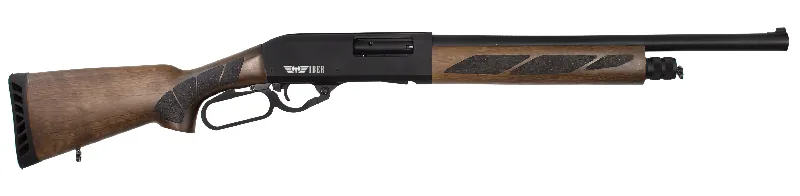
LEVER ACTION
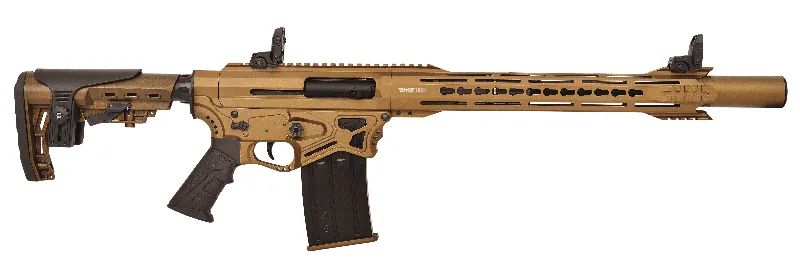
Magazine Fed


