
Phone number
Email address
Semi-Auto Shotguns in 12 and 20 Gauge
- Firearms Manufacturer
- Semi Auto Tactical Shotguns 12, 20 Gauge
Our Semi-Auto Shotgun Models
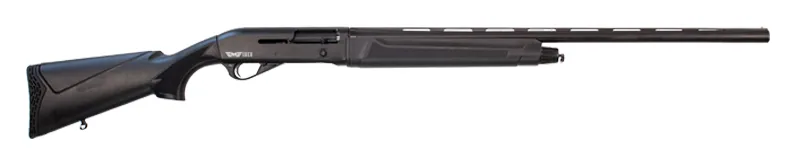
IB-SA01
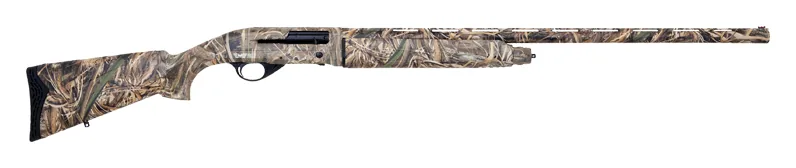
IB-SA02
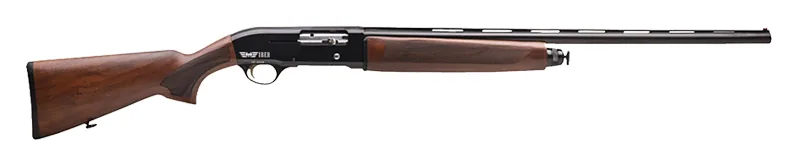
IB-SA03
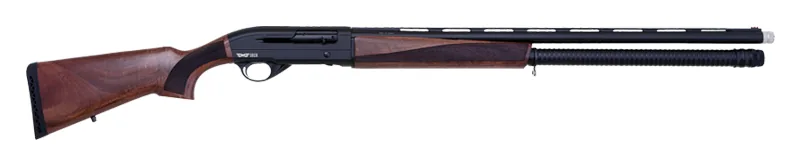
IB-SA04
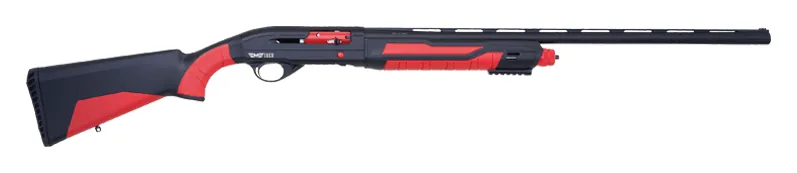
IB-SA05
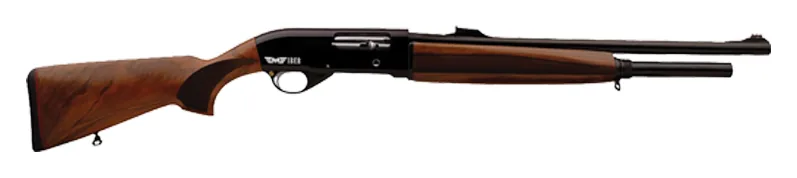
IB-SA06
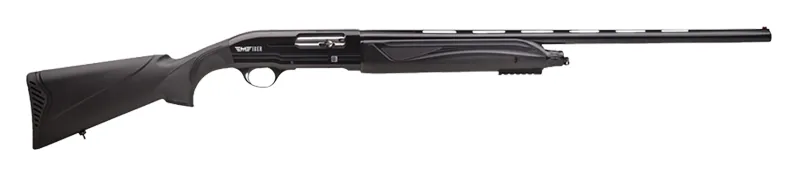
IB-SA07
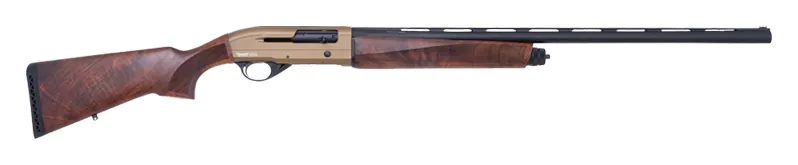
IB-SA08
A semi-auto shotgun (semi-automatic or autoloading shotgun) fires one shell per trigger pull and uses energy from that shot to eject the empty hull and chamber the next one. Iber Arms builds gas-operated 12 and 20 gauge semi-autos in Beyşehir, Türkiye, for importers, distributors and licensed dealers.
The grid below shows eight of our 26 semi-auto models (IB-SA01 to SA08). The full range of field, compact and sport/tactical versions is listed in the model table further down this page.
Semi-Auto Shotgun Specifications
| Specification | Iber semi-auto range |
|---|---|
| Action | Gas-operated semi-automatic (self-loading), one shot per trigger pull |
| Gauge | 12 gauge (IB-SA01 to SA13); 12 or 20 gauge (IUE-SAS-14 to 27) |
| Chamber | 76 mm (3″); shorter 70 mm (2¾”) shells also chamber |
| Barrel | 4140 steel, hard-chrome finished on our in-house line |
| Barrel lengths | 47, 51, 55, 61, 71 and 76 cm (18.5 to 30″) on the IB-SA, and 37 to 81 cm (14.6 to 32″) on the IUE-SAS depending on model |
| Receiver | Aluminum alloy |
| Stock | Turkish walnut, synthetic, camo, birdshead grip, fixed or collapsible pistol-grip stock |
| Magazine | Under-barrel tube holding 2+1, 4+1, 5+1, 7+1 or 10+1 depending on model and barrel |
| Chokes | Mobil-type interchangeable choke tubes (extended tubes on IUE-SAS); slug options |
| Private label | Logo, finish colors, stock type, barrel length and capacity to order |

Turkish Semi-Auto Shotgun Manufacturer Since 2000
Iber Arms (also known as Iber Hunt) has made shotguns since 2000 and exported them since 2010. Our factory in Beyşehir, Konya, sits in Turkey’s best-known shotgun-making cluster. Barrels are 4140 steel, hard-chromed on our own line; receivers and stocks are finished in-house; and our shotguns are assembled and test-fired before they leave the plant.
We sell B2B only, to importers, distributors, licensed dealers and government buyers. We do not sell to private individuals, so if you want one of our shotguns, ask a licensed dealer or importer in your country. Trade buyers can order any quantity, request evaluation samples and specify private-label builds. Request a quote or download the catalog.
Semi-Auto Shotgun FAQ
What is a semi-automatic shotgun?
A semi-automatic shotgun fires one shell each time you pull the trigger and reloads itself using energy from the shot, either propellant gas (gas-operated) or recoil (inertia-driven). It is not a machine gun. You must release and press the trigger for every shot. Semi-autos are widely used for bird hunting, clay shooting, competition and, where legal, law enforcement and home defense.
Is a semi-auto shotgun better than a pump?
Neither is better for every job. A semi-auto gives faster follow-up shots and softer felt recoil, which suits bird hunting, clays and competition. A pump is simpler, cheaper, cycles almost any load and faces fewer legal restrictions in many countries, which suits slug hunters, budget buyers and duty use with mixed ammunition. Iber builds both; see our pump action shotguns.
What is the difference between a gas and an inertia semi-auto shotgun?
A gas gun bleeds propellant gas from the barrel to drive a piston that cycles the action. It usually recoils more softly and tolerates light loads and accessories well, but needs more cleaning. An inertia gun uses the recoil of the gun itself; it is lighter, cleaner and simpler, but feels sharper and can be sensitive to light loads. See our gas vs inertia guide.
Do you make a 20 gauge semi-auto shotgun?
Yes. Every IUE-SAS model, from the walnut field guns (IUE-SAS-14 and 15) to the compact and sport/tactical versions (17 to 27), is listed in 12 or 20 gauge with a 76 mm (3″) chamber. Our magazine-fed IB-MF15 to MF19 are also 20 gauge. A 20 gauge semi-auto is lighter and softer-shooting, which suits upland hunting, doves and smaller-framed shooters.
Can I get a semi-auto shotgun with a detachable magazine?
Yes, that is our magazine-fed line. The IB-MF and IUE-MF models are AR-pattern gas semi-autos that take detachable box magazines (2+1, 5+1 and 10+1, plus 20+1 on IUE-MF-22 and 23) in 12 gauge, 20 gauge and .410 bore (IB-MF20). Check local law first, because detachable magazines are restricted in several markets. See magazine-fed shotguns.
How many shells does a semi-auto shotgun hold?
It depends on the model, barrel length and local law. Our tube-fed semi-autos are offered from 2+1 (two shells in the magazine, one in the chamber) up to 10+1. Hunting rules often require 2+1, the UK Section 2 certificate allows no more than two in the magazine, and Canada caps semi-auto shotgun magazines at five. We set capacity to your market’s requirement.
Can a semi-auto shotgun be used for hunting?
Yes. In most countries semi-autos are standard hunting shotguns, but capacity is often limited. US federal rules for migratory birds allow three shells in total, many European countries require 2+1 for hunting, and some licenses, such as South Africa’s self-defense license, exclude semi-autos altogether. Always check your local hunting regulations and license conditions before you hunt.
Why won't my semi-auto shotgun cycle light loads?
Usually the load produces too little gas or recoil to drive the action fully, especially in a new gun with stiff springs and tight parts. Shoot a few boxes of standard hunting loads to break it in, keep the gas system or bolt clean and lightly oiled, and check the recoil spring for wear. On inertia guns, heavy accessories and a loose hold also cause short-cycling.
Are Turkish semi-auto shotguns any good?
Turkey is a major shotgun-producing country, and many well-known brands sell Turkish-made semi-autos. Quality depends on the individual factory, and in particular on its materials, heat treatment, proof testing and test-firing. Our barrels are 4140 steel hard-chromed in-house, and our guns are assembled and test-fired in Beyşehir. Read are Turkish shotguns good? for what to check.
Do you sell semi-auto shotguns to private buyers?
No. Iber Arms sells only to importers, distributors, licensed dealers and government or law-enforcement buyers. If you are a private buyer, please contact a licensed dealer or importer in your country. Trade buyers can request quotations, samples and private-label builds through our inquiry form.
Can you build semi-autos under our brand, and do you send samples?
Yes. We produce semi-autos as OEM or private label with your logo and your choice of finish, stock, barrel length, chokes and magazine capacity. Samples are available for evaluation, and we accept orders of any quantity. Ask our export team which proof marks and certificates are available for your market through the inquiry form.
Complete Semi-Automatic Shotgun Guide for Buyers and Importers
Semi-auto shotguns at a glance
- Operating system gas-operated on every IB-SA and IUE-SAS model; inertia-driven semi-autos are in our Kinetic System and ADA 2 lines.
- Gauges 12 gauge across the range; 20 gauge on IUE-SAS-14 to 27.
- Chamber 76 mm (3″) on every model.
- Barrels 4140 steel, 37 cm (14.6″) to 81 cm (32″) depending on model.
- Capacity 2+1 up to 10+1, set to the model, barrel and market.
- Configurations walnut and synthetic field guns, camo, engraved, compact birdshead-grip and sport/tactical.
- Who we supply importers, distributors, licensed dealers and government buyers (B2B only).
What is a semi-automatic shotgun and where is it used?
A semi-automatic shotgun is a self-loading shotgun. Each pull of the trigger fires one shell, and the action reloads itself using energy from that shot. It is not an automatic (machine) shotgun; you must release and press the trigger again for every shot. Fast follow-up shots with ordinary one-shot-per-pull operation explain where semi-autos are used, as the list below shows.
- Bird hunting waterfowl, doves, pheasant and other upland game, where a quick second or third shot matters.
- Clay sports sporting clays, skeet and trap practice, where softer felt recoil helps over long sessions.
- Slug hunting driven boar and deer hunts, where local law allows semi-autos.
- Practical and 3-gun competition events that reward capacity and fast reloading.
- Law enforcement, security and home defense where legal, usually with shorter barrels, sights and pistol-grip or adjustable stocks.
The first commercially successful semi-auto shotgun was an early recoil-operated design, made from 1902. Gas operation became the mainstream system for field guns in the second half of the 20th century, and inertia-driven designs became the main alternative.
How does a gas-operated semi-auto shotgun work?
A gas-operated shotgun taps a small portion of the propellant gas from the barrel to power the reloading cycle. Every IB-SA and IUE-SAS model works this way. Here is the cycle step by step.
- Firing. The trigger releases the hammer, the firing pin strikes the primer and the shot charge travels up the barrel.
- Gas tapping. As the wad passes one or more small ports drilled in the barrel under the forend, gas flows into a cylinder around the magazine tube.
- Piston stroke. The gas drives a piston rearward; the piston pushes the action bars, which push the bolt carrier back.
- Unlocking and extraction. The bolt unlocks from the barrel extension; the extractor pulls the empty hull from the chamber and the ejector throws it out of the ejection port.
- Feeding. As the bolt travels rearward it compresses the recoil (action) spring, and the shell latch releases the next shell from the magazine tube onto the carrier.
- Return and lock-up. The spring drives the bolt forward; the carrier lifts the new shell, and the bolt chambers it and locks.
- Reset. The disconnector holds the hammer until you release the trigger, so the gun fires only one shot per pull.
Many gas systems also use a valve or exhaust that vents surplus gas with heavy loads. Because the gas system spreads the recoil impulse over a slightly longer time and adds weight, gas guns are generally regarded as the softest-shooting semi-autos.
Should you choose a gas or inertia semi-auto system?
The two dominant semi-auto systems differ in where the reloading energy comes from. Gas guns use propellant gas, while inertia guns use the gun’s own recoil. Iber builds both, so we can set out the trade-offs plainly.
| Factor | Gas-operated (IB-SA, IUE-SAS, ADA 4) | Inertia-driven (Kinetic System, ADA 2) |
|---|---|---|
| Felt recoil | Softer, longer recoil impulse | Sharper; guns are usually lighter |
| Light target loads | Usually cycles a wide range of loads | Can short-cycle light loads, especially before break-in |
| Cleaning | Gas ports, piston and cylinder collect carbon | Action stays cleaner; fewer parts |
| Weight | Heavier | Lighter and quicker to carry |
| Accessories (lights, extensions) | Little effect on cycling | Added weight can affect cycling |
| Typical uses | Clays, high-volume shooting, tactical | Upland and waterfowl hunting, long walks |
For the full comparison and troubleshooting, read our guide to gas vs inertia shotguns, or see our inertia-driven (Kinetic System) semi-auto shotguns and the M2-style ADA 2.
Our semi-auto shotgun models
The gas-operated line has 26 models in three groups. All use 4140 steel barrels, aluminum receivers, 76 mm (3″) chambers and Mobil-type choke tubes. Barrel lengths and capacities are the options listed on each product page; available capacity also depends on the barrel and magazine tube chosen.
Field and hunting semi-autos
| Model | Stock / finish | Gauge | Barrel options | Capacity |
|---|---|---|---|---|
| IB-SA01 | Black synthetic | 12 | 47 to 76 cm (18.5 to 30″) | 4+1, 5+1, 7+1, 10+1 |
| IB-SA02 | Full camo (receiver, barrel, stock) | 12 | 47 to 76 cm (18.5 to 30″) | 4+1, 5+1, 7+1, 10+1 |
| IB-SA03 | Turkish walnut | 12 | 47 to 76 cm (18.5 to 30″) | 4+1, 5+1, 7+1, 10+1 |
| IB-SA04 | Turkish walnut | 12 | 47 to 76 cm (18.5 to 30″) | 4+1, 5+1, 7+1, 10+1 |
| IB-SA05 | Black and red synthetic | 12 | 47 to 76 cm (18.5 to 30″) | 4+1, 5+1, 7+1, 10+1 |
| IB-SA06 | Turkish walnut | 12 | 47 to 76 cm (18.5 to 30″) | 4+1, 5+1, 7+1, 10+1 |
| IB-SA07 | Black synthetic | 12 | 47 to 76 cm (18.5 to 30″) | 4+1, 5+1, 7+1, 10+1 |
| IB-SA08 | Turkish walnut, bronze-tone receiver | 12 | 47 to 76 cm (18.5 to 30″) | 4+1, 5+1, 7+1, 10+1 |
| IB-SA09 | Engraved silver receiver, figured walnut | 12 | 47 to 76 cm (18.5 to 30″) | 4+1, 5+1, 7+1, 10+1 |
| IB-SA10 | Engraved silver receiver, figured walnut | 12 | 47 to 76 cm (18.5 to 30″) | 4+1, 5+1, 7+1, 10+1 |
| IB-SA11 | Turkish walnut | 12 | 47 to 76 cm (18.5 to 30″) | 4+1, 5+1, 7+1, 10+1 |
| IB-SA12 | Turkish walnut | 12 | 47 to 76 cm (18.5 to 30″) | 2+1, 5+1, 7+1, 10+1 |
| IB-SA13 | Turkish walnut | 12 | 47 to 76 cm (18.5 to 30″) | 2+1, 5+1, 7+1, 10+1 |
| IUE-SAS-14 | Turkish walnut (synthetic option) | 12 or 20 | 37 to 81 cm (14.6 to 32″) | 2+1, 4+1, 10+1 |
| IUE-SAS-15 | Turkish walnut (synthetic option) | 12 or 20 | 37 to 81 cm (14.6 to 32″) | 2+1, 4+1, 10+1 |
Compact birdshead-grip semi-autos
| Model | Stock / finish | Gauge | Barrel options | Capacity |
|---|---|---|---|---|
| IUE-SAS-17 | Black birdshead grip, accessory rails | 12 or 20 | 37, 47, 51 cm (14.6 to 20″) | 2+1, 4+1 |
| IUE-SAS-18 | Black synthetic birdshead grip | 12 or 20 | 37, 47, 51 cm (14.6 to 20″) | 2+1, 4+1 |
| IUE-SAS-19 | Walnut birdshead grip and forend | 12 or 20 | 37, 47, 51 cm (14.6 to 20″) | 2+1, 4+1 |
These pistol-grip-only guns are compact configurations for vehicles and confined spaces. Their legal classification depends on barrel length, overall length and the absence of a shoulder stock, so it varies by market; see the legal notes below.
Sport and tactical semi-autos
| Model | Stock / finish | Gauge | Barrel options | Capacity |
|---|---|---|---|---|
| IUE-SAS-20 | Black synthetic, red accents | 12 or 20 | 37 to 81 cm (14.6 to 32″) | 2+1, 4+1, 10+1 |
| IUE-SAS-21 | Collapsible stock, pistol grip, red accents | 12 or 20 | 37 to 81 cm (14.6 to 32″) | 2+1, 4+1, 10+1 |
| IUE-SAS-22 | Collapsible stock, pistol grip | 12 or 20 | 37 to 81 cm (14.6 to 32″) | 2+1, 4+1, 10+1 |
| IUE-SAS-23 | Collapsible stock, pistol grip | 12 or 20 | 37 to 81 cm (14.6 to 32″) | 2+1, 4+1, 10+1 |
| IUE-SAS-24 | Fixed pistol-grip stock | 12 or 20 | 37 to 81 cm (14.6 to 32″) | 2+1, 4+1, 10+1 |
| IUE-SAS-25 | Black synthetic sport stock | 12 or 20 | 37 to 81 cm (14.6 to 32″) | 2+1, 4+1, 10+1 |
| IUE-SAS-26 | Black synthetic sport stock | 12 or 20 | 37 to 81 cm (14.6 to 32″) | 2+1, 4+1, 10+1 |
| IUE-SAS-27 | Black synthetic, red accents | 12 or 20 | 37 to 81 cm (14.6 to 32″) | 2+1, 4+1, 10+1 |
12 gauge vs 20 gauge semi-auto shotguns
Choose 12 gauge for versatility and the widest choice of loads; choose 20 gauge for lighter carry weight and less recoil. Every IUE-SAS model (14 to 27) can be ordered in either gauge, so a distributor can offer both on one platform.
| 12 gauge | 20 gauge | |
|---|---|---|
| Bore diameter | About 18.5 mm (0.729″) | About 15.6 mm (0.615″) |
| Typical field loads | 28 to 36 g (1 to 1¼ oz) | 21 to 28 g (¾, 1 oz) |
| Felt recoil | Higher at equal gun weight | Lower |
| Best for | Waterfowl, slugs, buckshot, tactical, all-round use | Upland birds, doves, clays practice, smaller-framed shooters |
| Ammunition availability | Widest worldwide | Wide, slightly narrower |
| Iber semi-autos | All models | IUE-SAS-14 to 27 |
The magazine-fed line adds more 20 gauge options (IB-MF15 to MF19); see magazine-fed shotguns.
Capacity limits and plugs for semi-auto hunting shotguns
Many hunting regulations limit how many shells a shotgun may hold, so semi-auto hunting shotguns are often supplied with a magazine plug or a short tube that gives 2+1 (three shells in total). Typical examples follow.
- United States federal rules for migratory game birds such as ducks, geese and doves limit shotguns to three shells in total; many states apply similar limits to other game.
- United Kingdom a semi-auto whose magazine holds no more than two cartridges, with a barrel of at least 24 in, can be held on a Section 2 shotgun certificate.
- Spain and much of continental Europe semi-autos used for hunting are commonly limited to 2+1 with a limiter.
- Canada magazines for semi-automatic shotguns are limited to 5 shells, and hunting rules such as those for migratory birds can be stricter.
Our walnut and camo guns are the core of the hunting range, with the IB-SA02 in full camo for blinds and marshes and the walnut IB-SA series and IUE-SAS-14 and 15 for upland work. Barrels of 61 to 71 cm (24 to 28″) suit walking hunts and woodland; 71 to 76 cm (28 to 30″) give a longer sighting plane for waterfowl and clays. Capacity, including 2+1, is specified per order.
Key features of semi-auto tactical shotguns
A semi-auto tactical shotgun is a gas or inertia semi-automatic configured for police, security or defensive use rather than hunting. These are the features that set one apart.
- Reliable cycling with full-power loads such as buckshot and slugs, so follow-up shots need no manual action.
- Shorter barrels, typically 47 to 51 cm (18.5 to 20″), for handling in vehicles and buildings.
- Sights and rails ghost-ring or rifle-type sights and a Picatinny rail for optics and lights.
- Pistol-grip, collapsible or fixed stocks to suit body armor and shooters of different sizes.
- Extended tubes or detachable box magazines where the law allows.
- Durable finishes, such as hard-chrome bores and coated aluminum receivers.
Our tube-fed tactical semi-autos are the IUE-SAS-20 to 27 series and the ADA 4 M4-style shotguns; inertia-driven tactical versions are IUE-KS-32 to 37. For every tactical family mapped by mission, see tactical shotguns.
Tube-fed vs magazine-fed semi-auto shotguns
Most semi-autos, including every IB-SA and IUE-SAS model, feed from a fixed tube under the barrel. A magazine-fed (mag-fed) semi-auto uses a detachable box magazine, like a rifle. If you are looking for a “semi auto shotgun with magazine”, this is the distinction that matters.
| Tube-fed semi-auto | Magazine-fed semi-auto | |
|---|---|---|
| Reloading | Shell by shell through the loading port | Swap a loaded magazine in seconds |
| Capacity | Set by tube length (2+1 to 10+1 in our range) | Set by the magazine (2+1, 5+1, 10+1; 20+1 on some models) |
| Profile and balance | Slim and traditional; carries well when hunting | Bulkier, with the magazine below the receiver |
| Typical uses | Hunting, clays, duty | Practical shooting, tactical, sport |
| Legal sensitivity | Lower in most markets | Detachable magazines are restricted in more jurisdictions |
| Iber models | IB-SA, IUE-SAS, ADA 4, Kinetic System | IB-MF01 to MF20, IBMF-21, IUE-MF-22 to 26, bullpups, IEU-SB |
Our magazine-fed semi-auto shotguns are AR-pattern (“AR-12”) gas guns in 12 gauge, 20 gauge (IB-MF15 to MF19) and .410 bore (IB-MF20). For a compact layout with a box magazine, see our bullpup shotguns; for every .410 option, our .410 shotguns guide.
What to consider when buying a semi-automatic shotgun
For a hunter comparing guns at a dealer and an importer building a range alike, six questions decide the right semi-auto.
- Main use. Hunting and clays favor long barrels, walnut or camo and 2+1 or 4+1 capacity; duty and home defense favor 47 to 51 cm barrels, sights and rails.
- System and gauge. Gas for softer recoil and tolerance of varied loads; inertia for lighter weight. 12 gauge for versatility, 20 gauge for less weight and recoil.
- Capacity and legality. Confirm the limit for your market and intended use before ordering.
- Fit. Length of pull, drop and cast decide where the pattern lands; adjustable stocks help on shared or duty guns.
- Chokes and finish. Interchangeable Mobil-type tubes cover lead, steel, slugs and clays; synthetic or camo suits wet, hard use, walnut suits traditional field shooting.
- Support. If you are a dealer or importer, look for spare parts, documentation, proof marks accepted in your market and a manufacturer that answers technical questions.
Advantages and disadvantages of semi-auto shotguns
Advantages
- Fast follow-up shots without breaking your mount
- Softer felt recoil than a pump or break-action of similar weight, especially with gas operation
- More shots available than a double gun
- One platform covers hunting, clays and, with a short barrel, duty use
Disadvantages
- More parts and more complex to make than a pump
- Gas guns need regular cleaning of the gas system
- Can be sensitive to very light loads, lubrication and dirt
- Stricter licensing than manual actions in some countries
Shells, chokes and break-in
Use shells no longer than the chamber, which on our guns is 76 mm (3″). Within that limit a gas semi-auto handles most 28 to 36 g (1 to 1¼ oz) hunting loads, buckshot and slugs. Very light target loads may cycle less reliably in any new semi-auto until the action has worn in, so shooting a few boxes of standard loads first is common practice.
- Chokes cylinder or improved cylinder for slugs, close-range buckshot and close-flushing birds; modified for general hunting; full for long passing shots and trap.
- Steel shot most makers recommend no tighter than modified unless the choke tube is marked for steel. Many markets require non-toxic shot over wetlands.
- Slugs use a slug barrel or an open choke; do not fire slugs through tight chokes unless the choke is rated for them.
Cleaning and maintaining a gas-operated shotgun
- Unload, confirm the chamber and magazine are empty, and keep the muzzle pointed in a safe direction.
- After each outing, brush and patch the bore, wipe the bolt, carrier and receiver, and apply a light film of oil.
- Every few hundred shells, or after wet or dusty days, remove the forend and barrel, clean carbon from the gas piston, cylinder and magazine tube, and check that the gas ports are clear. Keep the gas system nearly dry, because oil attracts carbon.
- Inspect seals (where fitted) and the recoil spring, and replace worn or kinked parts.
- Clean and lightly grease choke threads so tubes do not seize.
- Store the gun unloaded, dry and secure, in line with local storage law.
Legal notes by country
General information only, not legal advice, current as of October 2026. Laws change and vary by state, province and license type. Verify with the competent authority and your importer before ordering or buying.
| Country | Key points for semi-auto shotguns |
|---|---|
| United States | Imports need a licensed importer (FFL Type 08/11) and an ATF Form 6 import permit, and the model must meet the “sporting purposes” importability criteria. Semi-autos assembled with imported parts fall under the 18 U.S.C. 922(r) parts-count rules. A barrel under 18 in (45.7 cm) or overall length under 26 in makes an NFA short-barreled shotgun, which matters for 37 cm (14.6″) options. States such as California and New York add feature and magazine limits. |
| Canada | Magazines for semi-automatic shotguns are limited to 5 shells. The RCMP sets the classification of each model (Firearms Reference Table), and several models have been prohibited since 2020, so check before importing. |
| Australia | Self-loading shotguns are Category C (magazine of 5 rounds or fewer, available only to limited groups such as primary producers) or Category D (more than 5). Each state and territory administers licensing. |
| United Kingdom | A Section 2 shotgun certificate covers semi-autos whose magazine holds no more than 2 cartridges and whose barrels are at least 24 in; anything else needs a Section 1 firearm certificate. |
| South Africa | Under the Firearms Control Act 60 of 2000, a self-defense license (section 13) excludes semi-automatic shotguns; dedicated hunter or sport-shooter status (section 16) is the usual route. Imports need a SAPS import permit. |
| Spain and the EU | Spain requires a licencia E and guía de pertenencia from the Guardia Civil, and hunting semi-autos are usually limited to 2+1. EU rules place some semi-automatic long guns in the prohibited Category A, including certain high-capacity and folding or telescoping-stock configurations. |
| Mexico | Civilians may buy firearms only through SEDENA’s DCAM, and the LFAFE reserves shotguns with barrels shorter than 635 mm for the armed forces (check the current text). |
We do not ship to private individuals and do not advise on getting around any rule. We build compliance variants, such as 2+1 or 4+1 capacity and longer barrels, to the specification your importer or authority confirms.
OEM, private label and wholesale semi-autos
Many of our semi-autos leave Beyşehir under importers’ own brands or as wholesale stock for distributors. Private-label options include your logo on the receiver, finish colors and camo patterns, walnut or synthetic stocks, barrel lengths, chokes and magazine capacity set to local law. Evaluation samples are available before a first order, and we accept orders of any quantity.
Read more about private-label shotgun manufacturing, how to import shotguns from Turkey, how our shotguns are made and our honest answer to are Turkish shotguns good? You can also compare Iber with other Turkish shotgun manufacturers.
Source semi-auto shotguns from the factory
Tell us your market, quantities and preferred configurations, and our export team will reply with specifications and a quotation. Send an inquiry, email info@iberarms.com or download our catalogs.
Reviewed by the Iber Arms technical & export team, October 2026.


