Phone number
Email address
Single Barrel Shotguns in 12 Gauge
- Firearms Manufacturer
- Single Barrel Shotgun Manufacturers
Our Single Barrel Shotgun Models
These six break-action single shots are built at our Beyşehir factory, four with Turkish walnut stocks (the IB-SB03 with rifle-style sights for slugs) and two with black synthetic stocks. Select a model for photos and specifications.
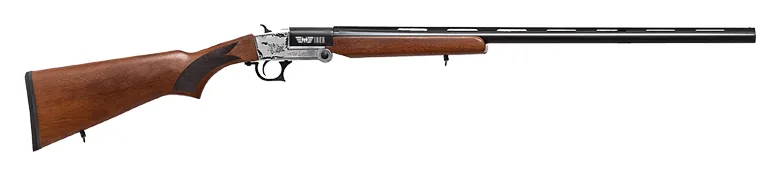
IB-SB01
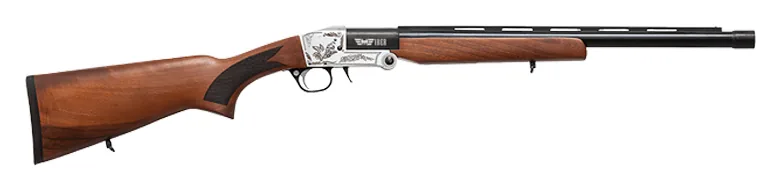
IB-SB02
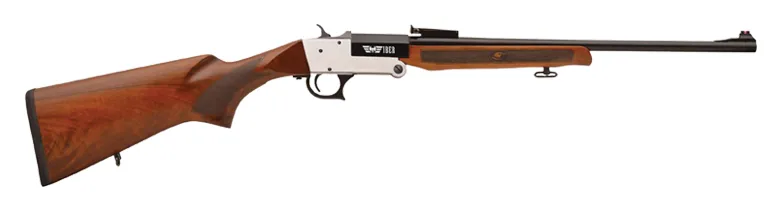
IB-SB03
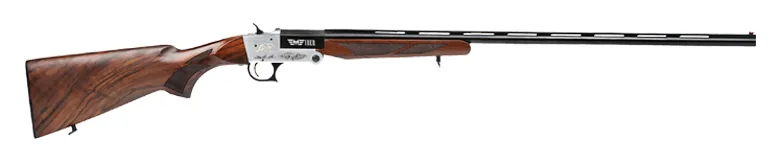
IB-SB04
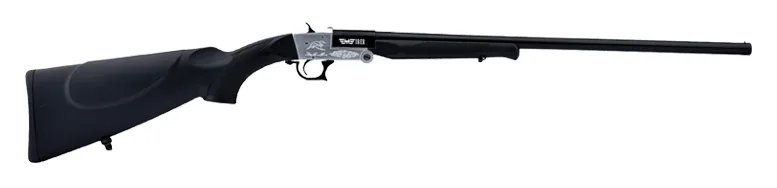
IB-SB05
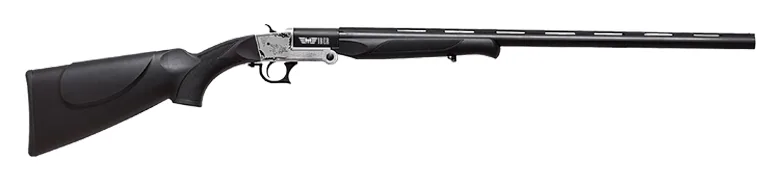
IB-SB06
Single Barrel Shotgun Specifications (IB-SB Series)
| Specification | IB-SB series |
|---|---|
| Action | Break-action, single shot (one shell, no magazine) |
| Gauge | 12 gauge |
| Chamber | 76 mm (3″); also fires 70 mm (2¾”) shells |
| Hammer | Exposed hammer, cocked by hand for each shot |
| Shell removal | Extractor (lifts the hull for removal by hand) |
| Barrel | 4140 steel; 47 cm (18.5″), 51 cm (20″), 55 cm (21.7″), 61 cm (24″) |
| Chokes | Mobil-type interchangeable choke tubes; slug configuration available |
| Sighting | Ventilated rib on most models; plain barrel on IB-SB05; rifle-style sights on IB-SB03 |
| Stock | Turkish walnut (SB01 to SB04) or black synthetic (SB05 to SB06) |
| Receiver finish | Silver; engraved on IB-SB01 and IB-SB02 |
| OEM options | Private-label logo, stock type, finish, barrel length per market |
Weight and overall length depend on barrel length and stock; they are listed on the technical sheet supplied with each quotation.

What Is a Single Barrel Shotgun?
A single barrel shotgun is a shotgun with one smoothbore barrel. In everyday use the term means a break-action single shot. The barrel hinges open, you load one shell, close it, cock the exposed hammer and fire, then reopen the action to extract the empty hull. It is the simplest, lightest and most affordable type of shotgun.
- Iber IB-SB series six 12 gauge break-action single shots with exposed hammer and extractor.
- Chamber and chokes 76 mm (3″) chamber, Mobil-type interchangeable choke tubes, slug option.
- Barrels 47 cm (18.5″), 51 cm (20″), 55 cm (21.7″) or 61 cm (24″), 4140 steel.
- Stocks Turkish walnut (IB-SB01 to SB04) or black synthetic (IB-SB05, SB06).
Factory-direct supply
Single Barrel Shotgun Manufacturer in Türkiye
Iber Arms has built shotguns in Beyşehir, Konya, Türkiye’s best-known shotgun-making region, since 2000 and has exported since 2010. Barrels are machined from 4140 steel, the factory runs its own hard-chrome line, and guns are assembled and test-fired in-house before packing.
We supply importers, distributors, licensed dealers and government buyers, not private individuals. We accept orders of any quantity, send samples for evaluation and build private-label versions with your logo, stock choice, finish and barrel length.
Send your market, quantities and preferred configuration through the inquiry form and our export team will reply with the technical sheet and a quotation.
INQUIRY FORM
Single Barrel Shotgun FAQ
Is a single barrel shotgun the same as a single shot shotgun?
Usually, but not always. “Single barrel” counts barrels and “single shot” counts shells. Pumps, semi-autos and lever actions also have one barrel but feed from a magazine. In normal use, “single barrel shotgun” means a break-action single shot that holds one shell and has no magazine, which is what Iber’s IB-SB models are.
How does a break-action single shot shotgun work?
You operate the opening lever and the barrel pivots down on a hinge, exposing the chamber. Insert one shell, close the action until it locks, cock the exposed hammer and pull the trigger. Opening the gun again lets the extractor lift the empty hull so you can remove it and reload. There is no bolt, slide or magazine.
What is the difference between an extractor and an ejector?
An extractor lifts the shell a few millimeters when you open the gun, so you remove it by hand. An ejector uses a spring to throw the fired hull clear. Iber’s single barrel models use extractors, which are simpler, need less maintenance and let you keep your empties. Ejectors are most useful on doubles used for high-volume clay shooting.
Is a 12 gauge single barrel shotgun good for a beginner?
It can be, with the right loads and fit. A single shot teaches deliberate shooting and shows clearly when it is loaded. Because the gun is light, heavy 12 gauge hunting shells kick hard, so start with light 24 to 28 g target loads and make sure the stock length suits the shooter. Some coaches prefer a 20 gauge for smaller beginners.
What is a single barrel shotgun used for?
Common uses are a first or training shotgun, farm and pest control, turkey and small-game hunting, slug shooting in shotgun-only deer areas, informal trap-style clays, and a backup or vehicle gun for rural users. Its low cost, light weight and simple mechanism make it a practical tool rather than a high-volume competition gun.
Can you hunt turkey or shoot slugs with a single barrel shotgun?
Yes. For turkey, fit a tight choke tube and use turkey loads within your patterned range. For slugs, a cylinder or improved-cylinder choke is the usual choice, following the slug maker’s guidance; Iber’s IB-SB03 has rifle-style sights for this role. The 76 mm (3″) chamber accepts both 70 mm and 76 mm shells.
Are exposed-hammer single shot shotguns safe?
Yes, when handled correctly. The hammer shows whether the gun is cocked. Many designs use a rebounding hammer or transfer bar, and some add a manual safety; check the manual for the exact model. Cock only when ready to shoot, and if you decide not to fire, open the action and remove the shell instead of lowering the hammer on a live round.
Can I change barrels or gauges on a single shot shotgun?
Some single shot designs offer interchangeable barrels, but it depends on the model and requires factory-fitted barrels. Iber’s IB-SB models are cataloged in 12 gauge with barrel lengths of 47, 51, 55 or 61 cm chosen at the time of order. Never fit or modify barrels yourself; barrel length is also regulated in many countries.
Are single barrel shotguns legal in Australia, the UK and Canada?
Generally yes, with a license. In Australia break-action single and double-barrel shotguns are Category A. In Great Britain a single barrel with a barrel of at least 24″ usually needs a Section 2 shotgun certificate. In Canada break-action shotguns of normal length are generally non-restricted. This is general information; verify with your local authority.
Does Iber Arms sell single barrel shotguns to private buyers?
No. Iber Arms is a B2B manufacturer and supplies importers, distributors, licensed dealers and government buyers only. If you are an individual, ask a licensed dealer or importer in your country; they can order through their supply chain and handle the legal transfer.
Can we order single barrel shotguns under our own brand?
Yes. We build OEM and private-label versions with your logo and a choice of walnut or synthetic stock, receiver finish and barrel length for your market. Send the configuration you need through the inquiry form and our export team will confirm options and send the technical sheet.
Do you send samples and accept small orders?
Yes. Samples are available so you can evaluate fit, finish and function before committing, subject to the import and export permits your country requires, and we accept orders of any quantity. Ask our export team which proof marks and certificates are available for your destination country.
How Single Barrel Shotguns Work, with Uses and Buying Advice
Single barrel shotguns at a glance
- What it is a shotgun with one smoothbore barrel; in common use, a break-action single shot that holds one shell.
- How it loads open the hinged barrel, insert a shell, close, cock the hammer, fire, reopen to extract.
- Why people buy one low cost, light weight, few moving parts, easy to learn and maintain.
- Main limits one shot before reloading, sharper recoil in a light gun, slow follow-up shots.
- Iber IB-SB series six 12 gauge models, 76 mm (3″) chamber, exposed hammer, extractor, 47 to 61 cm (18.5 to 24″) barrels, walnut or synthetic stocks.
- Who we supply importers, distributors and licensed dealers (B2B only).
Is a single barrel shotgun the same as a single shot shotgun?
Not always. “Single barrel” describes how many barrels the gun has; “single shot” describes how many shells it holds. Every pump-action, semi-automatic and lever-action shotgun also has one barrel, but it feeds from a magazine. When hunters and dealers say “single barrel shotgun”, though, they nearly always mean a break-action single shot with one barrel, one shell and no magazine. Iber’s IB-SB models are exactly that.
Two related terms add to the confusion. A single-shot rifle has a rifled bore and fires bullets, while a shotgun has a smooth bore and fires shells loaded with shot or a slug. And in the UK, South Africa and South Asia, “12 bore” simply means 12 gauge, so a “12 bore single barrel gun” is the same firearm described on this page.
| Term | What it means | Examples |
|---|---|---|
| Single barrel | One barrel; may be a single shot or a repeater | Break-action single shot, pump, semi-auto, lever action |
| Single shot | Holds one shell; reload after every shot | Break-action single barrel such as the IB-SB series |
| Double barrel | Two barrels; two shots before reloading | Over/under, side-by-side |
| Repeater | One barrel fed from a tube or box magazine | Pump, semi-auto, lever action |
How does a break-action single shot shotgun work?
A break-action shotgun is hinged just ahead of the trigger guard. When you operate the opening lever, the barrel pivots down on its hinge pin and exposes the chamber. There is no bolt, slide or magazine. The sequence is the same on almost every design.
- Open with the muzzle pointed in a safe direction, operate the opening lever and let the barrel tip down.
- Load place one shell of the correct gauge and length in the chamber.
- Close raise the barrel until the locking bolt engages with a positive click.
- Cock only when you are ready to shoot, draw the exposed hammer fully back with your thumb.
- Fire the trigger releases the hammer, which drives the firing pin into the primer.
- Extract open the action again; the extractor lifts the fired hull so you can remove it and reload.
Because the breech is in plain view and the lockwork is simple, anyone can see at a glance whether a break action is loaded. That is one reason ranges, hunter-education courses and farms favor them.
What is the difference between an extractor and an ejector?
An extractor is a small plate in the breech that lifts the shell rim a few millimeters when the gun is opened, so you pull the hull out by hand. An ejector adds a spring that throws the fired hull clear of the gun. Iber’s IB-SB models use extractors. On a single shot that is usually the sensible choice, because it is simpler, it keeps empties in your hand (useful for reloaders and where spent hulls must be collected), and it removes extra springs and parts that need maintenance. Ejectors matter more on doubles used for high-volume clay shooting.
Exposed hammer, safety and safe handling
The exposed hammer is a visual and tactile indicator. When it is down, the gun is not cocked. Designs differ in the details. Some single shots have no separate safety catch and rely on the uncocked hammer plus an internal rebounding-hammer or transfer-bar system that stops the hammer reaching the firing pin unless the trigger is pulled. Others add a cross-bolt or tang safety. Always read the manual and technical sheet for the exact model, and train new shooters on that design.
With any hammer gun, good practice is to cock only when the target is in view. If you decide not to shoot, open the action and remove the shell rather than lowering the hammer on a loaded chamber. Carry and store the gun open and unloaded, and never treat a lowered hammer as a substitute for muzzle discipline.
A short history of the single barrel shotgun
Smoothbore guns firing shot were used for centuries as muzzle-loading fowling pieces. The modern single barrel shotgun arrived in the 19th century, when hinged breech-loading actions and self-contained cartridges, popularized in France and later refined with centerfire shells, let shooters load at the breech in seconds. By the early 20th century, factories in the United States and Europe were producing inexpensive single-barrel hammer guns in very large numbers, and the single shot became the classic farm, youth and first shotgun.
The basic layout of a hinged barrel, an exposed hammer and an extractor has hardly changed. What has improved is material and finishing, with modern barrel steels, chrome-lined bores, interchangeable choke tubes, 76 mm (3″) chambers and weatherproof synthetic stocks. Today factories in the Beyşehir area of Konya, including ours, build single barrel guns for export alongside over/unders, pumps and semi-autos.
Advantages and disadvantages of a single barrel shotgun
Advantages
- The lowest cost of any shotgun type to build, buy and maintain.
- Light, and usually several centimeters shorter overall than a pump or semi-auto with the same barrel length.
- Few moving parts, so it functions with a wide range of shells.
- Loaded or unloaded status is obvious, which makes it ideal for training.
- Often the least restricted license category (see the legal section).
Disadvantages
- One shot before reloading; follow-up shots are slow.
- A light gun recoils harder with heavy 12 gauge loads.
- With an extractor, empties are removed by hand.
- The hammer must be cocked for each shot, which takes practice.
- Less suited to high-volume clay shooting than an over/under or semi-auto.
What is a single barrel shotgun used for?
First shotgun and training
Instructors like the single shot because it forces deliberate shooting and shows its status at a glance. Stock fit matters more than anything else, and a stock that is too long is the most common reason beginners struggle.
Farm, ranch and pest control
Kept in the barn, workshop or vehicle for vermin and predators. It is simple to clean, cheap enough to keep where it is needed, and synthetic-stocked versions such as the IB-SB05 shrug off rain and dust.
Turkey and small game
With a tight choke tube and turkey loads, a 12 gauge single shot is a capable turkey gun; with an open choke it suits rabbits and walked-up birds. The one-shot limit rewards careful shot selection.
Slugs and shotgun-only deer zones
The IB-SB03 has rifle-style sights for slugs. Where regulations require shotguns rather than rifles for deer, a single shot with sights is a simple, affordable answer.
Trap-style and casual clays
Fine for practice and informal trap-style targets. Dedicated single-barrel trap guns use long 81 to 86 cm (32 to 34″) barrels and high ribs; the IB-SB barrels (47 to 61 cm) are field lengths.
Survival and truck gun
Compact, light and inexpensive, a single shot is a common backup or vehicle gun for rural users. Check transport and storage rules in your jurisdiction.
Should you choose a 12, 20, 28 or .410 single shot?
Gauge is the number of lead balls of the bore’s diameter that weigh one pound, so the smaller the number, the larger the bore. The exception is the .410, which is a bore diameter in inches. Iber’s IB-SB models are cataloged in 12 gauge, the most versatile choice and the shell sold almost everywhere.
| Gauge | Bore diameter | Typical field payload | Recoil in a light single shot | Best suited to |
|---|---|---|---|---|
| 12 gauge | 18.5 mm (0.729″) | 28 to 36 g (1 to 1¼ oz) | Heavy | All-round use, including turkey, waterfowl, slugs and pest control |
| 20 gauge | 15.6 mm (0.615″) | 24 to 28 g (⅞, 1 oz) | Moderate | Upland game, smaller shooters |
| 28 gauge | 14.0 mm (0.550″) | About 21 g (¾ oz) | Light | Small game, skeet |
| .410 bore | 10.4 mm (0.410″) | 14 to 19 g (½, 11/16 oz) | Very light | Small game at short range; demanding for beginners |
A light gun magnifies recoil, so many coaches start smaller shooters on light 24 to 28 g (⅞, 1 oz) 12 gauge target loads rather than heavy hunting shells, or on a 20 gauge. For the smallest bore, see our .410 shotgun guide.
Single shot vs over/under vs pump vs semi-auto
If you are deciding between action types, this table summarizes the practical trade-offs. License categories are general and vary by country.
| Feature | Single shot (break action) | Over/under | Pump action | Semi-auto |
|---|---|---|---|---|
| Shots before reloading | 1 | 2 | Magazine + 1 | Magazine + 1 |
| Moving parts | Fewest | Few | Moderate | Most |
| Weight | Lightest | Medium to heavy | Medium | Medium to heavy |
| Relative cost | Lowest | Medium to high | Low to medium | Medium to high |
| Follow-up speed | Slow | Fast (second barrel) | Fast | Fastest |
| Felt recoil with heavy loads | Sharpest | Moderate | Moderate | Softer (gas-operated) |
| Typical use | First gun, farm, turkey, backup | Clays, upland | All-round, utility | Waterfowl, clays, high volume |
| Australia (general) | Category A | Category A | Category C or D | Category C or D |
| Great Britain (general) | Section 2 if barrel is 24″ or longer | Section 2 if barrels are 24″ or longer | Section 2 only as 2+1 with a 24″ barrel | Section 2 only as 2+1 with a 24″ barrel |
| Iber range | IB-SB series | IB-OU series | Pump-action range | Semi-auto range |
Iber IB-SB single barrel models compared
All six models share the same core, with a 12 gauge break action, 76 mm (3″) chamber, exposed hammer, extractor, a 4140 steel barrel in 47, 51, 55 or 61 cm (18.5, 20, 21.7 or 24″), and Mobil-type interchangeable chokes with a slug option. They differ in stock, finish and sighting.
| Model | Stock | Receiver | Sighting | Typical role |
|---|---|---|---|---|
| IB-SB01 | Turkish walnut | Silver, engraved | Ventilated rib | Traditional field gun |
| IB-SB02 | Turkish walnut | Silver, engraved | Ventilated rib | Field and upland gun |
| IB-SB03 | Turkish walnut | Silver | Rifle-style sights | Slugs, turkey, shotgun-only deer zones |
| IB-SB04 | Turkish walnut | Silver | Ventilated rib | Everyday field and farm gun |
| IB-SB05 | Black synthetic | Silver | Plain barrel | Weather-resistant utility gun |
| IB-SB06 | Black synthetic stock and forend | Silver | Ventilated rib | All-weather field and truck gun |
How to choose a single barrel shotgun, with a buyer checklist
- Gauge and chamber 12 gauge with a 76 mm (3″) chamber covers everything from light 70 mm target loads to magnum turkey shells.
- Barrel length 47 to 51 cm (18.5 to 20″) handles well in cover, vehicles and farm buildings; 55 to 61 cm (21.7 to 24″) gives a longer sight plane and a smoother swing. In Great Britain, 24″ is the minimum for a Section 2 shotgun certificate.
- Chokes interchangeable tubes turn one gun into a slug gun, an upland gun and a turkey gun.
- Stock material Turkish walnut for a classic look and feel; synthetic for rain, mud and hard use.
- Fit length of pull and comb height matter more than any feature. A gun that fits feels softer and hits more.
- Sights a ventilated rib for moving targets; rifle-style sights, as on the IB-SB03, for slugs.
- Safety design understand how the hammer and any safety catch work before buying for a beginner.
- Dealer support ask the supplier about spare firing pins, extractors and springs, and a manual in your market’s language.
Ammunition and chokes for a 12 gauge single shot
A 76 mm (3″) chamber accepts both 70 mm (2¾”) and 76 mm (3″) 12 gauge shells. Never fire a shell longer than the chamber length marked on the barrel, and never mix gauges in your pocket. A 20 gauge shell can slide down a 12 gauge barrel and lodge there, and a 12 gauge shell fired behind it can burst the barrel.
| Choke | Typical use with a single shot |
|---|---|
| Cylinder | Slugs and very close shots |
| Improved cylinder | Rabbits and walked-up birds at close range; common choice for Foster-type slugs |
| Modified | General hunting and pest control at medium range |
| Improved modified / full | Turkey, pass shooting and trap-style targets |
Choke tubes are part of the barrel’s pressure system, so screw them in fully, never fire a choke-threaded barrel without a tube installed, and use only tubes marked as suitable if you shoot steel shot. For slugs, follow the slug and choke makers’ guidance; most shooters use cylinder or improved cylinder. The choke set supplied with an order is confirmed on the technical sheet.
Maintenance and care
- After each outing, open the action, wipe the breech face and run a cleaning rod through the bore from the breech end.
- Remove the choke tube, clean the threads and apply a light film of choke grease before refitting it.
- Put a drop of oil on the hinge pin, locking bolt and extractor, and wipe off the excess so it does not soak into a walnut stock.
- Check that the extractor moves freely and that the action closes firmly without play. A loose hinge is a job for a gunsmith.
- Wipe exposed metal with a lightly oiled cloth; let a wet walnut stock dry at room temperature, never next to a heater.
- Store the gun unloaded in a locked cabinet as local law requires. If you want to release hammer spring tension, dry-fire only on a snap cap.
Single barrel shotgun laws by country (general information)
Break-action single barrel shotguns usually sit in the least restricted category a country offers, but a license is still required almost everywhere. The summary below is general information as of October 2026, not legal advice. Verify with the competent authority before buying, importing or exporting.
| Country | How single barrel break actions are usually treated | Points to check |
|---|---|---|
| United States | Ordinary long gun when the barrel is at least 18″ and overall length at least 26″; every IB-SB barrel (47 to 61 cm, 18.5 to 24″) is above 18″. | Imports need a licensed importer and an ATF Form 6 permit; state and local rules vary. |
| Canada | Break-action shotguns of normal length are generally non-restricted; buyers need a PAL. | Each model’s classification is set by the RCMP (Firearms Reference Table); confirm before import. |
| Australia | Category A (single and double-barrel shotguns that are not pump-action or self-loading). | License, genuine reason and, in most states, a permit to acquire. |
| United Kingdom (Great Britain) | Section 2 shotgun certificate when the barrel is at least 24″ and there is no magazine. | Only the 61 cm (24″) IB-SB barrel reaches the minimum; confirm the measured length. Shorter barrels need a Section 1 firearm certificate. |
| South Africa | Licensed under the Firearms Control Act 60 of 2000; a shotgun that is not semi-automatic can be licensed for self-defense (s13) as well as for hunting or sport shooting. | Competency certificate required; imports need a SAPS import permit. |
Iber Arms supplies licensed importers, distributors and dealers only. Consumers should buy through a licensed dealer in their own country, who handles the transfer and paperwork.
OEM, private label and export supply
The IB-SB series is built at our factory in Beyşehir, Konya, where we have made shotguns since 2000 and exported since 2010. Barrels are machined from 4140 steel, the plant runs its own hard-chrome line, and stocks are prepared and finished in-house before assembly and test-firing. See how our shotguns are made.
- Private label your brand and logo on the gun and packaging.
- Configuration walnut or synthetic stock, receiver finish and barrel length per market, for example 61 cm (24″) for British Section 2 buyers.
- Samples evaluation samples before a first order.
- Quantities orders of any quantity.
- Documents ask our export team which proof marks and certificates are available for your market.
Planning a range? Read our guides to private label shotguns, importing shotguns from Turkey and whether Turkish shotguns are good, or compare Iber’s other break-action line, the over/under shotguns, and our lever action shotguns.
Request the IB-SB technical sheet and quotation
Tell us your country, quantities and preferred configuration and our export team will reply with specifications, photos and pricing. Send your inquiry, browse our catalogs or email info@iberarms.com.
Reviewed by the Iber Arms technical & export team, October 2026.
MOST EXPORTED FIREARMS
OTHER FIREARMS MODELS
Find below the firearms models that we manufacture. If you need any custom firearms, do not hesitate to inform us.
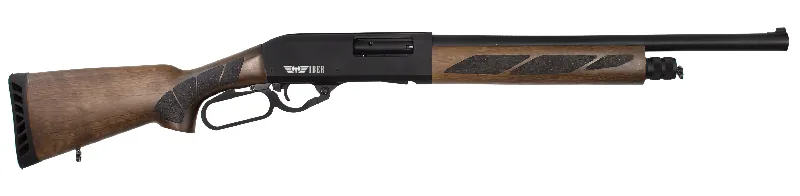
LEVER ACTION
Magazine Fed