Phone number
Email address
Types of Shotguns Explained
- Firearms Manufacturer
- Types of Shotguns
One model from each shotgun family
Each model below represents a different action or layout we build in Beyşehir. Open a model for its specifications, or use the family pages linked further down for the complete range.
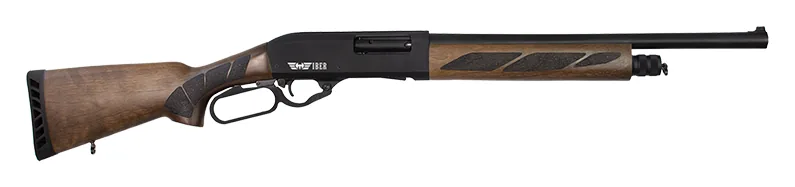
IB-L01
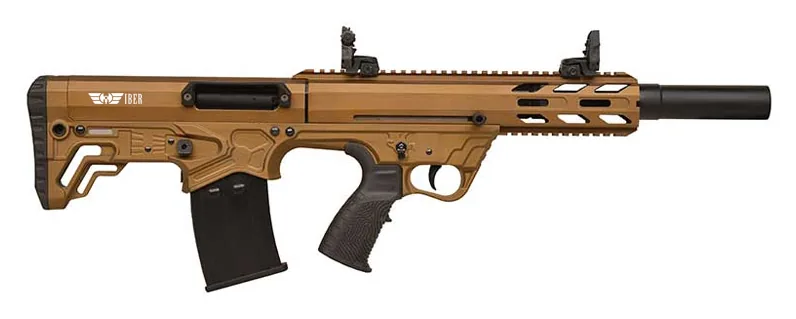
IB-BP02
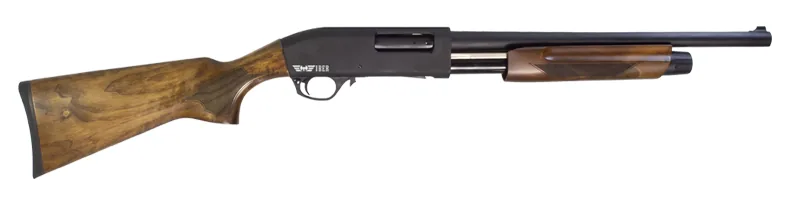
IB-PA03
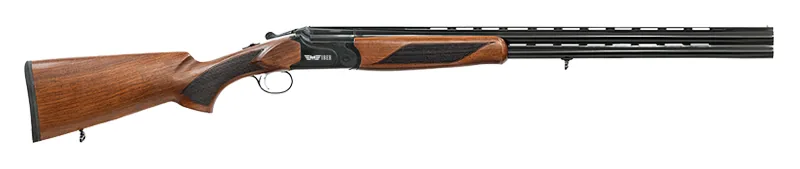
IB-OU04
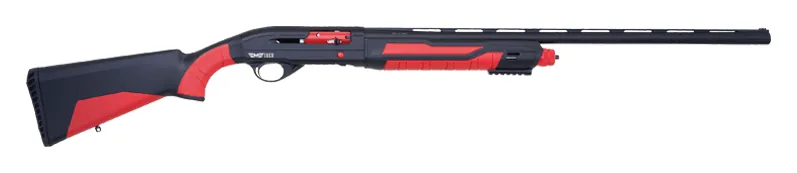
IB-SA05
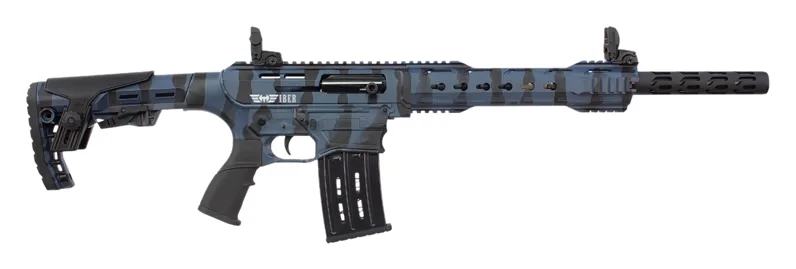
IB-MF06
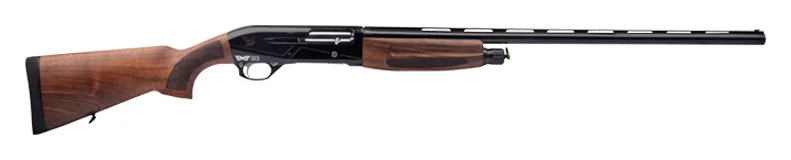
IB-KS02
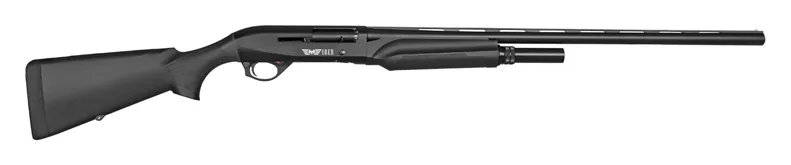
IB-ADA2-03
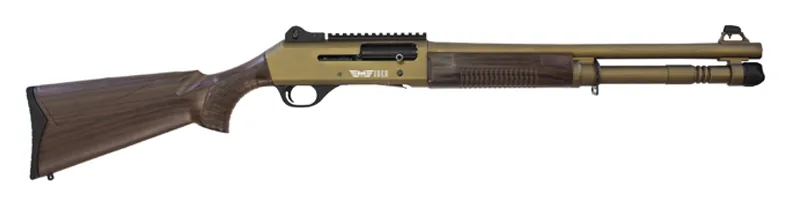
IB-ADA4-04

What are the main types of shotguns?
The main types of shotguns are defined by their action, namely break-action (single-barrel, over/under and side-by-side), pump-action, semi-automatic (gas-operated or inertia-driven), lever-action and bolt-action. Shotguns are then further described by layout, feed system, barrel length and gauge. Each type balances speed, capacity, weight, cost and legal classification differently.
- Most versatile gauge 12 gauge; 20 gauge for lighter recoil
- Fastest follow-up shots semi-automatics
- Simplest and most reliable with any load break-actions and pumps
- Most compact for its barrel length bullpups
- Fastest reloads box-magazine shotguns
Below you will find a master comparison table, each action explained, barrels and chokes, a gauge table and the best type for each use. The guide is written by the technical team at Iber Arms, a shotgun manufacturer in Beyşehir, Türkiye.
Choosing a type
How do I choose the right type of shotgun?
Before choosing between shotgun types, answer the five questions below.
- What will you use it for? Clays and upland hunting favor break-actions; waterfowl favors semi-autos; defense and duty use favor pumps, semi-autos and magazine-fed guns.
- How many shots do you need? One or two (break-action) or a magazine (pump, semi-auto, lever)?
- How much recoil can you tolerate? Gas semi-autos and 20 gauge guns kick less than light inertia guns and 12 gauge break-actions.
- What does your license allow? In many countries the action type and capacity decide the license category.
- How much maintenance will you accept? Break-actions, pumps and inertia guns need the least cleaning.
Importers and dealers can use the inquiry form to ask our export team which Iber models suit their market.
Ask our export team
Frequently asked questions about types of shotguns
What are the main types of shotguns?
The main types are break-action (single-barrel, over/under and side-by-side), pump-action, semi-automatic (gas-operated or inertia-driven), lever-action and bolt-action shotguns. Less common types include lever-release and revolving-cylinder designs. Bullpup and box-magazine shotguns are layouts or feed systems that combine with these actions, usually semi-auto or pump.
How many types of shotgun actions are there?
There are six common action types, namely break-action, pump-action, gas-operated semi-auto, inertia-driven semi-auto, lever-action and bolt-action. Lever-release and revolving-cylinder actions are rarer additions. Break-actions are further divided by barrel arrangement into single-barrel, over/under and side-by-side guns.
What is the most common type of shotgun?
Pump-action and semi-automatic 12-gauge shotguns are among the most common types, especially in North America, because they combine capacity, versatility and moderate cost. In Europe and in clay sports worldwide, break-action over/unders are the most common choice. Which type is most popular in a market depends heavily on local hunting traditions and licensing rules.
What is the difference between a gas and an inertia semi-auto shotgun?
A gas-operated shotgun bleeds gas from the barrel to drive a piston that cycles the action, which softens felt recoil but adds fouling. An inertia-driven shotgun uses recoil to compress a spring in the bolt, so it stays cleaner and is often lighter, but it transmits more recoil and needs adequate loads to cycle reliably.
Which type of shotgun is best for beginners?
A pump-action or single-barrel break-action in 20 gauge or 12 gauge is the usual starting point. Both are simple, affordable and easy to check for safety. A gas semi-auto is a good choice for recoil-sensitive shooters. Whatever you choose, fit matters. The stock length should suit your build, and proper training is essential.
What is the difference between an over/under and a side-by-side shotgun?
Both are two-barrel break-actions. On an over/under the barrels are stacked vertically, giving a narrow sight plane that most clay shooters prefer. On a side-by-side the barrels sit next to each other, the traditional layout for game shooting. Over/unders are generally more popular today; side-by-sides are valued for their handling and tradition.
What gauge shotgun should I choose?
12 gauge is the most versatile, with the widest choice of shells for hunting, clays and defense. 20 gauge kicks less and weighs less, making it a good choice for upland hunting and smaller shooters. 28 gauge and .410 bore are specialist small-bore options for skeet, small game and pest control.
Is .410 a gauge?
Strictly, no. The .410 is a bore size measured in inches, unlike gauges, which are based on the number of bore-sized lead balls per pound. It is still sold alongside gauges, and in continental Europe it is often called 36 gauge. It is the smallest common shotgun bore and has very light recoil.
What does 5+1 mean on a shotgun?
It means the magazine holds five shells and one more can be carried in the chamber, for six in total. Manufacturers offer capacities such as 2+1, 4+1 and 5+1 because many countries limit magazine capacity for hunting or for certain license categories.
Is a bullpup a separate type of shotgun action?
No. Bullpup describes a layout, not an action. The action and magazine sit behind the trigger to shorten the gun without shortening the barrel. Bullpup shotguns can be pump-action or semi-automatic, and many use box magazines.
Which shotgun types does Iber Arms manufacture?
We build single-barrel, over/under, pump, double-barrel pump, gas-operated and inertia-driven semi-auto, lever-action, lever-release, revolving-cylinder, bullpup and magazine-fed shotguns, mainly in 12 gauge with 20 gauge, 28 gauge and .410 bore options. We do not build break-action side-by-sides or bolt-action shotguns.
Can importers order samples of different shotgun types?
Yes. Importers, distributors and dealers can request samples of several types and configurations to evaluate before ordering, subject to the usual export and import permits. Send the models you want to test through our inquiry form or to info@iberarms.com.
Shotgun types explained in detail
Shotgun types compared in one master table
The table below compares every common shotgun action, plus the two layouts (bullpup and box-magazine) that are often listed as “types”. Capacities follow the usual magazine+chamber notation, in which 5+1 means five shells in the magazine and one in the chamber.
| Type | How it works | Typical capacity | Best suited to | Trade-offs | Iber page |
|---|---|---|---|---|---|
| Break-action single-barrel | The barrel hinges down to load one shell by hand; an exposed or internal hammer fires it. | 1 | First guns, farm and ranch, trap, slug hunting | Slow follow-up shot; light models kick | Single-barrel |
| Over/under (O/U) | Two barrels stacked vertically on a break-action, usually with a single selective trigger. | 2 | Sporting clays, trap, skeet, upland hunting | Only two shots; heavier and costlier than a single | Over/under |
| Side-by-side (SxS) | Two barrels mounted next to each other on a break-action, with double or single triggers. | 2 | Traditional upland and driven-game shooting, cowboy action | Wide sight picture; quality doubles are costly to regulate | Not built by Iber |
| Pump-action | Sliding the forend back and forward ejects the empty shell and chambers the next one. | Typically 4+1 to 7+1 (tube) | Hunting, home defense, law enforcement, all-round use | Shooter must cycle it; short-stroking under stress | Pump-action |
| Gas-operated semi-auto | Gas tapped from the barrel drives a piston that cycles the bolt after each shot. | 2+1 to 10+1 | Waterfowl, clays, tactical use; softer felt recoil | More parts to clean; usually heavier | Gas semi-auto |
| Inertia-driven semi-auto | Recoil compresses a spring inside the bolt; the spring rebounds to unlock and cycle the action. | 2+1 to 10+1 | Upland and field hunting, wet and cold conditions | More felt recoil; needs a firm shoulder and adequate loads | Inertia (Kinetic System) |
| Lever-action | A lever under the grip ejects and chambers each shell, usually from a tube magazine. | 2+1 to 10+1 | Ranch use, cowboy action, markets that restrict pumps and semi-autos | Awkward to cycle when prone; slower to reload | Lever-action |
| Lever-release | A manually operated repeater in which pressing a lever releases the bolt to chamber the next shell. | Varies by market | Markets, notably Australia, where it is licensed differently from semi-autos | Classification varies by jurisdiction; few models | Lever-release |
| Bolt-action | A rifle-style turn bolt is lifted and pulled back by hand to cycle each shell. | Typically 2+1 | Low-cost slug guns, older farm guns | Slowest repeater; rare today | Not built by Iber |
| Revolving-cylinder | A rotating cylinder holds the shells and indexes one in line with the barrel for each shot. | 5 (Iber .410 models) | Small-bore sport and pest control | Bulky cylinder; few gauges | New shotguns (RV01 to RV03) |
| Bullpup (layout) | The action and magazine sit behind the trigger, so a full-length barrel fits in a shorter gun. | 2+1 to 10+1 (box) | Vehicles, close quarters, home defense, law enforcement | Trigger feel; ejection side can bother left-handers | Bullpup |
| Magazine-fed (feed system) | A detachable box magazine replaces the tube; most are gas semi-autos in AR or AK layouts. | 2+1 to 20+1 | Practical shooting, law enforcement, fast reloads | Bulky magazines; reliability depends on magazine quality | Magazine-fed (AR-12) |
Shotgun actions explained
The action is the mechanism that loads, fires and ejects each shell. It decides how fast you can shoot again, how much the gun weighs, how much maintenance it needs and, in many countries, which license you need.
Break-action shotguns in single-barrel, over/under and side-by-side form
A break-action shotgun hinges open just ahead of the trigger. You load shells directly into the chambers, close the gun and fire. There is no magazine, so a single-barrel holds one shell and a double holds two. Break-actions are the simplest shotguns and the easiest to check for safety, and their short receivers help them balance and point naturally. That is why they dominate clay sports and traditional game shooting.
- Single-barrel (single-shot) one barrel, usually with an exposed hammer and an extractor that lifts the empty shell for removal by hand. Light, inexpensive and easy to learn on. Our single-barrel shotguns follow this pattern.
- Over/under two barrels stacked vertically. The narrow sight plane and the choice of two chokes make it the standard clay and upland gun. Ejector models throw the empties clear, while extractor models lift them for removal. See our over/under shotguns.
- Side-by-side two barrels mounted next to each other, the classic “double-barrel” game gun. Iber does not build break-action side-by-sides. Our double-barrel shotguns are a different design, built as pump-action tactical guns with two barrels and two magazine tubes.
Pump-action shotguns
A pump-action (slide-action) shotgun is cycled by pulling the forend back and pushing it forward. The rearward stroke unlocks the bolt and ejects the empty shell; the forward stroke chambers a fresh shell from the magazine, usually a tube under the barrel. Pumps run almost any load, from light target shells to slugs, because the shooter supplies the cycling energy. They are affordable and rugged, and they are among the most widely used repeating shotguns for hunting and police service. The main drawback is that the shooter must cycle the gun firmly every time, because short-stroking under stress causes malfunctions. Browse our pump-action shotguns, or compare lever-action vs pump.
Gas-operated vs inertia-driven semi-automatic shotguns
A semi-automatic (autoloading) shotgun fires one shell per trigger pull and uses the energy of each shot to eject the empty and chamber the next. There are two main operating systems, described below.
- Gas-operated a small amount of gas is bled from the barrel into a cylinder, where it pushes a piston that drives the bolt back. Spreading the recoil impulse over a longer time makes felt recoil softer, which is why gas guns are popular for waterfowl, clays and high-volume shooting. The trade-off is more fouling to clean and a slightly heavier gun. Our gas-operated semi-autos and M4-style ADA 4 guns use this system.
- Inertia-driven the bolt body contains a stiff spring. When the gun recoils, the bolt body’s inertia compresses that spring, and its rebound unlocks the bolt head and cycles the action. No gas enters the receiver, so inertia guns stay cleaner and tend to be lighter, but they transmit more recoil. They also need the gun held firmly against the shoulder and loads with enough energy to cycle. Our Kinetic System inertia shotguns and M2-style ADA 2 field guns work this way.
For a full comparison, read gas vs inertia shotguns.
Lever-action shotguns
A lever-action shotgun is cycled by swinging a lever below the grip down and back up. This ejects the empty shell and chambers the next one from a tube magazine. The design dates back to the 1880s and has had a revival, partly for cowboy action shooting and partly because some licensing systems treat lever-actions more favorably than pumps or semi-autos. Our lever-action shotguns are 12 gauge with capacities from 2+1 to 10+1.
Lever-release shotguns
A lever-release shotgun looks like a semi-automatic, but it is a manual repeater. After each shot, the shooter presses a lever that releases the bolt, which then closes and chambers the next shell. The concept grew in Australia, where action type determines the license category. How lever-release guns are classified differs between states and countries, so buyers must verify locally. See our lever-release shotguns.
Bolt-action shotguns
A bolt-action shotgun uses a rifle-style bolt that the shooter lifts and pulls back to cycle each shell, usually from a small box magazine. Bolt-action shotguns were once common low-cost farm guns and survive mainly as dedicated slug guns. They are the slowest repeaters and are rarely made today; Iber does not build them.
Revolving-cylinder shotguns
A revolving-cylinder shotgun holds its shells in a rotating cylinder, like an oversized revolver. Each trigger cycle brings a fresh chamber in line with the barrel. Our RV01 to RV03 models are .410 bore with a five-shot cylinder and 47 or 51 cm (18.5 or 20″) barrels; see new shotguns and our .410 shotguns guide.
Layouts and feed systems
Some shotguns are described by their layout or feed system rather than their action. These features combine with the actions above.
Bullpup shotguns
A bullpup places the action and magazine behind the trigger, inside the stock. The result is a much shorter overall length for the same barrel length, which helps in vehicles and tight spaces. Bullpups can be pump or semi-auto. The usual criticisms are a heavier trigger pull and, on some designs, ejection that bothers left-handed shooters. Our bullpup shotguns are gas-operated 12 gauge guns with box magazines.
Box-magazine (magazine-fed) shotguns
A magazine-fed shotgun uses a detachable box magazine instead of a fixed tube, so reloading means swapping magazines rather than loading shells one at a time. Most are gas-operated semi-autos in AR-style (“AR-12”) or AK-style layouts, although magazine-fed pumps and levers exist. Our magazine-fed shotguns come in 12 gauge, 20 gauge and .410 bore, and our short-barrel versions are built for authorized military and law-enforcement buyers.
Tube-magazine and double-tube shotguns
The tube magazine under the barrel is still the most common feed system on pumps, semi-autos and lever guns. Variants include extended tubes for tactical use, our horizontal-magazine semi-autos, and twin-tube designs such as our double-barrel pump shotguns (10+2 to 16+2). For an overview of duty configurations, see tactical shotguns.
Barrel length, chokes, chambers and rifling
After the action, the barrel has the biggest influence on how a shotgun handles and patterns. Longer barrels swing more smoothly and give a longer sight plane, while shorter barrels are quicker to maneuver.
| Barrel length | Typical use |
|---|---|
| 47 to 51 cm (18.5 to 20″) | Home defense, security and law enforcement, tactical shotguns. In the US, 18 in is the minimum for a shotgun outside the NFA. |
| 56 to 61 cm (22 to 24″) | Slug and buckshot hunting, turkey, dense cover. 24 in is the UK minimum for a Section 2 shotgun. |
| 66 to 71 cm (26 to 28″) | General hunting, upland birds and waterfowl, making these the most versatile lengths. |
| 76 to 81 cm (30 to 32″) | Trap, sporting clays and long-range waterfowl, where a smooth swing matters most. |
What do shotgun chokes do?
A choke is a slight narrowing at the muzzle that controls how quickly the shot pattern spreads. Most modern shotguns, including ours, use interchangeable screw-in tubes (our guns use Mobil-type tubes) so one gun can cover several uses. Constrictions below are typical 12-gauge values and vary by manufacturer.
| Choke | Typical constriction (12 ga) | Pattern and use |
|---|---|---|
| Cylinder | 0.000 in | Widest pattern; slugs, buckshot and very close targets |
| Improved cylinder | about 0.010 in | Close upland shooting, skeet |
| Modified | about 0.020 in | All-round hunting, waterfowl, sporting clays |
| Improved modified | about 0.025 in | Longer upland and waterfowl shots |
| Full | about 0.035 in | Trap, turkey, long passing shots |
Chamber length
The chamber must be at least as long as the fired shell. Common 12-gauge chamber lengths are 70 mm (2¾”), 76 mm (3″) and 89 mm (3½”). A 76 mm (3″) chamber, standard on Iber shotguns, accepts both 70 mm and 76 mm shells, although very light loads may not cycle some semi-autos reliably.
Smoothbore vs rifled barrels and sights
Almost all shotgun barrels are smoothbore, which suits shot. Dedicated slug guns may use rifled barrels or rifled choke tubes for sabot slugs. Sights range from a simple bead on a ventilated rib (best for moving targets) to rifle sights, ghost-ring sights and Picatinny rails for optics on slug and tactical guns.
Shotgun gauges and bore sizes
A shotgun’s gauge is the number of lead balls, each the diameter of the bore, that together weigh one pound. A smaller number therefore means a larger bore, so a 12 gauge is bigger than a 20 gauge. The .410 is the exception, because it is measured in inches. In continental Europe, and in our own catalog, it is also listed as 36 gauge.
| Gauge | Nominal bore diameter | Common shell lengths | Typical uses | Iber models |
|---|---|---|---|---|
| 10 gauge | 0.775 in (19.7 mm) | 3½” (89 mm) | Geese and large waterfowl; now rare | Not made |
| 12 gauge | 0.729 in (18.5 mm) | 2¾”, 3″, 3½” | Everything from hunting and clays to defense and duty use | Most of our range |
| 16 gauge | 0.662 in (16.8 mm) | 2¾” (70 mm) | Traditional upland hunting | Not made |
| 20 gauge | 0.615 in (15.6 mm) | 2¾”, 3″ | Upland birds, smaller shooters, lighter recoil | IB-MF15 to MF19, IUE-SAS series, over/unders |
| 28 gauge | 0.550 in (14.0 mm) | 2¾” (70 mm) | Skeet, light upland hunting | Over/unders |
| .410 bore (36 gauge) | 0.410 in (10.4 mm) | 2½”, 3″ | Small game, pest control, skeet, very low recoil | IB-MF20, RV01 to RV03, over/unders |
For most buyers, 12 gauge offers the widest choice of ammunition, while 20 gauge gives noticeably less recoil and weight.
Which type of shotgun for which use?
No single type is best for everything. This table shows what most shooters choose for each job.
| Use | Common shotgun types | Typical gauge | Typical barrel |
|---|---|---|---|
| Upland birds | Over/under, side-by-side, inertia semi-auto, pump | 12, 20, 28 | 66 to 71 cm (26 to 28″) |
| Waterfowl | Gas or inertia semi-auto, pump | 12, 20 | 71 to 76 cm (28 to 30″) |
| Trap, skeet, sporting clays | Over/under, gas semi-auto, single-barrel (trap) | 12, 20, 28, .410 | 71 to 81 cm (28 to 32″) |
| Turkey | Pump, semi-auto, over/under | 12, 20 | 56 to 61 cm (22 to 24″) |
| Deer and boar with slugs | Pump, semi-auto, single-barrel with sights | 12, 20 | 51 to 61 cm (20 to 24″) |
| Home defense (where lawful) | Pump, semi-auto, magazine-fed | 12, 20 | 47 to 51 cm (18.5 to 20″) |
| Law enforcement and security | Pump, gas semi-auto, magazine-fed, bullpup | 12 | Short to 51 cm (20″), depending on authorization |
| Practical shooting | Gas semi-auto (tube or box magazine) | 12 | 51 to 61 cm (20 to 24″) |
| Cowboy action | Side-by-side, lever-action, pump | 12 | 47 to 51 cm (18.5 to 20″) |
| Farm, pest control, first gun | Single-barrel, pump, .410 models | 12, 20, .410 | 61 to 71 cm (24 to 28″) |
A short history of shotgun actions
- Before the mid-1800s shotguns were muzzle-loading fowling pieces, loaded with powder and shot from the front.
- Mid-to-late 1800s breech-loading break-actions using self-contained shells took over, and the side-by-side double became the standard sporting gun.
- 1880s, 1890s repeaters arrived. Lever-action designs came first, and the pump-action became a mainstream American shotgun.
- Early 1900s the first commercially successful semi-automatic shotgun, an early recoil-operated design, was produced from around 1902.
- 1930s the over/under gained wide popularity.
- 1960s gas-operated semi-autos became the dominant autoloader design.
- 1970s onward inertia-driven semi-autos became the main alternative to gas guns.
- Since the 1990s box-magazine and bullpup shotguns have moved from niche to mainstream, and Turkish factories now build many of them. Read more about the Turkish shotgun industry.
How action type affects licensing (general information)
Many countries license shotguns by action type, magazine capacity and barrel or overall length. A few examples that buyers often ask about are given below.
- United States a shotgun with a barrel under 18 in or an overall length under 26 in is a short-barreled shotgun under the NFA. Imported shotguns must also meet the “sporting purposes” importability criteria, and some states add feature or magazine limits.
- Canada magazines for semi-automatic shotguns are generally limited to 5 shells, and the RCMP classifies individual models.
- Australia single and double-barrel break-actions are Category A, lever-actions holding 5 rounds or fewer are Category B, and pump and self-loading shotguns are Category C or D.
- United Kingdom a Section 2 shotgun certificate covers guns whose magazine holds no more than 2 cartridges and whose barrels are at least 24 in; anything else needs a Section 1 certificate.
- South Africa a self-defense license excludes semi-automatic shotguns; dedicated hunters and sport shooters are the usual route for semi-autos.
This is general information, not legal advice. Laws change and vary by state and province, so always verify with the competent authority before buying, selling or importing a shotgun.
Shotgun types we manufacture
Iber Arms builds most of the types described on this page at our factory in Beyşehir, Konya. Barrels are 4140 steel with in-house hard-chrome lining, receivers are aluminum, and chambers are 76 mm (3″). The table lists one example model per type; each family page shows the full range and specifications.
| Type | Example models | Gauges | Family page |
|---|---|---|---|
| Break-action single-barrel | IB-SB01 | 12 ga | Single-barrel shotguns |
| Over/under | IB-OU01 | 12, 20, 28 ga, .410 bore (36 gauge) | Over/under shotguns |
| Pump-action | IB-PA01, IEU-PA-15 | 12 ga | Pump-action shotguns |
| Double-barrel pump | IEU-DB-01 | 12 ga | Double-barrel shotguns |
| Gas-operated semi-auto | IB-SA01, IUE-SAS-14 | 12 ga; 12 or 20 ga (IUE-SAS) | Semi-auto shotguns |
| M4-style gas semi-auto | IB-ADA4-01 | 12 ga | ADA 4 (M4-style) |
| Inertia-driven semi-auto | IB-KS01 | 12 ga | Kinetic System (inertia) |
| M2-style inertia field gun | IB-ADA2-01 | 12 ga | ADA 2 (M2-style) |
| Lever-action | IB-L01 | 12 ga | Lever-action shotguns |
| Lever-release | IEU-LR-01 | Specifications on request | Lever-release shotguns |
| Revolving-cylinder | RV01 | .410 bore | New shotguns |
| Bullpup | IB-BP01 | 12 ga | Bullpup shotguns |
| Magazine-fed (AR-12 style) | IB-MF01, IB-MF15, IB-MF20 | 12 ga; 20 ga (MF15 to MF19); .410 bore (MF20) | Magazine-fed shotguns |
| Tube-fed tactical semi-auto | IEU-HS-01 | 12 ga | Horizontal-magazine shotguns |
| Short-barrel (authorized buyers) | IEU-SB-01 | 12 ga | Short-barrel shotguns |
| AK-pattern semi-auto | AK01 | 12 ga | New shotguns |
| Interchangeable-upper semi-auto | IB-CB01 | 12 ga | New shotguns |
We supply importers, distributors, licensed dealers and government buyers, including OEM and private-label shotguns. We do not sell to private individuals; consumers should buy through a licensed dealer in their country.
Need a specific shotgun type for your market?
Tell us the action, gauge, barrel length and capacity you need, and our export team will recommend matching models. Send your inquiry or download our catalogs.
Reviewed by the Iber Arms technical & export team, October 2026.
Shotgun families
Explore our shotgun families
Explore each family below, or tell us the configuration you need (action, gauge, barrel length, capacity, stock and finish) and our export team will quote it.
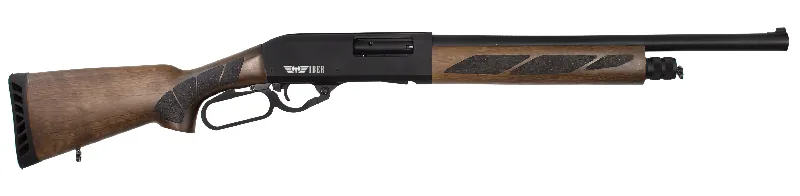
LEVER ACTION
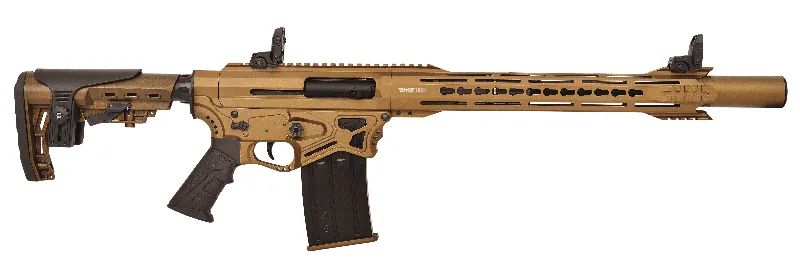
Magazine Fed