Phone number
Email address
Turkish Shotgun Manufacturers
- Iber Arms
- Turkish Shotgun Manufacturers
Turkish shotgun manufacturers are the factories in Türkiye (Turkey) that design and build shotguns for export and for the domestic market. They range from small workshops to large integrated plants. Most are concentrated in Konya province, especially around Beyşehir, with others near Istanbul and İzmir, and many build guns sold under American and European brands.
Key facts about the Turkish shotgun industry
- Main cluster Beyşehir district of Konya province, including Üzümlü
- Roots local gunsmithing tradition; a hunting-gun cooperative was founded in the 1960s
- Export weight Türkiye is consistently among the largest sources of shotguns imported into the United States
- Typical products gas and inertia semi-autos, pumps, over/unders, single-barrels, AR-style magazine-fed guns, bullpups and lever-actions
- Business models factory brands, OEM/private-label suppliers, and foreign brands selling Turkish-made guns
- Buyer’s main task evaluating the individual factory and importer, because quality varies widely
Who makes Turkish shotguns?
Turkish shotguns are made by a large number of independent companies rather than by one or two national champions. Some are household names in export markets and sell under their own brands. Others work mainly as OEM suppliers and build guns that carry an importer’s or retailer’s name. Many factories do both. This guide is written by Iber Arms, a shotgun manufacturer in Beyşehir, Konya. It explains how the industry works. It also gives importers a practical checklist for evaluating a factory.
Why did Türkiye become a major shotgun exporter?
Several factors came together over decades, including a craft tradition, a dense regional cluster, a skilled workforce, local walnut and a cost structure that suits export pricing.
A gunsmithing tradition and a local cooperative
Villages in the Beyşehir district of Konya have made hunting guns for generations. In the 1960s, local gunsmiths formed a hunting-gun cooperative, which organized production and gave the area international recognition. Private factories followed in neighboring Üzümlü and the wider district, and the area grew into Türkiye’s best-known shotgun-making cluster.
The Konya and Beyşehir cluster
Clusters matter in firearms manufacturing. When many factories, parts makers, heat-treatment and surface-finishing shops, stock makers and tooling suppliers sit within a short drive of each other, components move quickly and skills spread. A new model can go from drawing to sample faster than it could in an isolated plant. Other manufacturers operate near Istanbul, İzmir and elsewhere, but Konya remains the center of gravity for shotguns.
Skilled workforce
Many machinists, assemblers and stock makers in the region have grown up around shotgun production. That depth of experience is hard to replicate and is one reason Turkish factories can scale production while keeping hand-finishing steps such as stock fitting.
Turkish walnut
Turkish walnut has long been valued for gunstocks because of its strength and figure. Having the wood available locally helps Turkish makers offer walnut-stocked field guns at prices that would be hard to match elsewhere.
Cost-to-quality balance and flexibility
Modern CNC machining and in-house finishing let established Turkish factories build to tight specifications at a lower cost than many Western European or North American plants. Turkish makers are also known for flexibility, since they accept configuration changes, private-label orders and mixed shipments that larger Western brands rarely offer to small and mid-sized importers.
How is the Turkish shotgun industry organized?
When you look at a Turkish shotgun, you are usually dealing with one of three business models.
| Model | What it means | What you see on the gun |
|---|---|---|
| Factory brand | The manufacturer designs, builds and exports under its own name, usually through importers and distributors in each country. | The factory’s name and model, plus the importer’s marking where the destination country requires it |
| OEM / private-label supplier | The factory builds to a buyer’s specification and the buyer’s brand goes on the gun. The buyer may be an importer, a distributor or a retail chain. | The buyer’s brand; the Turkish factory may not be named at all |
| Foreign brand with Turkish production | An established American or European brand sources some models from a Turkish factory, often under a long-term agreement, and handles marketing, warranty and parts. | The foreign brand’s name, with “Made in Turkey” or a similar origin marking |
Many factories run all three models at once. For buyers, the key point is that the name on the receiver tells you who stands behind the gun commercially, not necessarily who made it.
A large number of factories build shotguns in Konya and elsewhere, some of them almost exclusively as OEM suppliers whose names never appear on a retail shelf. Iber Arms, the author of this guide, is a Beyşehir manufacturer founded in 2000; see about Iber Arms.
Many shotguns sold under American and European brand names are built in Türkiye. In these cases the brand or importer specifies the gun, approves samples and usually handles warranty and spare parts in its home market.
How can you tell where a shotgun was made? Look at the markings. US rules require imported firearms to carry the importer’s name and location and the country of manufacture, and many European markets require recognized proof marks. Turkish-made guns therefore usually show “Turkey” or “Made in Turkey” somewhere on the barrel or receiver, even when the brand is foreign. The factory itself is often not named.
That matters when you judge quality. Two guns from different Turkish factories can differ as much as guns from different countries. A brand that specifies tight tolerances and enforces inspection can deliver a very good Turkish-made gun, while a price-driven order from the same region can produce a poor one. Our separate guide answers the question are Turkish shotguns good? in detail.
What do Turkish shotgun factories make?
Turkish factories cover almost every shotgun category. The most common are listed below.
| Category | Typical Turkish configurations | Iber family |
|---|---|---|
| Gas-operated semi-autos | Walnut or synthetic field and sporting guns, 12 and 20 gauge, plus tactical versions | Semi-auto shotguns |
| Inertia-driven semi-autos | Light field guns and M2-style designs | Kinetic System (inertia) |
| Pump-action | Field, home-defense and compact pistol-grip pumps | Pump-action shotguns |
| Over/under | Boxlock field and sporting guns from 12 gauge to .410 bore | Over/under shotguns |
| Single-barrel | Break-action single-shots for first-time and farm use | Single-barrel shotguns |
| AR-style magazine-fed | Box-magazine gas semi-autos in 12 gauge, 20 gauge and .410 bore | Magazine-fed shotguns |
| M4-style tactical semi-autos | Gas-operated duty and home-defense guns | ADA 4 (M4-style) |
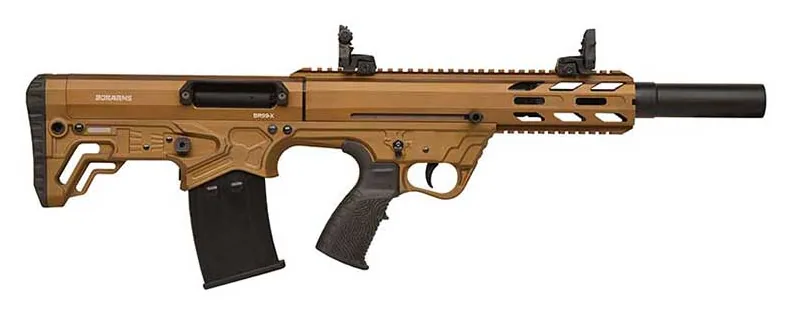
| Bullpups | Gas or pump bullpups, usually with box magazines | Bullpup shotguns |
| Lever-action | 12 gauge and .410 tube-fed or box-fed lever guns | Lever-action shotguns (12 ga) |
| Side-by-side | Traditional doubles, often with walnut stocks | Not built by Iber |
For definitions of each action, see our guide to the types of shotguns.
How importers should evaluate a Turkish shotgun factory
Whether you are a first-time importer or adding a second source, check the points below before you sign.
- Is it really a manufacturer? Ask for the factory address and a video tour, or visit. Trading companies and assemblers are not necessarily bad, but you should know who controls the critical steps.
- Which processes are in-house? Barrel production and chrome lining, receiver machining and finishing, stock making, assembly and test-firing. The more of these a factory controls, the more consistent the result tends to be.
- Barrel steel and bore treatment. Ask for the steel grade, whether bores are chrome-lined and the chamber length.
- Proof marks for your market. Confirm which proof marks or certificates the guns can carry and whether they are accepted in your country.
- Function testing and inspection. Ask what is checked before packing and whether every gun is test-fired.
- Samples. Test samples yourself with the loads your customers use, from light target shells to heavy loads and slugs.
- Batch consistency. Compare production guns with the approved samples. Agree in writing how specification changes are handled.
- Spare parts and magazines. Ask for parts lists, exploded diagrams and how quickly spares can ship. Parts support is what your dealers will judge you on.
- Documentation. Owner’s manuals in your language, specification sheets and complete export documents.
- Export experience. Ask which countries the factory already ships to and how it handles export authorizations.
- Configuration flexibility. Capacities, barrel lengths, finishes and private-label marking for your market.
- Warranty arrangements. In most markets the importer handles consumer warranty, so agree how the factory supports you with parts and replacements.
What drives the price of a Turkish shotgun?
Importers often ask why quotes for apparently similar guns differ so much between Turkish factories. The answer is usually in the specification. The main cost drivers are listed below.
- Action and complexity a single-barrel break-action has far fewer parts than a gas semi-auto or a bullpup.
- Barrel steel grade, chrome lining, length, ventilated rib and the number of choke tubes supplied.
- Receiver aluminum alloy grade, machining and the type of finish (paint, anodizing or other coatings).
- Stock synthetic versus walnut, and the grade and finish of the wood.
- Magazines and accessories the number of magazines per gun, sights, rails, slings and cases.
- Private-label work logo marking, custom colors and market-specific capacities.
- Compliance proof marks, certificates and documentation required by the destination country.
- Order structure quantity per configuration and the agreed delivery terms.
When you compare quotes, compare like with like. Ask every factory for a written specification of each model rather than comparing model names and prices alone.
Turkish factories compared with other sourcing options
For many importers the real choice is between a Turkish factory and a long-established Western European or American brand. The differences are mostly structural, as the comparison below shows.
| Factor | Established Turkish factories | Large Western brands |
|---|---|---|
| Price tier | Mainly value to upper mid-range | Mainly mid-range to premium |
| Configuration changes | Commonly accepted, including small runs | Usually limited to catalog models |
| Private label | Widely offered | Rarely offered |
| Brand recognition | Growing; often depends on the importer’s brand | Strong, built over decades |
| After-sales support | Usually organized by the importer, with parts from the factory | Often a national service network |
Neither route is automatically better. The right supplier is the one whose quality, flexibility and support match your market.
Basics of exporting and importing Turkish shotguns
Every shipment involves two sets of permissions, namely the Turkish export authorization, which the manufacturer obtains, and the import authorization in the destination country, which the importer obtains. Factories typically need the buyer’s import permit and end-user documentation before they can apply for export approval.
- United States the importer needs a Type 08 or 11 FFL and an approved ATF Form 6 import permit. Imported shotguns must meet the “sporting purposes” importability criteria, and semi-automatic shotguns assembled with imported parts fall under the 18 U.S.C. 922(r) parts-count rules. State laws add their own limits.
- Canada import permits are required, and the RCMP classification of each model must be checked in the Firearms Reference Table.
- Australia import permits and state licensing categories apply, and action type and capacity determine the category.
- South Africa a SAPS import permit is required under the Firearms Control Act 60 of 2000.
Our step-by-step guide on how to import shotguns from Turkey covers documents, shipping and common pitfalls.
This section is general information, not legal advice. Rules change, so confirm every requirement with the competent authorities and a qualified customs or firearms attorney before importing.
Where Iber Arms fits
Iber Arms (also known as Iber Hunt) was founded in 2000 in Beyşehir, Konya, and has exported since 2010. We have more than 150 employees, build more than 100 models and configurations across about 15 families, and have completed more than 2,800 export shipments. Our 4140 steel barrels are hard-chrome lined on our own chrome line. Receivers and stocks are finished in-house, and guns are assembled and test-fired at our factory. Our factory videos show each step.
We sell only to importers, distributors, licensed dealers and government buyers, under our own brand or as OEM and private-label shotguns. Samples are available for evaluation, and we quote orders of any quantity.
Evaluating Turkish suppliers?
Put us through the checklist above. Ask for specifications, samples and a factory video call. Send your inquiry or download our catalogs.
Reviewed by the Iber Arms technical & export team, October 2026.
Frequently asked questions about Turkish shotgun manufacturers
Who makes Turkish shotguns?
Turkish shotguns are made by many independent factories, most of them in Konya province around Beyşehir, with others near Istanbul and İzmir. Some export under their own brands. Others build guns for American and European brands and importers, which put their own names on the receiver. Many factories do both.
What is the best Turkish shotgun brand?
There is no single best brand, because quality depends on the specific factory, model, price tier and importer. A well-specified gun from an established factory, backed by an importer that stocks parts and handles warranty, is a better buy than a famous name with no local support. Compare samples, proof marks, parts availability and independent owner feedback.
Are Turkish made shotguns any good?
Many are very good, and several major American and European brands sell Turkish-made models. Quality varies between factories and price tiers, and most complaints concern the cheapest guns or poor importer support. Read our guide Are Turkish shotguns good? for common problem areas and how to check a gun.
Who are some famous Turkish gun manufacturers?
Turkish shotguns are made by a large number of independent companies rather than by one or two national champions. Some sell under their own brands, others work mainly as OEM suppliers for importers and retailers, and many do both. Iber Arms is a Beyşehir manufacturer founded in 2000. Because quality varies widely, buyers should evaluate the individual factory rather than rely on a name.
Where are most Turkish shotguns made?
Most are made in the Beyşehir district of Konya province in central Türkiye, including the town of Üzümlü. The area’s hunting-gun tradition, a local cooperative founded in the 1960s, and a dense network of factories and parts suppliers made it the country’s best-known shotgun-making cluster.
Which American brands sell Turkish-made shotguns?
Several do. Many shotguns sold under American and European brand names are built in Türkiye, and many importers offer Turkish-built guns. Check the origin marking on the gun, because US rules require imported firearms to show the importer and the country of manufacture.
Are there Turkish shotgun brands to avoid?
Rather than blacklisting names, avoid guns with red flags such as no identifiable importer, no spare parts or magazines in your country, no warranty contact, missing proof marks required in your market, poor fit and finish, or prices far below comparable models. These warning signs predict problems better than country of origin.
How do I import shotguns from a Turkish manufacturer?
You need an import license and permit in your own country, such as a Type 08/11 FFL and ATF Form 6 in the United States. The Turkish manufacturer then obtains the export authorization using your import documents and end-user information. See our guide on how to import shotguns from Turkey.
Can private individuals buy directly from Turkish shotgun factories?
Generally no. Turkish factories export to licensed businesses and authorized government buyers, and export authorizations are tied to licensed importers. Private buyers should purchase Turkish-made shotguns from a licensed dealer in their own country. Iber Arms, for example, sells only to importers, distributors, dealers and government buyers.
What country makes the best shotguns?
Italy is widely regarded as the benchmark for premium over/unders and semi-autos, while the United States is known for pump-actions, and Belgium, Germany, Spain and the UK have long gunmaking traditions. Türkiye has become a leading source of value and mid-range shotguns. The best gun for a buyer depends on budget, use and local support.
Why Choose Iber Arms as Your Turkish Shotgun Manufacturer
Why importers source from Iber Arms
Iber Arms has built shotguns in Beyşehir, Konya, since 2000 and exported since 2010, with more than 2,800 export shipments completed. Barrels are 4140 steel, hard-chrome lined on our own line, and every family is assembled and test-fired in our factory.
We work only with professional buyers, meaning importers, distributors, licensed dealers and government agencies. Choose from more than 100 models or order a private-label configuration with your logo, finish, stock, barrel length and capacity.
Samples are available for evaluation, and we quote orders of any quantity. Tell us your market and our export team will recommend suitable configurations.
INQUIRY FORM
Shotguns Made in Türkiye
Explore more shotgun models
Browse the shotgun families we build in our Beyşehir factory, or send us an inquiry for the full catalogue and wholesale pricing.
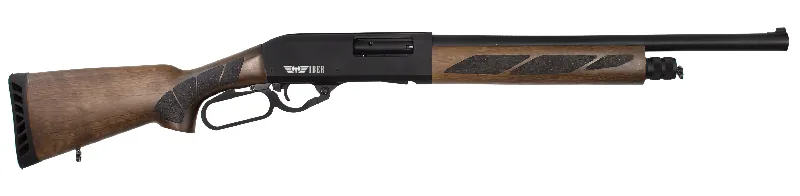
LEVER ACTION
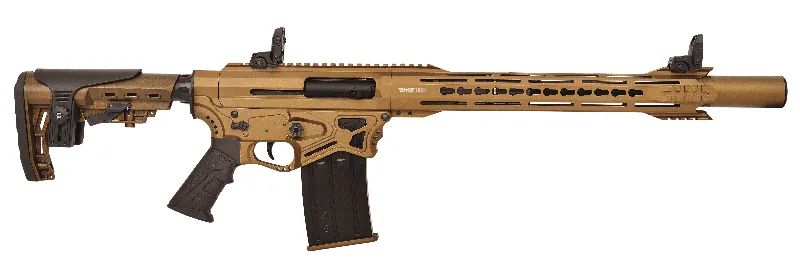
Magazine Fed