Phone number
Email address
Are Turkish Shotguns Good?
- Iber Arms
- Are Turkish Shotguns Good?
Yes, many Turkish shotguns are good, reliable guns. But quality varies widely by factory, price tier and importer, more than it does by country of origin. Established Turkish factories build field, sporting and tactical shotguns that are sold under well-known brand names. Most complaints involve the cheapest guns, weak parts support or poor importer service.
The short answer
- Are Turkish shotguns good? Many are. Several major American and European brands sell Turkish-made models.
- Why the mixed reputation? Türkiye produces guns at every price point, and the cheapest ones generate most of the complaints.
- Typical weak points on budget guns firing pins and doubling on cheap doubles, light-load cycling on inertia guns, magazines, finish wear
- What decides quality materials, heat treatment, bore treatment, fitting, test-firing and inspection at the factory
- What decides ownership experience the importer’s parts stock and warranty service
- Who wrote this the technical and export team at Iber Arms, a shotgun manufacturer in Beyşehir, Türkiye
Why does Turkish shotgun quality vary so much?
Türkiye has a large number of shotgun factories, from small assembly workshops to integrated plants that make their own barrels, receivers and stocks. Their output covers every price point. That is why you can read glowing reviews of one Turkish semi-auto and horror stories about another. Four factors explain most of the difference.
- The factory itself. Plants that control barrel production and chrome lining, heat treatment, machining, finishing, assembly and test-firing tend to produce more consistent guns than assemblers that buy most parts from outside suppliers.
- The specification the buyer orders. Turkish factories build to order. An importer can specify better steel, more inspection and more spare parts, or it can order to the lowest possible price. Both can come out of the same region, sometimes the same factory.
- Inspection and sampling. How many guns are function-tested, what is measured and how batches are released all affect how many faulty guns reach a dealer.
- The importer’s support. Even a well-made gun becomes a bad experience if nobody in your country stocks firing pins, springs or magazines, or honors the warranty.
For background on how the industry is organized, read our guide to Turkish shotgun manufacturers.
Are Turkish shotguns reliable? The problems buyers report
Most Turkish shotguns from established factories run reliably with sensible maintenance. The problems below are the ones owners, reviewers and dealers report most often, mostly about entry-level guns. None of them is unique to Turkish shotguns. They are the classic weak points of inexpensive shotguns from any country.
| Problem | Where it is usually reported | Typical root cause | What to check |
|---|---|---|---|
| Broken firing pins or doubling (both barrels firing at once) | Budget over/unders and side-by-sides | Firing pins or sears that are poorly heat-treated, poorly fitted or worn | Inspect the trigger group; test-fire both barrels repeatedly; ask how firing pins are hardened and whether spares are stocked |
| Failure to cycle light loads | Inertia-driven semi-autos, and some gas guns when new | Stiff new springs, very light target loads, a loose shoulder mount or a dry action | Break the gun in with standard loads, hold it firmly, and clean and lubricate it as the manual specifies |
| Stoppages in gas guns | Gas-operated semi-autos | Fouled gas ports or piston, worn seals, or load-specific parts fitted the wrong way | Clean the gas system regularly; check seals; follow the manual for heavy and light loads |
| Feeding problems from box magazines | AR-style magazine-fed shotguns | Feed-lip geometry, weak springs, tilting followers or magazines from another maker | Use factory magazines; test every magazine with your loads; inspect the feed lips |
| Worn finish and rust | Inexpensive guns of every type | Thin paint or bluing, unprotected bores, humid storage | Check edges and high-wear areas; ask about the coating and chrome lining; wipe the gun down after use |
| Extraction and ejection faults | Pumps, semi-autos and ejector doubles | Rough chambers, weak extractor springs or ejector timing | Test with several shell brands; chrome-lined chambers help extraction |
| Loose or cracked stocks | Low-cost walnut guns | Poor inletting, unsealed wood or loose stock bolts | Check wood-to-metal fit and stock bolt tightness |
| Damaged choke tubes or threads | Guns of every type | Inconsistent thread machining, wrong tube pattern, dirty threads | Use the correct tube pattern; keep the threads clean and lightly greased |
Firing pins and doubling on budget over/unders
This is the complaint most often attached to cheap Turkish doubles. A firing pin that is too soft deforms; one that is too hard or badly finished can snap. Doubling, where both barrels fire from one pull, usually points to sears or an inertia block that are worn, poorly fitted or incorrectly hardened. Well-made doubles avoid this through correct heat treatment and careful trigger-group fitting. When you buy, ask whether replacement firing pins are stocked locally and how the trigger group is tested. Use snap caps if you dry-fire.
Inertia semi-autos that will not cycle light loads
Inertia-driven guns use recoil to cycle, so they need enough energy from each shot and a firm shoulder to push against. New guns often have stiff springs and may short-cycle with the lightest target loads until they are broken in. This is a characteristic of the system, not a Turkish defect. Gas-operated guns are usually more forgiving with light loads. Our guide to gas vs inertia shotguns explains the trade-off, and our inertia-driven shotguns page lists the models we build.
Magazines on AR-style magazine-fed shotguns
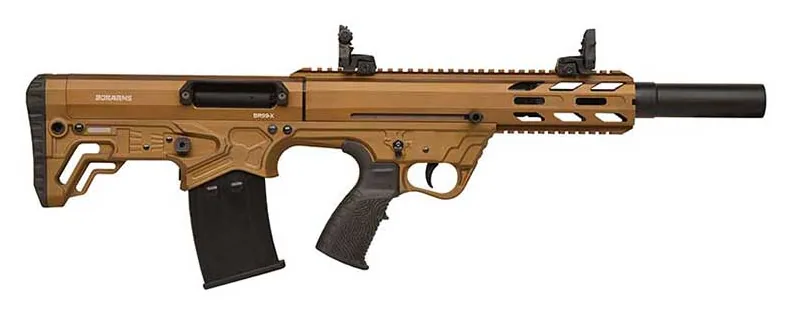
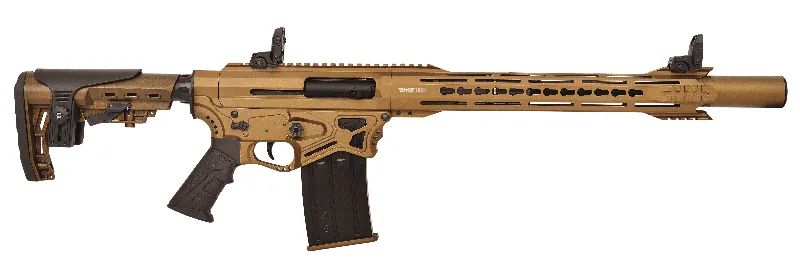
Box magazines for shotgun shells are harder to make reliable than rifle magazines because shells are large, tapered and vary in length and rim design. Feed-lip shape, spring strength and follower design all matter. Most feeding complaints come from worn or mismatched magazines, so buy spares from the gun’s maker and test each one with your loads. See our magazine-fed shotguns for how we approach the platform.
Finish wear
Painted or thinly coated receivers can wear at the edges, and unprotected steel rusts in humid conditions. Ask what finish is used and whether the bore and chamber are chrome-lined, and wipe the gun down after wet days.
What does a manufacturer control?
Whether a shotgun is good or bad is decided long before it reaches a dealer. These are the levers a factory controls.
- Materials barrel steel (for example 4140 chromoly steel), receiver alloy, spring steel and stock material.
- Heat treatment firing pins, sears, bolts and springs must be hardened correctly. Too soft and they wear or deform; too hard and they become brittle.
- Bore and chamber treatment hard-chrome lining protects against corrosion and wear and makes extraction smoother.
- Machining accuracy consistent dimensions make parts interchangeable and actions smooth.
- Assembly and fitting trigger groups, locking surfaces and stocks need careful fitting by experienced technicians.
- Test-firing live-firing before packing catches assembly faults and function problems.
- Inspection and sampling checking parts during production and sampling finished guns from each batch.
- Documentation and spares clear manuals, exploded diagrams and a parts supply for importers.
Our page on how our shotguns are made shows how we handle these steps in our own factory.
Proof testing and proof marks
Proof testing means firing a gun with a deliberately over-pressure load to confirm that the barrel and action can withstand it safely. In C.I.P. member states, which include many European countries, guns must carry recognized proof marks before they can be sold. The United States has no government proof requirement; SAAMI publishes voluntary industry standards. Proof marks and certificates differ by market, so ask the importer or manufacturer which marks a given gun carries. If you are an importer, ask our export team which proof marks and certificates are available for your market.
What can you expect at each price tier?
Turkish shotguns span a wide price range. The tiers below describe typical differences, not specific brands.
| Tier | What you typically get | What to watch |
|---|---|---|
| Entry level | Synthetic or plain walnut stocks, painted finishes, basic trigger groups, few accessories | Firing pins and springs, finish durability, magazine quality, local parts support |
| Mid-range | Chrome-lined barrels, better wood, several choke tubes, more consistent fitting and inspection | The importer’s warranty and service record |
| Upper range | Figured walnut, engraving, premium finishes, tighter fitting | Prices approach established European brands, so compare support and resale value |
How to evaluate a Turkish shotgun brand or importer
Whether you are buying one gun or importing a container, judge both the gun and the support behind it.
- Identify the importer. Who brings the gun into your country, and how long have they carried this line?
- Check parts and magazines. Are firing pins, springs, extractors and magazines in stock locally?
- Read the warranty. In most markets the importer, not the factory, handles warranty claims. Find out who repairs the gun and where.
- Look for proof marks required in your market.
- Read long-term reviews. Owner reports after several thousand rounds are worth more than launch reviews.
- Inspect the gun. Cycle the action, try the trigger, check the wood-to-metal fit, look down the bore and examine the finish.
- Test with your loads. Especially with semi-autos and magazine-fed guns, use the shells you actually shoot.
- Check the manual. A clear manual in your language is a good sign of a serious supplier.
Importers evaluating a factory should also read the full checklist in our guide to Turkish shotgun manufacturers and our guide on how to import shotguns from Turkey.
Turkish shotgun brands to avoid? Red flags instead of a blacklist
We will not publish a blacklist. Brand names change, factories improve, and the same name can cover very different guns in different markets. These red flags predict trouble far better than a brand name.
- No identifiable importer or service address in your country
- No spare parts or magazines available locally
- No warranty contact, or a warranty that requires shipping the gun abroad
- Missing proof marks where your market requires them
- Visible machining marks inside the action, a gritty trigger or a loose stock out of the box
- Model names and specifications that change from one listing to the next
- A price far below comparable models from established factories
Tips for owners on getting the best from a Turkish shotgun
- Clean it before the first use. New guns often ship with heavy preservative oil that slows actions.
- Break it in. Fire a few boxes of standard-velocity loads before judging a semi-auto’s reliability with light target shells.
- Lubricate as specified. Inertia guns usually want a light film of oil; gas guns need a clean gas system.
- Use the right shells. Never fire shells longer than the chamber; Iber chambers are 76 mm (3″).
- Look after choke tubes. Never shoot without a tube installed, and keep the threads clean and greased.
- Use snap caps for dry-firing break-actions.
- Store it dry and wipe metal surfaces after handling.
What Iber Arms does (and what we don’t claim)
Iber Arms has built shotguns in Beyşehir, Konya, since 2000 and exported since 2010. Here is what we can state as fact.
- Barrels are made from 4140 steel and hard-chrome lined on our own chrome line.
- Receivers are aluminum, including 7075-T6 on selected tactical models, and are painted and finished in-house.
- Turkish walnut and synthetic stocks are prepared and finished in our stock shop.
- Components such as charging handles are machined in the factory.
- Guns are assembled and test-fired at our factory before shipment.
- Chambers are 76 mm (3″), and most models take Mobil-type interchangeable choke tubes.
- We have more than 150 employees and have completed more than 2,800 export shipments.
What we don’t do is publish test numbers, certifications or warranty terms on this website that we cannot document here. If you need test data, proof certificates or documentation for your market, ask our export team, and evaluate samples before you order. We supply importers, distributors, licensed dealers and government buyers, including private-label shotguns. We do not sell to private individuals.
Judge our quality yourself
Request specifications and samples of the models you are considering. Send your inquiry or download our catalogs.
Reviewed by the Iber Arms technical & export team, October 2026.
Frequently asked questions about Turkish shotgun quality
Are Turkish shotguns reliable?
Turkish shotguns from established factories are generally reliable when they are maintained and fed suitable loads. Reliability problems cluster in the cheapest guns, typically firing pins and doubling on budget doubles, magazines on low-cost box-fed guns, and inertia guns that are not broken in. Check the importer’s parts support and warranty before you buy.
Are Turkish shotguns good for hunting?
Yes. Turkish factories build many field guns for upland and waterfowl hunting, including gas and inertia semi-autos, pumps and over/unders with walnut or synthetic stocks. Choose a model with chrome-lined barrels and interchangeable chokes, make sure the stock fits you, and confirm that parts and service are available where you hunt.
Why are Turkish shotguns so cheap?
Lower labor and overhead costs than in Western Europe or North America, a dense regional supply chain around Konya, locally sourced walnut, aluminum receivers and high production volumes all reduce costs. Cheap does not automatically mean poor, but the very lowest-priced guns usually save money on materials, heat treatment and inspection.
Are Turkish shotguns really that bad?
No. The bad reputation comes mainly from the cheapest imports and from importers that provide little parts support. Several major brands sell Turkish-made models, and many Turkish guns give years of service. Judge the individual gun, factory and importer rather than the country of origin.
Which Turkish shotgun brands should I avoid?
Instead of avoiding names, avoid red flags such as no identifiable importer, no local spare parts or magazines, no warranty contact, missing proof marks where they are required, poor fit and finish, and prices far below comparable models. Those signs predict problems better than any brand list, which goes out of date quickly.
Are Turkish over/under shotguns safe?
A properly made and proof-tested Turkish over/under is as safe as any other. Problems reported with budget models, such as broken firing pins or doubling, come from poor heat treatment or fitting of trigger parts. Buy from an importer that stocks parts, check for proof marks, and have a gunsmith inspect any gun that doubles.
Why won't my Turkish inertia shotgun cycle?
Most often the gun is new and its springs are still stiff, the loads are too light, the gun is not held firmly against the shoulder, or the action is dirty or over-oiled. Break the gun in with standard loads, mount it firmly, and clean and lubricate it as the manual specifies. If problems persist, contact the importer.
How long do Turkish shotguns last?
Service life depends on build quality, use and maintenance rather than country of origin. A well-made Turkish shotgun with a chrome-lined barrel, correctly hardened parts and regular cleaning can last for many years of normal hunting and target use. Springs, firing pins and seals are wear items on any shotgun and should be replaced when needed.
Can I get spare parts for a Turkish shotgun?
Usually through the importer or brand that sells the gun in your country. Before you buy, check that firing pins, springs, extractors, seals and magazines are stocked locally. If you import Iber shotguns, ask our export team about spare parts for the models you carry.
Who handles the warranty on a Turkish shotgun?
In most markets the importer or the brand that sells the gun handles warranty claims and repairs, while the Turkish factory supports the importer with parts and technical help. Read the warranty terms and find out where repairs are done before you buy.
Can importers test Iber Arms samples before ordering?
Yes. Importers, distributors and dealers can request samples to evaluate build quality, function and finish with their own loads before placing an order, subject to the usual export and import permits. Send the models you want to test through our inquiry form.
Why Choose Iber Arms as Your Turkish Shotgun Manufacturer
How Iber Arms builds its shotguns
Iber Arms builds shotguns in Beyşehir, Konya, with the critical steps in-house, including 4140 steel barrels hard-chrome lined on our own line, receiver finishing, stock preparation, assembly and test-firing.
Since 2010 we have completed more than 2,800 export shipments for importers, distributors, licensed dealers and government buyers. Samples are available, so you can judge our quality with your own loads before ordering.
We offer more than 100 models and private-label configurations, and we quote orders of any quantity.
INQUIRY FORM
Shotguns Made in Türkiye
Explore more shotgun models
Browse the shotgun families we build in our Beyşehir factory, or send us an inquiry for the full catalogue and wholesale pricing.
LEVER ACTION
Magazine Fed