Phone number
Email address
Lever Action Shotguns in 12 Gauge
- Firearms Manufacturer
- Lever Action Shotguns
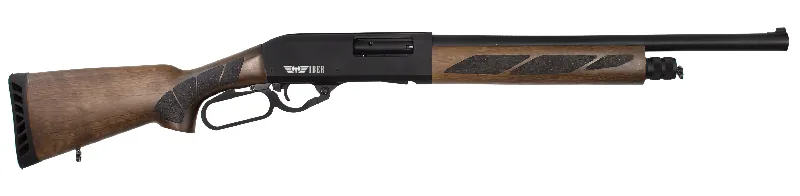
Our Lever Action Shotgun Models
Every model below is a 12 gauge lever action with a tube magazine loaded from the underside of the receiver. The models differ in receiver finish and stock material; magazine capacity and barrel length are chosen per order, so the same model can be built as a 2+1 gun for one market and a 10+1 gun for another where that is lawful.
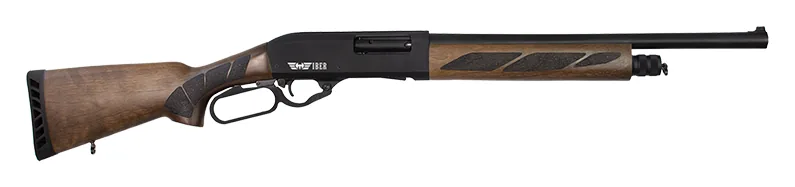
IB-L01
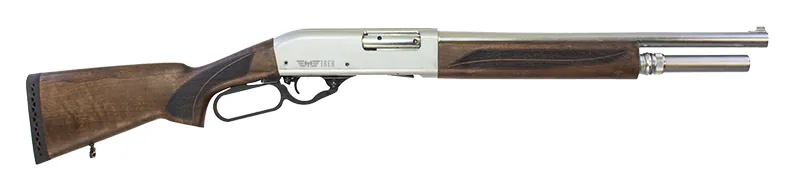
IB-L02
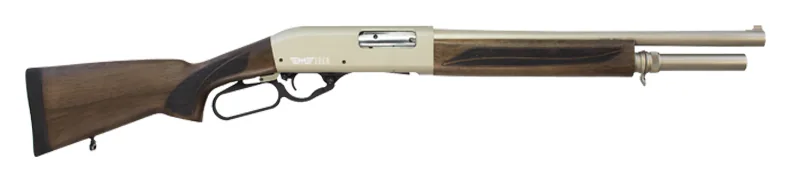
IB-L03
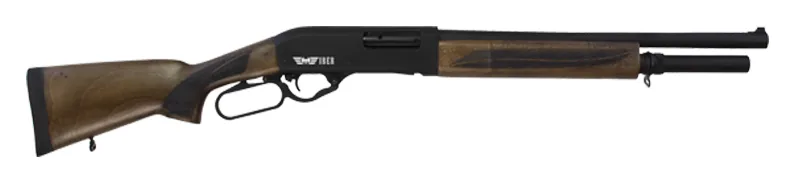
IB-L04
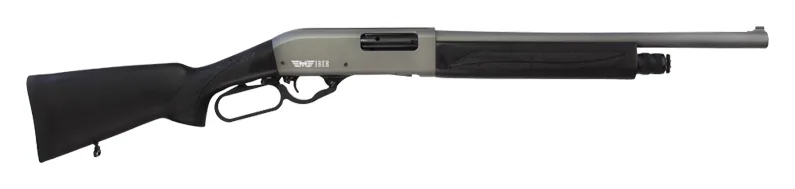
IB-LB05
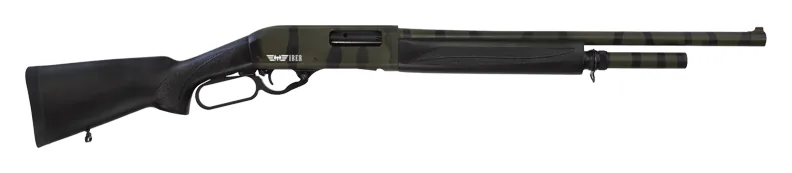
IB-LB06
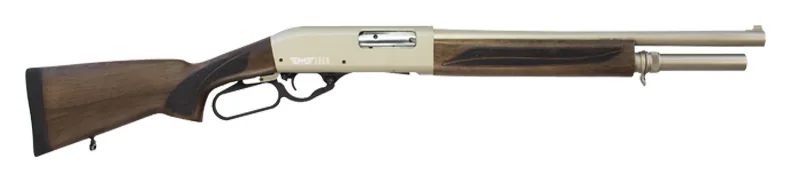
IB-LB07
Compare all models
| Model | Receiver finish | Stock and forend | Receiver | Capacity options | Barrel options |
|---|---|---|---|---|---|
| IB-L01 | Black | Turkish walnut | Aluminum | 2+1, 5+1, 7+1, 10+1 | 47, 51, 55, 61, 71, 76 cm (18.5 to 30″) |
| IB-L02 | Nickel/silver receiver and barrel | Turkish walnut | Aluminum | 2+1, 5+1, 7+1, 10+1 | 47, 51, 55, 61, 71, 76 cm (18.5 to 30″) |
| IB-L03 | Champagne/bronze | Turkish walnut | Aluminum | 2+1, 5+1, 7+1, 10+1 | 47, 51, 55, 61, 71, 76 cm (18.5 to 30″) |
| IB-L04 | Black | Turkish walnut | Aluminum | 2+1, 5+1, 7+1, 10+1 | 47, 51, 55, 61, 71, 76 cm (18.5 to 30″) |
| IB-LB05 | Gray | Black synthetic | Aluminum with polymer lower | 2+1, 5+1, 7+1, 10+1 | 47, 51, 55, 61, 71, 76 cm (18.5 to 30″) |
| IB-LB06 | OD green/black | Black synthetic | Aluminum | 2+1, 5+1, 7+1, 10+1 | 47, 51, 55, 61, 71, 76 cm (18.5 to 30″) |
| IB-LB07 | Champagne/silver | Turkish walnut | Aluminum | 2+1, 5+1, 7+1, 10+1 | 47, 51, 55, 61, 71, 76 cm (18.5 to 30″) |
Lever Action Shotgun Specifications
| Gauge | 12 gauge |
|---|---|
| Chamber | 76 mm (3″); accepts 70 mm (2¾”) and 76 mm (3″) shells |
| Action | Manual lever action; tube magazine under the barrel, loaded from the bottom of the receiver |
| Magazine capacity | 2+1, 5+1, 7+1 or 10+1 |
| Barrel | 4140 steel, chrome-lined |
| Barrel lengths | 47 cm (18.5″), 51 cm (20″), 55 cm (21.7″), 61 cm (24″), 71 cm (28″), 76 cm (30″) |
| Chokes | Mobil-type interchangeable choke tubes; slug configuration available |
| Receiver | Aluminum (aluminum with a polymer lower on the IB-LB05) |
| Stock and forend | Turkish walnut (IB-L01 to IB-L04, IB-LB07) or black synthetic (IB-LB05, IB-LB06) |
| Standard finishes | Black, nickel/silver, champagne/bronze, gray, OD green; other colors on OEM orders |
| Customization | Private-label markings, finish, stock, barrel length, magazine capacity |
Weight and overall length depend on the barrel and magazine combination. Our export team supplies the data sheet for the exact configuration you quote.

What Is a Lever Action Shotgun?
A lever action shotgun is a manually operated repeating shotgun that you cycle by swinging a lever under the grip down and back up. That single stroke ejects the fired shell, lifts a fresh one from the magazine into the chamber and cocks the action, giving you a follow-up shot without a pump or gas system.
Iber Arms builds seven 12 gauge lever action models, IB-L01 to IB-LB07, at its factory in Beyşehir, Konya. All share a 76 mm (3″) chamber, a 4140 steel barrel, an aluminum receiver and a tube magazine offered in 2+1, 5+1, 7+1 or 10+1 capacity. We supply importers, distributors and licensed dealers, not private buyers.
We do not make a .410 lever action. If you need a .410, see our .410 shotguns in magazine-fed, revolving-cylinder and over/under form.
Key facts about Iber lever action shotguns
- Gauge 12 gauge only, 76 mm (3″) chamber; fires 70 mm (2¾”) and 76 mm (3″) shells
- Action manual lever action with a tube magazine under the barrel, loaded through a port on the underside of the receiver
- Capacity 2+1, 5+1, 7+1 or 10+1 (shells in the magazine plus one in the chamber)
- Barrels 47 cm (18.5″), 51 cm (20″), 55 cm (21.7″), 61 cm (24″), 71 cm (28″) or 76 cm (30″), chrome-lined 4140 steel
- Chokes Mobil-type interchangeable choke tubes, or slug configuration
- Receiver and stock aluminum receiver; Turkish walnut or black synthetic stock and forend
- Models 7 (IB-L01, IB-L02, IB-L03, IB-L04, IB-LB05, IB-LB06, IB-LB07)
- Market builds 2+1 with a 61 cm+ barrel for UK Section 2; 2+1 or 5+1 for Australia’s Category B limit (verify locally)
- Supply B2B only, covering wholesale, OEM/private label, samples for evaluation and orders of any quantity
Features and safety
What Are the Features of a Lever Action Shotgun?
The defining feature is the lever, which lets one hand cycle the action while the gun stays shouldered. Around it, a modern 12 gauge lever gun uses shotgun-style internals and the features buyers expect from a current pump or semi-auto.
- Lever-operated bolt the loop around the trigger guard is linked to the bolt. Down and forward opens the action, ejects the hull and lifts the next shell; back to the grip chambers it and locks the bolt.
- Bottom-loading tube magazine shells go in through the loading port under the receiver, as on a pump gun, so you can top up the magazine with the action closed.
- 3-inch chamber handles 70 mm and 76 mm shells, from light target loads to buckshot and slugs.
- Interchangeable chokes Mobil-type tubes let one gun move between slugs, buckshot and longer-range birdshot.
- Chrome-lined 4140 steel barrel hard-chromed on our own line for wear and corrosion resistance.
- Aluminum receiver keeps the gun lighter than an all-steel action.
- Walnut or synthetic Turkish walnut for a traditional look, synthetic for weather and hard use.
What safety devices does a lever action shotgun have?
Modern lever shotguns usually combine a manual safety, often a cross-bolt button in the trigger guard, with an interlock that stops the gun firing unless the lever is fully closed and the bolt locked. Treat the lever like a pump’s forend. Keep your finger outside the trigger guard while cycling, and check both the chamber and the magazine tube when unloading. Ask us for the safety layout and manual of the model you are evaluating.
INQUIRY FORM
Lever Action Shotgun FAQ
Is there a 12 gauge lever action shotgun?
Yes. 12 gauge lever action shotguns date back to the 1880s and are made today by several manufacturers, including Iber Arms in Türkiye. Our seven models, IB-L01 to IB-LB07, are 12 gauge with 76 mm (3″) chambers, tube magazines from 2+1 to 10+1 and barrels from 47 to 76 cm (18.5 to 30″).
Are lever action shotguns still made?
Yes. After decades as a niche, lever action shotguns came back in the 2010s through .410 lever guns from US makers, reproductions of classic 1880s lever-action guns and new 12 gauge designs from Turkish factories. Iber Arms produces them in Beyşehir, Konya, and builds capacity and barrel configurations to suit different export markets.
Are lever action shotguns any good?
For many jobs, yes. A lever shotgun is mechanically simple, cycles any shell the chamber accepts because you supply the energy, and handles like a field gun. The trade-offs are a longer stroke than a pump, awkward cycling when prone and fewer accessories. They suit ranch, sporting and defensive use where a manual action is preferred or favored by the law.
What is the best lever action 12 gauge shotgun?
There is no single best; it depends on the job and the law where the gun will be used. Look for a smooth, positive lever stroke, a 3-inch chamber, interchangeable chokes, a barrel length that suits the task, a capacity that is legal locally and good spare-parts support. Dealers should test samples with the loads their customers buy.
Is there a .410 or 20 gauge lever action shotgun?
.410 lever shotguns are made by several companies, usually on rifle-style actions; 20 gauge levers are rare. Iber Arms makes its lever actions in 12 gauge only. For .410 we offer the magazine-fed IB-MF20, IB-RV revolving-cylinder models and over/under guns, and for 20 gauge the IB-MF15 to IB-MF19. See our .410 shotguns page.
Do lever action shotguns use a tube or a box magazine?
Most use a tube magazine under the barrel, including all Iber models. Some other manufacturers offer lever shotguns fed from detachable box magazines, which reload faster but add bulk and can change how the gun is classified in some countries. If you want a 12 gauge with a box magazine, our magazine-fed shotguns are the alternative.
Are lever action shotguns legal in Australia?
Yes, with the right license. Since the 2017 to 18 National Firearms Agreement review, lever action shotguns with a magazine capacity of five rounds or fewer are Category B, and those holding more are Category D. Our 2+1 and 5+1 configurations are built for the Category B limit. Each state applies the rules, so check with your firearms registry before ordering.
Are lever action shotguns legal in Canada?
Generally, yes. Lever shotguns are manually operated, so the five-shell limit for semi-automatic magazines does not apply, and conventional configurations are usually non-restricted. The RCMP sets the classification of each model in the Firearms Reference Table, so importers should check it before shipping. This is general information, not legal advice.
What shells can I use in a lever action shotgun?
Iber lever actions have 76 mm (3″) chambers, so they take standard 70 mm (2¾”) and 76 mm (3″) 12 gauge shells, including birdshot, buckshot and slugs. Never use 89 mm (3½”) magnum shells. Shoot slugs through an open choke or the slug configuration, and check the choke tube’s marking before using steel shot.
Who makes lever action shotguns?
Lever action shotguns are made by a small group of US, Italian and Turkish companies, plus makers of reproductions of classic 1880s lever-action designs. Many shotguns sold under US or Australian brand names are produced in Türkiye. Iber Arms manufactures 12 gauge lever actions in Beyşehir, Konya, for importers, distributors and private-label customers.
Can I buy a lever action shotgun directly from Iber Arms?
Only if you are a licensed business. Iber Arms sells to importers, distributors, licensed dealers and government buyers; we do not sell to private individuals. If you are a shooter, ask a licensed dealer or importer in your country, who can bring in our models through the legal import channel.
Do you offer samples, private label and small orders?
Yes. We ship samples for evaluation where export rules allow, accept orders of any quantity and build lever actions under your brand with your choice of finish, stock, barrel length and magazine capacity. Send your market, configuration and quantity through our inquiry form for a quote.
How Lever Action Shotguns Work, with Types, Laws and Buying Advice
How does a lever action shotgun work?
A lever action shotgun uses a lever, shaped around the trigger guard, to drive the bolt back and forth. Swinging the lever down and forward unlocks and opens the action; swinging it back closes and locks it. The full cycle on a tube-fed 12 gauge such as our IB-L series runs as follows.
- Load the magazine. With the action closed and the safety on, push shells one at a time through the loading port on the underside of the receiver into the tube under the barrel.
- Open the action. Swing the lever down and forward. The bolt travels rearward and the lifter (carrier) raises the first shell from the magazine into line with the chamber.
- Close the action. Bring the lever back up to the grip. The bolt pushes the shell into the chamber and locks behind it. The gun is now cocked.
- Fire. With the safety off and the muzzle on target, press the trigger. Nothing else moves until you work the lever again.
- Cycle for the next shot. With the lever down, the extractor pulls the fired hull from the chamber, the ejector throws it clear and the next shell is lifted. With the lever back up, the new shell is chambered.
- Unload. With the safety on, work the lever to remove the chambered shell, then empty the magazine (by cycling each shell through the action or with the shell release, depending on the model). Check the chamber and magazine by sight and touch.
Because the shooter supplies the energy, a lever gun does not care how powerful the shell is, unlike a gas or inertia semi-auto. Light target loads, buckshot and slugs all cycle the same way. The flip side is that every shot needs a deliberate, full stroke. A half stroke (“short-stroking”) can fail to pick up the next shell, just as with a pump.
A short history of the lever action shotgun
The first commercially important lever action shotgun appeared in the late 1880s, when a maker famous for its lever-action rifles wanted a repeating shotgun in the same style. This classic 1880s lever-action design was offered in 10 and 12 gauge for black-powder shells.
When smokeless powder arrived, a strengthened version followed, offered only in 10 gauge. Pump actions, and later semi-automatics, went on to dominate the 20th century. Lever shotguns became a curiosity, kept alive by occasional .410 lever guns and, from the 1990s, by the classic design’s film fame and modern reproductions.
The modern revival came in the 2010s. US makers added .410 lever guns built on rifle-style actions, and Turkish factories began building 12 gauge lever actions on modern shotgun receivers with 3-inch chambers, bottom-loading tube magazines, choke tubes and walnut or synthetic stocks. Demand in Australia, where lever actions are licensed differently from pumps and semi-autos, accelerated that growth. Iber Arms builds this modern type.
What are the different types of lever action shotgun?
1880s-style (classic)
Reproductions and derivatives of classic 1880s lever-action designs, with an exposed hammer, a breechblock that rolls back when the lever is worked and a short tube magazine loaded through the open action. Popular with collectors and cowboy-action shooters; rarely suited to rails, optics or extended magazines.
Modern tube-fed 12 gauge
The type we build has a shotgun-style receiver with a bottom loading port, a tube magazine under the barrel (2+1 to 10+1 on our models), a 3-inch chamber and choke tubes. It comes as field guns (walnut, long barrel) or compact utility guns (synthetic, 47 cm barrel).
Box-magazine lever shotguns
Offered by some other manufacturers, this type uses the lever to cycle shells from a detachable box magazine, so reloads are faster but the gun is bulkier under the receiver. A detachable magazine can also change the legal category; in Great Britain, for example, it rules out a Section 2 shotgun certificate.
Lever-release shotguns
This is a different mechanism, popular in Australia, in which the bolt does not close by itself after each shot and the shooter releases it with a lever to chamber the next shell. See our lever-release shotguns and the IEU-LR-01. Classification varies by state.
Rifle-style .410 lever guns form a separate branch; Iber does not make one (see our .410 shotguns instead).
How does a 12 gauge lever action compare with a pump or semi-auto?
All three can be built as 12 gauge, 3-inch, tube-fed shotguns. The differences lie in how the action is cycled and what that means for speed, reliability and licensing. For a full head-to-head, read our lever action vs pump shotgun guide.
| Factor | Lever action | Pump action | Semi-auto (gas or inertia) |
|---|---|---|---|
| Cycled by | Firing hand swinging the lever | Support hand sliding the forend | Gas or recoil energy; the shooter only pulls the trigger |
| Follow-up shots | Quick with practice; long stroke, and the grip breaks on every cycle | Fast; firing hand stays on the grip | Fastest; no manual stroke |
| Sensitivity to shell power | None | None | May need full-power loads; light loads can fail to cycle |
| Prone and tight positions | Awkward, because the lever swings toward the ground | Good | Good |
| Left-handed use | Lever works the same with either hand; ejection usually right | Ambidextrous stroke; ejection usually right | Depends on safety, charging handle and ejection side |
| Iber capacity options | 2+1 to 10+1 (tube) | 2+1 to 10+1 (tube) | 2+1 to 10+1 (tube or box); 20+1 on some mag-fed models |
| Mechanical complexity | Low | Low | Higher (gas system or inertia spring) |
| Australia | Category B (5 rounds or fewer) or D | Category C or D | Category C or D |
| Great Britain | Section 2 (2+1, barrel 24 in or more) or Section 1 | Section 2 or 1; prohibited if barrel under 24 in or overall length under 40 in | As pump |
| Canada | Manual action, so no magazine limit | Manual action, so no magazine limit | Magazine limited to 5 shells |
What are the advantages and disadvantages of lever action shotguns?
Advantages
- Works with any shell. Manual operation means light target loads, buckshot, slugs and low-recoil loads all feed the same way, with no gas system to tune.
- Simple, durable mechanism. Fewer parts than a semi-auto and nothing driven by gas, so it is easy to clean and tolerant of dust and neglect.
- Favorable licensing in some countries. In Australia a lever gun with up to five rounds in the magazine is Category B, where pumps and semi-autos are C or D. In Great Britain, short lever guns are not caught by the Section 5 prohibition on short pumps and semi-autos.
- Natural handling. A slim forend and traditional stock profile carry and point like a field gun.
- Distinctive look. The Western heritage gives lever guns strong collector and gift appeal, which matters to dealers looking for a product that stands out.
Disadvantages
- Long stroke. A 12 gauge lever must move a full-length shell and bolt, and cycling it quickly without dropping the muzzle takes practice.
- Grip breaks on every shot. The firing hand works the lever, unlike a pump, where it stays on the grip.
- Awkward when prone or seated. The lever needs clearance below the gun, which is hard to find lying down, in a blind or in a vehicle.
- Fewer accessories. Stocks, rails, magazine extensions and spare parts are far more common for pumps and semi-autos.
- Slower reloads than a box magazine. Tube magazines are loaded one shell at a time.
- No 3½-inch option. Our 3-inch chambers cover nearly all hunting and defensive loads, but not 89 mm (3½”) magnums.
What are lever action shotguns used for?
- Farm, ranch and pest control. A simple repeater that tolerates mixed ammunition and rough storage; 47 to 51 cm (18.5 to 20″) barrels handle easily in vehicles and around buildings.
- Hunting. With a 61 to 76 cm (24 to 30″) barrel and choke tubes, a 12 gauge lever suits upland birds, rabbits and waterfowl. With slugs and an open choke or the slug configuration, it can be used on deer or boar where shotgun slugs are allowed. Hunting rules often cap capacity; in the US, for example, migratory bird hunters must plug any repeater to three shells in total.
- Home and property defense. Where the law and training support it, a short lever gun offers the reliability of a manual action. For most people a pump is easier to run under stress, so practice matters.
- Sport and recreational shooting. Informal clays, plinking and practical-style matches that have a manual-action division.
- Cowboy action shooting. Rules usually call for period-style 1880s designs, so modern lever guns suit side matches and casual Western shooting rather than strict period categories.
Lever action shotgun capacity and legal notes by country
Part of an exporter’s job is shipping the right configuration for each market. The table summarizes how lever action shotguns are commonly treated and which Iber configuration fits. It is general information, not legal advice. Laws change and are interpreted locally, so importers must confirm with the competent authority before ordering.
| Country | How lever shotguns are treated (summary) | Iber configuration to ask for |
|---|---|---|
| Australia | Category B with a magazine capacity of 5 rounds or fewer; Category D above 5 (2017 to 18 National Firearms Agreement review). Applied by each state and territory. Lever-release guns are classified separately, and some states are reviewing them. | 2+1 or 5+1, any barrel length; confirm how your registry counts capacity |
| UK (Great Britain) | Section 2 shotgun certificate if the magazine is non-detachable, holds no more than 2 shells and the barrel is at least 24 in; otherwise a Section 1 firearm certificate. Lever actions are not covered by the Section 5 prohibition on short self-loading and pump-action smoothbores. Northern Ireland has its own legislation. | Section 2 for 2+1 with a 61, 71 or 76 cm (24, 28 or 30″) barrel. Section 1 for other capacities and lengths |
| Canada | Manually operated, so the 5-shell limit for semi-automatic magazines does not apply. Most conventional lever shotguns are non-restricted, but the RCMP classifies each model (Firearms Reference Table), and several models have been prohibited since 2020. | Any capacity; confirm the model’s classification before shipping |
| USA | A barrel under 18 in or an overall length under 26 in makes any shotgun an NFA short-barreled shotgun. Imports require a licensed importer (FFL Type 08/11), an ATF Form 6 permit and the “sporting purposes” test. States such as California and New York add their own rules. | 47 cm (18.5″) or longer barrels; capacity to suit state and hunting rules |
| South Africa | Firearms Control Act 60 of 2000. The self-defense license (s13) excludes semi-automatic shotguns, so manually operated lever and pump shotguns can be considered under s13. Imports require a SAPS import permit. | Any capacity; confirm the license category with your customer |
Need a market-specific build? Tell us the country, license category and intended use, and our export team will confirm the matching capacity and barrel length. Ask which proof marks and certificates are available for your market.
How to choose a 12 gauge lever action shotgun
There is no single best lever action 12 gauge; the right one depends on the job and the law. These are the points we work through with dealers and importers when they specify an order.
- Barrel length for the use. 47 to 51 cm (18.5 to 20″) for vehicles, property and defensive roles; 55 to 61 cm (21.7 to 24″) as an all-round length; 71 to 76 cm (28 to 30″) for birds and clays, where a longer sighting plane and smoother swing help.
- Capacity the law allows. 2+1 for UK Section 2 or strict hunting rules, 5+1 for Australian Category B, 7+1 or 10+1 where higher capacity is legal.
- Stock and finish. Turkish walnut for traditional and gift buyers; synthetic for wet climates and hard use; black, gray, OD green, nickel or champagne receivers to differentiate your shelf.
- Lever feel. Ask for a sample and check that the stroke is smooth, positive and locks fully every time, wearing gloves if your customers hunt in cold weather.
- Chokes and slugs. Mobil-type choke tubes cover most needs; order the slug configuration where deer or boar hunting with slugs is common.
- Support. Check spare parts, manuals in your language and consistency between batches. Private-label buyers should also agree packaging and markings.
Ammunition and chokes for a lever action 12 gauge
Our lever actions are chambered for 76 mm (3″) shells and also fire standard 70 mm (2¾”) shells. Never use 89 mm (3½”) shells. Because the action is manual, shell power does not affect cycling, but very short “mini” shells may not feed reliably from a magazine designed for full-length shells, so test them before relying on them.
| Choke | Typical use with a 12 gauge lever gun |
|---|---|
| Cylinder or slug configuration | Slugs and buckshot at short range |
| Improved cylinder | Close-range birds, buckshot, property and pest control |
| Modified | General hunting; usually the tightest choke recommended for steel shot unless the tube is marked otherwise |
| Improved modified or full | Longer-range birds and turkey with lead or tungsten loads |
Keep choke threads clean and lightly greased, and never fire the gun without a choke tube installed, because that can damage the threads at the muzzle.
How do you maintain a lever action shotgun?
- Unload and check. Confirm the chamber and the magazine tube are empty before cleaning.
- Clean the bore and chamber after each session with a bore brush and solvent. A chrome-lined bore resists corrosion but still collects plastic wad fouling.
- Wipe the bolt face, extractor and lifter, where powder residue and hull debris build up, then apply a thin film of oil.
- Lubricate the lever pivot and linkage sparingly; excess oil attracts grit.
- Clean the magazine tube and follower from time to time so the spring feeds freely.
- Remove the choke tube, clean and grease the threads, and refit it snugly with the choke key.
- Care for the stock. Wipe walnut with a little stock oil and dry it after rain; synthetic needs only a damp cloth.
- Store it dry and unloaded in a locked cabinet, as local law requires.
How we build lever action shotguns in Beyşehir
Iber Arms has made shotguns since 2000 and exported them since 2010. Our factory in Beyşehir, Konya, part of Türkiye’s best-known shotgun-making region, employs more than 150 people. Lever action barrels are made from 4140 steel and chrome-lined on our own hard-chrome line; receivers are aluminum; walnut and synthetic stocks are prepared and finished in-house; and guns are assembled and test-fired in the factory. The same process supports more than 100 models and configurations across our shotgun families. See how our shotguns are made, or read what to check in a Turkish shotgun.
OEM and private label lever action shotguns
Lever actions make a strong private-label product, because the platform stands out on a dealer’s wall and finish and stock options let a brand create its own line. We can build IB-L series guns with the options below.
- your logo and markings (private label)
- receiver finishes and colors beyond our standard black, gray, OD green, nickel and champagne
- Turkish walnut or synthetic stocks and forends
- any of the six barrel lengths from 47 to 76 cm (18.5 to 30″)
- magazine capacity of 2+1, 5+1, 7+1 or 10+1 to match your market
We send samples for evaluation and accept orders of any quantity. Read more about private-label shotguns, importing shotguns from Türkiye and Turkish shotgun manufacturers. To compare families, see our pump action, semi-auto, magazine-fed and tactical shotguns.
Request a quote for lever action shotguns
Tell us your market, configuration and quantity, and our export team will reply with specifications and pricing. Send an inquiry, download our catalogs or email info@iberarms.com. If you are a shooter, please buy through a licensed dealer or importer in your country.
Reviewed by the Iber Arms technical & export team, October 2026.
MOST EXPORTED FIREARMS
OTHER FIREARMS MODELS
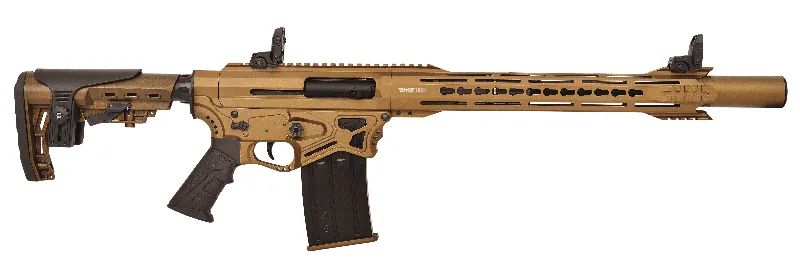
Explore the other shotgun families built in our Beyşehir factory. Every model can be configured for your market, so ask us about finishes, barrel lengths and magazine capacities.
LEVER ACTION
Magazine Fed