Phone number
Email address
Gas vs Inertia Shotguns
- Iber Arms
- Gas vs Inertia
Gas vs inertia is the main choice in semi-auto shotguns. A gas-operated shotgun bleeds propellant gas from the barrel to drive a piston that cycles the action; an inertia shotgun uses the gun’s own recoil and a spring inside the bolt. Gas guns usually recoil more softly; inertia guns are lighter and cleaner.
Iber Arms builds both systems at our factory in Beyşehir, Türkiye, so this guide explains how each one works, where each is stronger, and how to fix the most common problem searchers ask about, which is an inertia shotgun that will not cycle.
Quick answer
- Choose gas if you want the softest felt recoil, shoot a lot of light target loads, or mount lights, optics and magazine extensions.
- Choose inertia if you want a lighter gun to carry all day and prefer less cleaning.
- Both are reliable when matched to suitable loads, held correctly and maintained.
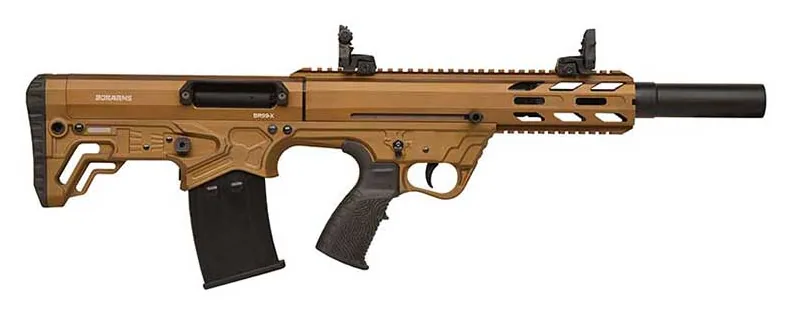
- Our gas lines IB-SA, IUE-SAS, ADA 4, magazine-fed, bullpup, horizontal-magazine and IEU-SB.
- Our inertia lines IB-KS, IUE-KS and ADA 2 (Kinetic System).
How does a gas-operated shotgun work?
Picture the barrel with a small hole, the gas port, drilled underneath it inside the forend. Below the port, a cylinder surrounds the front of the magazine tube, and a piston inside that cylinder is linked to the bolt by action bars. Here is how it works, step by step.
- The shell fires and the wad and shot travel up the barrel.
- Once the wad passes the gas port, a small amount of high-pressure gas flows down into the cylinder.
- The gas pushes the piston rearward; the piston drives the action bars and the bolt carrier back.
- The bolt unlocks, the extractor pulls the empty hull from the chamber and the ejector throws it out.
- The bolt compresses the recoil spring, and the shell latch drops a new shell onto the carrier.
- The spring returns the bolt, which chambers the new shell and locks. The trigger must be released before the next shot.
In words, the energy path is propellant gas → gas port → piston → action bars → bolt carrier → recoil spring → bolt returns. Designs vary. Many field guns use a ring-shaped piston around the magazine tube, some designs place one or two short pistons near the chamber, and many include a valve that vents surplus gas with heavy loads.
How does an inertia shotgun work?
Now picture a bolt made of two parts, a rotating bolt head that locks into the barrel extension and a heavier bolt body behind it, with a short, stiff inertia spring separating them. There is no gas port, piston or cylinder. Here is how it works, step by step.
- The shell fires and the whole gun recoils rearward into the shooter’s shoulder.
- The bolt body, because of its inertia, tends to stay where it is, so relative to the recoiling gun it moves forward and compresses the inertia spring against the locked bolt head.
- The spring rebounds and throws the bolt body rearward. As it moves back, it rotates the bolt head out of lock, by which time chamber pressure has dropped.
- The whole bolt assembly travels rearward, extracting and ejecting the hull and compressing the recoil spring, which many designs house in the buttstock.
- A new shell is released onto the carrier, and the recoil spring returns the bolt to chamber it and lock.
The energy path is recoil → gun moves back while the bolt body lags → inertia spring compresses → spring drives the bolt body back → bolt head unlocks → bolt cycles → recoil spring returns it. The design is credited to an Italian gun designer and has been in use for decades.
Gas vs inertia shotgun comparison table
| Factor | Gas-operated | Inertia-driven |
|---|---|---|
| Energy source | Propellant gas tapped from the barrel | Recoil of the whole gun |
| Felt recoil | Softer; impulse spread over a longer time; guns usually heavier | Sharper; guns usually lighter |
| Cycling with light loads | Usually reliable across a wide range of loads | Light, low-velocity loads may short-cycle, especially in new or heavy guns |
| Heavy loads | Surplus gas vented in many designs | Cycle strongly, with more felt recoil |
| Cleaning interval | Gas ports, piston and cylinder need cleaning every few hundred shells or after wet days | Action stays cleaner; bolt stripped and cleaned periodically |
| Parts count | More, including piston, cylinder, seals and action bars | Fewer |
| Weight | Heavier | Lighter |
| Cold, wet or dirty conditions | Reliable when the gas system is kept clean; carbon and thick oil can slow it | Fewer places for fouling; thick oil or mud on the bolt can still slow it |
| Add-ons (lights, optics, extensions, side-saddles) | Little effect on cycling | Added mass can cause short-cycling |
| Hold and shooting position | Less sensitive | Needs a firm shoulder |
| Typical uses | Clays, high-volume shooting, tactical guns with accessories, recoil-sensitive shooters | Upland and waterfowl hunting, long carries, low-maintenance field guns |
| Iber lines | IB-SA, IUE-SAS, ADA 4, magazine-fed, bullpup, horizontal-magazine, IEU-SB | IB-KS, IUE-KS, ADA 2 |
Felt recoil and why gas guns feel softer
For a given gun weight and load, the recoil a shotgun generates is broadly similar whatever the action. What differs is how it reaches the shoulder. A gas system uses some of the energy to drive the piston and spreads the rearward push over a slightly longer time, and gas guns tend to be heavier, which reduces recoil further. An inertia gun is designed to recoil freely so the bolt body can do its work, and it is usually lighter, so the same shell feels sharper. Stock fit, recoil pads and gun weight matter as much as the system, and a well-fitted inertia gun can be more comfortable than a badly fitted gas gun.
Cycling with light loads and accessories
A gas gun takes its energy from the gas behind the wad, so a properly designed system generally keeps cycling as loads get lighter. An inertia gun needs a minimum recoil impulse to drive the bolt body; anything that lowers the gun’s rearward velocity, whether a light load, extra mass or a soft hold, eats into that margin.
- Mostly light target loads a gas gun is the safer choice.
- Weapon light, optic, side-saddle or long magazine extension gas is more forgiving; with inertia, test the complete configuration with your actual ammunition.
- Heavy hunting loads, buckshot and slugs both systems cycle well; the inertia gun will recoil harder.
Cleaning and maintenance compared
Gas-operated
- Clean the bore and wipe the bolt and receiver after each outing.
- Strip the gas piston, cylinder and ports every few hundred shells or after wet or dusty days.
- Keep the gas system nearly dry; oil attracts carbon.
- Check seals and the recoil spring, and reassemble gas parts in the correct order and orientation.
Inertia-driven
- Clean the bore and wipe the bolt and receiver after each outing.
- Strip and clean the bolt (body, head, inertia spring, firing pin) periodically.
- Use only a light film of lubricant, especially in cold weather.
- Check the recoil spring, often in the stock, and the inertia spring for wear.
Reliability in cold, wet and dirty conditions
Both systems are used by waterfowlers in freezing marshes and by police in all weathers, but their failure modes differ.
- Gas carbon build-up in the ports and on the piston slows the action over time, and thick oil congeals in the cold. The cure is regular gas-system cleaning and very little lubricant on the piston.
- Inertia there are fewer places for carbon and water to collect, but thick oil or grease on the bolt and rails slows it in the cold, and grit can stop the bolt from locking. The cure is a light film of cold-rated lubricant and drying the gun after use.
Neither system is immune to neglect; maintenance and suitable loads matter more than the operating principle.
Weight, balance and handling
Without a piston, cylinder and related parts, an inertia gun with the same barrel length is usually lighter and slimmer through the forend, so it carries easily and comes to the shoulder quickly. A gas gun’s extra weight sits largely under the forend, which can help it swing smoothly on crossing targets and settle between shots. Hunters who walk all day often prefer inertia; clay shooters firing hundreds of shells often prefer gas.
Inertia shotgun not cycling? Troubleshooting
| Symptom | Likely cause | What to do |
|---|---|---|
| Short-cycles with light loads, fine with heavy loads | Load too light for the gun or configuration; stiff springs in a new gun | Use standard loads; break the gun in with a few boxes |
| Short-cycles only from awkward positions | Soft or loose hold absorbs the recoil | Mount the gun firmly into the shoulder |
| Problems started after fitting a light, optic or extension | Added mass reduces recoil velocity | Remove the accessory and retest; use lighter accessories or heavier loads |
| Clicks but does not fire after closing the bolt gently | Bolt stopped slightly out of battery | Let the bolt close under full spring pressure; do not ease it forward |
| Sluggish in cold weather | Thick oil or grease on the bolt and rails | Degrease and apply a light, cold-rated lubricant |
| Gradual decline after many shells | Dirty bolt or worn recoil spring | Clean the bolt; have the spring checked by a qualified gunsmith |
Gas shotgun not cycling? Common causes
- Carbon in the ports or on the piston strip and clean the gas system.
- Worn or missing seals on designs that use them, a damaged seal lets gas escape.
- Incorrect reassembly gas parts fitted in the wrong order or orientation after cleaning.
- Too much oil lubricant on the piston turns into sticky carbon.
- Very light loads in a new gun break the gun in with standard loads first.
- Loose forend or magazine cap tighten to the manufacturer’s instructions.
Which should you choose?
| Use | Better fit | Why |
|---|---|---|
| Waterfowl | Either | Inertia for light carry and a clean action; gas for softer recoil with heavy loads |
| Upland walks | Inertia | Lighter and slimmer to carry all day |
| Sporting clays, skeet, trap practice | Gas | Soft recoil and reliable cycling of light target loads over high volumes |
| Tactical or duty with lights and optics | Gas | Little sensitivity to accessories; inertia tactical guns work with testing |
| Recoil-sensitive or smaller-framed shooters | Gas, ideally 20 gauge | Softest felt recoil |
| Low-maintenance hunting gun | Inertia | Fewer parts and a cleaner action |
| Ammunition from many sources | Gas (or a pump) | Broader tolerance of different loads |
Common myths about gas and inertia shotguns
- “Inertia guns never need cleaning.” False. The bolt still collects carbon and grit and needs periodic stripping.
- “Gas guns jam when dirty.” Gas guns tolerate a lot of fouling, but carbon must be removed periodically.
- “An inertia gun that kicks is badly made.” Sharper recoil comes from the light weight and the operating principle, not from a defect.
- “A short-cycling inertia gun is broken.” The usual causes are the hold, the load or added weight.
The manufacturer’s view on why Iber builds both
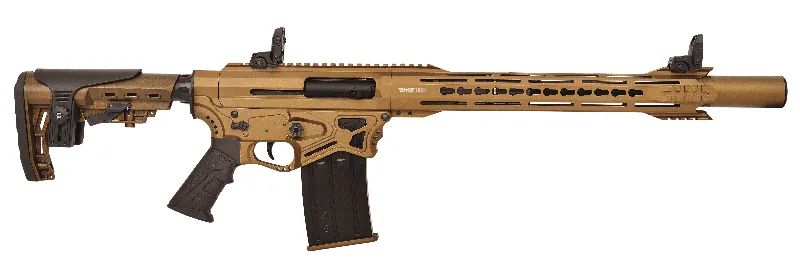
We manufacture both systems in Beyşehir, so we have no reason to push one. Our gas-operated lines are the IB-SA and IUE-SAS semi-autos, the ADA 4 M4-style shotguns, the magazine-fed AR-12 models, bullpups, horizontal-magazine shotguns and short barrel shotguns. Our inertia lines are the Kinetic System (IB-KS and IUE-KS) shotguns and the M2-style ADA 2. The tactical IUE-KS-32 to 37 are listed on their spec sheet as “TDI DU-PI Kinetic Gas Operated”; ask our export team for the technical documentation of that system.
For importers, the practical answer is usually to stock both, with gas guns for clays, tactical and recoil-sensitive customers and inertia guns for hunters who value low weight and low maintenance. All our semi-autos have 76 mm (3″) chambers, 4140 steel barrels hard-chromed on our own line, aluminum receivers and Mobil-type chokes, and they are assembled and test-fired in-house. See how our shotguns are made and our private-label shotgun options.
Build a semi-auto range with both systems
Importers, distributors and licensed dealers can request spec sheets, samples and quotations for our gas and inertia models. Send an inquiry or download our catalogs.
Reviewed by the Iber Arms technical & export team, October 2026.
Gas vs Inertia Shotgun FAQ
Which is better, a gas or an inertia shotgun?
Neither is better for everyone. A gas shotgun recoils more softly, cycles light target loads more readily and tolerates accessories, which suits clays, tactical use and recoil-sensitive shooters. An inertia shotgun is lighter, cleaner and simpler, which suits hunters who carry the gun all day. Match the system to the loads you shoot and how you use the gun.
How does an inertia shotgun work?
When the shell fires, the gun recoils backward, but the heavy bolt body lags behind and compresses a short spring against the locked bolt head. The spring then drives the bolt body rearward, rotating the bolt head out of lock. The bolt extracts and ejects the hull, and the recoil spring returns it to chamber a fresh shell. No gas is used.
Why is my inertia shotgun not cycling?
The usual causes are light loads, a loose hold, added weight from lights, optics or extensions, stiff springs in a new gun, a bolt eased forward instead of released, and thick oil or dirt on the bolt. Try heavier loads, mount the gun firmly, remove accessories and clean the action. If it still fails, have it inspected by a qualified gunsmith.
Does a gas shotgun have less recoil than an inertia shotgun?
Usually it feels softer. The gas system spreads the recoil impulse over a slightly longer time, and gas guns are generally heavier. An inertia gun is lighter and is designed to recoil freely, so the same load feels sharper. Fit, stock design and recoil pads also make a large difference to perceived recoil.
Are inertia shotguns more reliable than gas shotguns?
Not inherently. Inertia guns have fewer parts and stay cleaner, which helps in dirty conditions, but they are more sensitive to light loads, added weight and how the gun is held. Gas guns tolerate a wider range of loads and accessories but need regular gas-system cleaning. Each is reliable when used and maintained correctly.
Which needs more cleaning, gas or inertia?
A gas shotgun needs more. Its ports, piston and cylinder collect carbon and should be cleaned every few hundred shells or after wet or dusty days. An inertia shotgun keeps gas out of the action, so routine care is mainly the bore and bolt, with periodic stripping of the bolt and light lubrication.
Can an inertia shotgun shoot light target loads?
Often, once it is broken in, but light, low-velocity target loads are the most likely to short-cycle, particularly in a new gun or one carrying accessories. Test the exact loads you plan to buy. If you mostly shoot high volumes of light loads, a gas-operated semi-auto is the more forgiving choice.
Is gas or inertia better for duck hunting?
Both are widely used. Inertia guns appeal to waterfowlers because there is no gas system to foul with mud, water and carbon, and heavy duck loads cycle them strongly. Gas guns soften the recoil of heavy 3″ loads over a long day. Whichever you choose, keep lubrication light in cold weather and dry the gun after each hunt.
Is gas or inertia better for a tactical shotgun?
Gas is the more common choice for duty guns because it is less affected by mounted lights, optics and side-saddles, cycles a wide range of duty and reduced-recoil loads and recoils more softly. Inertia tactical shotguns, such as our IUE-KS-32 to 37, are lighter and clean-running, but the complete configuration should be tested with duty ammunition.
Is a recoil-operated shotgun the same as an inertia shotgun?
Inertia operation is a form of recoil operation, but it differs from older long-recoil designs, in which the barrel and bolt recoil together inside the receiver. In an inertia gun the barrel stays fixed to the receiver; only the bolt body’s inertia and a spring unlock the action as the whole gun recoils.
Can importers order both gas and inertia shotguns from Iber Arms?
Yes. We supply importers, distributors, licensed dealers and government buyers with gas-operated and inertia-driven semi-autos, including private-label builds with your logo, finish, stock, barrel length and capacity. Samples are available and we accept orders of any quantity. We do not sell to private individuals.
Why Choose Iber Arms as Your Turkish Shotgun Manufacturer
Why Importers Source Semi-Autos from Iber Arms
We build gas-operated and inertia-driven semi-autos side by side at our factory in Beyşehir, Konya, so we can recommend the right system for each of your markets rather than the only one we make.
Barrels are 4140 steel, hard-chromed on our own line; receivers and stocks are finished in-house; and our shotguns are assembled and test-fired in-house before export. Since 2000 we have grown to more than 150 employees and over 100 models and configurations.
We supply importers, distributors, licensed dealers and government buyers only. Private-label builds, evaluation samples and orders of any quantity are available.
INQUIRY FORM
Shotguns Made in Türkiye
Explore more shotgun models
Browse the shotgun families we build in our Beyşehir factory, or send us an inquiry for the full catalogue and wholesale pricing.
LEVER ACTION
Magazine Fed