Phone number
Email address
How Our Shotguns Are Made
- Iber Arms
- How Our Shotguns Are Made
Shotguns are made in five main stages. A steel barrel is drilled, reamed and finished, the receiver is machined and coated, small action parts are machined and fitted, the stock is shaped and finished in wood or synthetic, and the gun is assembled, test-fired and inspected. This page follows each stage at our factory in Beyşehir, Türkiye.
We have built shotguns since 2000. Where a step is filmed in our own factory videos, we show it; where we describe general industry practice rather than our specific setup, we say so.
Key facts about how Iber Arms shotguns are made
- Factory Üzümlü, Beyşehir, Konya, Türkiye, in Turkey’s best-known shotgun-making cluster
- Barrel steel 4140 chromium-molybdenum alloy steel
- Bore treatment hard-chrome lining on our own in-house line
- Receivers aluminum alloy, 7075-T6 on some models; prepared and painted in-house
- Stocks Turkish walnut or synthetic; prepared and finished in-house
- Chambers and chokes 76 mm (3″) chambers, Mobil-type interchangeable choke tubes, slug options
- Final stages assembly and test-firing at the factory
- Team 150+ employees; shotgun manufacturing since 2000, exporting since 2010
What are the main stages of shotgun manufacturing?
Every shotgun combines the same core components (barrel, receiver or frame, action parts, stock and forend), so the shotgun manufacturing process is broadly similar for pump, semi-auto, lever and break-action guns. The table shows the stages in order.
| Stage | What happens | Why it matters |
|---|---|---|
| 1. Barrel | Alloy steel is drilled, reamed and finished into a smoothbore barrel with a chamber and choke threads | Bore quality affects patterns, durability and safety |
| 2. Bore lining | Hard chrome is electroplated onto the bore and chamber | Resists corrosion and wear; makes cleaning easier |
| 3. Receiver | Aluminum alloy is machined, then prepared and painted or coated | Holds the action together and carries the markings |
| 4. Small parts | Bolts, carriers, trigger parts, charging handles and pins are machined and finished | Determines reliability and how the action feels |
| 5. Stock and forend | Turkish walnut or synthetic is shaped, fitted and finished | Fit, balance and durability in the field |
| 6. Assembly | Sub-assemblies are fitted together and function-checked | Every part must fit and work together |
| 7. Test-firing and inspection | Guns are fired with live shells and inspected | Confirms the gun works before it ships |
| 8. Packing and export | Guns are packed, documented and shipped | Arrives intact, with paperwork that matches |
How are shotgun barrels made?
A shotgun barrel is made by drilling a hole through a solid steel bar, reaming and polishing it to a precise smooth bore, cutting the chamber and choke threads, then machining the outside to its final profile and finishing it. Unlike a rifle barrel, a shotgun barrel has no rifling. It is a smoothbore designed to carry a column of shot, or a slug, and release it in a controlled pattern.
Why 4140 steel?
Our barrels are made from 4140, a chromium-molybdenum alloy steel widely used for gun barrels and other parts that must be both strong and tough. After heat treatment it combines high strength with good resistance to shock, it machines well, and it accepts surface treatments such as hard chrome. Those properties matter in a part that sees a sharp pressure peak every time a shell is fired.
Deep-hole drilling and reaming the bore
In general industry practice, the bore starts as a deep, straight hole made with a gun drill, which is a long, single-flute drill that pumps coolant through its own body to flush out chips and keep the hole straight along the full barrel length. The rough hole is then reamed in one or more passes to bring it to the final bore diameter, and honed or polished so the surface is smooth and consistent. A clean, even bore lets the wad and shot column travel with less friction and gives more predictable patterns.
Chamber, forcing cone and choke threads
At the breech end, the chamber is cut to accept the shell. Our shotguns have 76 mm (3″) chambers, which also accept standard 70 mm (2¾”) shells. Just ahead of the chamber, the forcing cone tapers down to bore diameter so the wad and shot move smoothly from the opened shell into the bore. At the muzzle, threads are cut for interchangeable choke tubes. Our models use Mobil-type choke tubes, with slug options, so the end user can change the constriction to suit the load and the job.
Outside profile, straightness, ribs and gas ports
The outside of the barrel is turned or ground to its final profile, removing weight where it is not needed and keeping wall thickness at the chamber, where pressure is highest. Barrels are checked for straightness and corrected where necessary. Depending on the model, further features follow, such as a ventilated rib on over/under and single barrel guns, gas ports on gas-operated semi-automatics, a barrel extension or lug that engages the action, and mounting points for sights. Finally, the outside is finished to protect it from corrosion and to match the gun’s color scheme.
What is hard-chrome lining, and why do we do it in-house?
Hard-chrome lining is a thin layer of hard chromium electroplated onto the inside of the barrel, covering the bore and the chamber. It makes the bore more resistant to corrosion and wear and easier to clean. We run hard-chrome production on our own line at the Beyşehir factory instead of sending barrels to an outside plater, so this step stays under our direct control.
The video shows shotgun barrels going through hard-chrome production on our in-house line.
How hard-chrome plating works
Hard-chrome plating is an electrolytic process. In general terms, barrels are cleaned and degreased so the chromium bonds to bare steel; surfaces that should not be plated are masked; an anode is positioned along the bore; and the barrel is immersed in a chromium plating bath while an electric current deposits chromium on the bore surface. After plating, the lining is inspected for coverage and finish. The aim is an even layer along the full bore, because an uneven deposit would affect the bore dimensions.
Advantages and trade-offs of a chrome-lined bore
- Corrosion resistance chrome protects the bore against moisture and firing residue, a real benefit for waterfowl guns and humid climates.
- Wear resistance the hard surface resists abrasion from shot and wads over a long service life.
- Easier cleaning plastic wad residue and fouling come off a chromed bore more easily.
- Trade-off, process control plating adds steps to production, and the deposit must be controlled carefully so bore dimensions stay consistent. That is one reason we keep it in-house.
- Trade-off, not a substitute for care a chrome-lined barrel still needs cleaning and oiling. Chrome slows corrosion; it does not make steel immune to neglect.
How are shotgun receivers made?
A shotgun receiver is the frame that houses the bolt and trigger group and connects the barrel, magazine and stock. Our receivers are aluminum alloy, with 7075-T6 on some models, which keeps the gun lighter than an equivalent steel receiver. In many modern designs the bolt locks into the steel barrel or barrel extension, so the receiver does not have to contain the full firing pressure on its own.
In general, a receiver starts as an aluminum forging, extrusion or billet that is CNC-machined to form the outside profile, the internal channels the bolt and carrier ride in, the magazine well or magazine tube opening, the ejection port and the holes for pins and the trigger group. After machining, parts are deburred so no sharp edges or chips remain to interfere with function.
Preparation and painting take place in-house. Receivers are cleaned and surface-prepared so the coating bonds properly, then painted in the specified color and cured. This is where the wide range of colors across our catalog (black, gray, bronze, OD green, tan, blue, red and camouflage patterns) is applied. It is also the stage that matters most to private label customers, because it defines how their brand looks on the shelf.
The video shows receivers being prepared and painted at our factory.
Aluminum vs steel receivers
| Factor | Aluminum alloy receiver | Steel receiver |
|---|---|---|
| Weight | Lighter, easier to carry all day | Heavier, which soaks up more felt recoil |
| Corrosion | Does not rust; the finish protects against wear and scratches | Needs a protective finish to prevent rust |
| Machining | Faster to machine, gentler on tooling | Slower to machine, harder on tooling |
| Durability | Very durable when the bolt locks into the barrel or a steel extension | Very durable wear surfaces throughout |
| Typical use | Most modern pumps, semi-autos and tactical guns | Heavy-duty and some traditional or premium guns |
How are small parts like charging handles made?
Small parts such as the bolt, bolt carrier, firing pin, extractor, trigger and hammer, safety, pins and charging handle decide how reliably an action cycles and how it feels in the hand. Most are machined on CNC lathes and milling machines from steel or aluminum bar and then finished. Across the industry, steel parts that take repeated impact or wear, such as bolts, firing pins and extractors, are normally heat-treated for hardness and toughness.
The video shows charging handles being manufactured at our factory, a typical example of the small, precise parts that go into an action. Consistent dimensions matter for two reasons. Parts fit and function the same way from gun to gun, and replacement parts supplied to importers and dealers later are simpler to fit.
How are shotgun stocks made?
Shotgun stocks are made either from wood, in our case Turkish walnut, that is shaped, fitted and finished, or from synthetic polymer that is molded and finished. Both types are prepared and finished in-house at our factory.
Turkish walnut stocks
Walnut has long been the traditional stock wood because it is strong for its weight, holds fine detail and finishes well. In general, a walnut stock begins as a blank that must be properly dried before machining so it does not move or crack later. The blank is shaped to profile, inletted so the receiver and action fit precisely, and sanded by hand. It is then stained and sealed with a finish such as oil or lacquer to bring out the grain and protect the wood from moisture. On many shotguns the grip and forend also get checkering or texturing for a secure hold.
Synthetic stocks
Synthetic stocks are molded from engineering polymers, then trimmed and finished. They are stable in rain and humidity, need little care and suit waterfowl, tactical and hard-use guns. Tactical platforms often use pistol-grip, fixed or collapsible synthetic stocks.
The video shows stocks being prepared and painted at our factory.
| Factor | Turkish walnut | Synthetic |
|---|---|---|
| Look | Classic; every stock has its own grain | Uniform; color and camouflage options |
| Weather | Needs a good finish; can swell if neglected | Unaffected by moisture |
| Durability | Strong; can be repaired and refinished | Resists dents and scratches; hard to refinish |
| Care | Occasional cleaning and oil or wax | Wipe clean |
| Typical use | Field, upland and premium lines | Waterfowl, tactical, hard-use and value lines |
How is a shotgun assembled and test-fired?
Assembly brings the finished barrel, receiver, action parts and stock together into a working shotgun; test-firing then confirms it works with live ammunition. Both happen at our Beyşehir factory.
Assembly generally proceeds in sub-assemblies, namely the trigger group (trigger, hammer, sear, safety and springs), the bolt group (bolt, firing pin, extractor and, on semi-automatics, the carrier and operating parts), the magazine tube or magazine well, and the barrel with its gas system or inertia components. These are fitted to the receiver, the stock and forend are mounted, and the gun is function-checked before firing for safety engagement, trigger reset, bolt travel and lockup, and feeding and ejection with dummy rounds.
Test-firing then checks what can only be confirmed under real pressure, such as whether the gun fires reliably, extracts and ejects fired shells and, on semi-automatics, cycles and feeds the next shell. A gun that does not perform correctly goes back for correction before it moves on.
The video shows shotguns being assembled and test-fired at our factory.
What does test-firing check?
- Ignition the firing pin strikes the primer reliably.
- Extraction and ejection fired shells are pulled from the chamber and thrown clear.
- Cycling on semi-automatics, the gas or inertia system unlocks, cycles and relocks the bolt.
- Feeding the next shell feeds from the tube or box magazine.
- Controls the trigger and safety still function correctly after firing.
What is proof testing?
Proof testing is a safety test in which a firearm is fired with a special proof cartridge that produces pressure well above that of a normal load, after which the barrel and action are inspected for cracks, bulges or other deformation. A gun that passes is stamped with proof marks showing it has been tested.
How proof is regulated depends on the country. In member states of the C.I.P. (the Permanent International Commission for the Proof of Small Arms), which include many European countries, civilian firearms must carry proof marks recognized under C.I.P. rules before they can be sold, and proof is carried out by official proof houses. The United States has no government proof house; manufacturers follow voluntary industry standards published by SAAMI. Some markets also have separate or additional tests, for example for guns intended for steel shot.
| Aspect | Proof testing | Test-firing |
|---|---|---|
| Purpose | Confirms the barrel and action withstand deliberate overpressure | Confirms the gun functions with normal ammunition |
| Ammunition | Special high-pressure proof cartridge | Standard shotgun shells |
| Who carries it out | Official proof house or the manufacturer, depending on the country’s rules | The manufacturer |
| Visible result | Proof marks stamped on the gun | A gun that passes final inspection |
Because proof requirements depend on the destination market, treat proof marks as part of the order specification. Ask our export team which proof marks and certificates are available for your market before you confirm an order.
Final inspection, packaging and export
After test-firing, guns are cleaned, inspected and packed for export. Final inspection checks that the finish is even and undamaged, that markings and serial numbers are correct and legible, that the configuration (barrel length, capacity, chokes and stock) matches the order, and that the box holds the agreed accessories. Serial numbers are recorded on the packing list, because the export authorization, the packing list and the importer’s records must all agree.
Packed guns are cartoned and marked for shipment, and our export team prepares the commercial invoice, packing list, certificate of origin and Turkish export authorization that allow the shipment to leave Turkey. If you are planning a first order, our guide on how to import shotguns from Turkey explains the documents needed on both sides.
How does the action type change the way a shotgun is built?
The core process is shared, but each action type adds its own parts and checks, as outlined below.
| Action | What is specific to the build | Iber range |
|---|---|---|
| Pump action | Action bars connect the forend to the bolt; smooth forend travel and positive lockup are key checks | Pump-action shotguns |
| Gas-operated semi-auto | Gas ports in the barrel feed a piston system that cycles the bolt; cycling is checked with live shells | Semi-auto shotguns, M4-style (ADA 4) |
| Inertia-driven semi-auto | No gas system; in the classic inertia design a spring between the bolt head and bolt body stores recoil energy to cycle the action | Inertia-driven (Kinetic System), M2-style (ADA 2) |
| Lever action | A lever linkage cycles the bolt; on our models the tube magazine loads from below | Lever action shotguns |
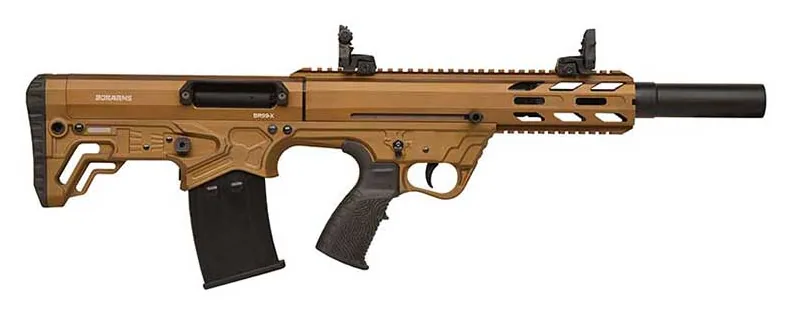
| Box magazine (AR-style) | Magazine well, detachable box magazines and magazine catch; feeding from the magazine is a key check | Magazine-fed shotguns, bullpup shotguns |
| Over/under | Two barrels joined and regulated to shoot to the same point; boxlock action with ejectors or extractors | Over/under shotguns |
| Single barrel | Simple break-action with hinge, exposed hammer and extractor; hinge fit and lockup are key checks | Single barrel shotguns |
| Double-barrel pump | Two barrels and two magazine tubes on one pump action | Double-barrel pump shotguns |
For a deeper look at the two semi-automatic systems, read gas vs inertia shotguns; for manual actions, see lever action vs pump shotguns.
Why are so many shotguns made in Beyşehir, Konya?
Beyşehir, including the Üzümlü area, in Konya province is Turkey’s best-known shotgun-making cluster. The region’s long gunsmithing tradition has built up a skilled workforce and a local network of suppliers, which lets factories combine their own production with regional specialists. Our shotgun factory is in Üzümlü, Beyşehir, where we have made shotguns since 2000 and now employ more than 150 people.
For a wider view of the industry and how to compare factories, see Turkish shotgun manufacturers and are Turkish shotguns good?, or read more about Iber Arms.
Evaluate our shotguns for your market
Importers, distributors and government buyers can request our catalogs or samples for evaluation, or ask our export team about any step of the process. Send your inquiry or email info@iberarms.com.
Reviewed by the Iber Arms technical & export team, October 2026.
Shotgun manufacturing FAQ
How are shotguns made?
A shotgun is made by drilling and reaming a steel bar into a smoothbore barrel, cutting the chamber and choke threads, and lining or finishing the bore; machining and coating the receiver; machining the small action parts; shaping and finishing a wood or synthetic stock; then assembling, test-firing and inspecting the gun. At Iber Arms, hard-chrome lining, receiver and stock finishing, assembly and test-firing are done in-house in Beyşehir.
How are shotgun barrels made?
Shotgun barrels are generally made by gun-drilling a deep, straight hole through alloy steel bar stock, reaming and honing it to the final bore diameter, cutting the chamber, forcing cone and choke threads, and turning the outside to profile. Barrels are then checked for straightness, fitted with features such as ribs or gas ports, and finished. Our barrels use 4140 steel with a hard-chrome lined bore.
What steel are shotgun barrels made of?
Many shotgun barrels are made from chromium-molybdenum alloy steels because they combine strength, toughness and good machinability after heat treatment. Iber Arms barrels are made from 4140 steel, a widely used chromium-molybdenum grade, and are hard-chrome lined on our own line for corrosion and wear resistance.
What is a chrome-lined shotgun barrel?
A chrome-lined barrel has a thin layer of hard chromium electroplated onto the bore and chamber. The lining resists corrosion and abrasion and makes fouling and plastic wad residue easier to clean. It does not replace normal maintenance, so a chrome-lined barrel still needs cleaning and a light coat of oil, especially after wet days in the field.
Are chrome-lined barrels better?
For most hunting, sport and duty use, yes. Chrome lining improves corrosion and wear resistance and simplifies cleaning, which is why many working shotguns have it. The trade-off is an extra, carefully controlled production step so bore dimensions stay consistent. That is the reason we run hard-chrome production on our own in-house line rather than outsourcing it.
Why are shotgun receivers made of aluminum?
Aluminum alloy receivers make a shotgun lighter and easier to carry, do not rust and machine efficiently. In many modern designs the bolt locks into the steel barrel or barrel extension, so the receiver does not carry the full firing pressure alone. Iber Arms receivers are aluminum alloy, with 7075-T6 on some models, and are prepared and painted in-house.
How are shotgun stocks made?
Wooden stocks start as dried walnut blanks that are shaped, inletted to fit the action, hand-sanded and finished with stain and a protective coat such as oil or lacquer. Synthetic stocks are molded from engineering polymers, then trimmed and finished. Iber Arms offers Turkish walnut or synthetic stocks, prepared and finished at our factory.
What is shotgun proof testing?
Proof testing means firing a gun with a special cartridge that produces pressure well above a normal load, then inspecting the barrel and action for cracks, bulges or deformation. Guns that pass receive proof marks. In C.I.P. member countries proof by official proof houses is mandatory for civilian sale; in the US, manufacturers follow voluntary SAAMI standards. Proof marks depend on the destination market.
Do your shotguns carry proof marks?
Proof requirements depend on the market the guns are going to, so we treat proof marks as part of each order’s specification. Ask our export team which proof marks and certificates are available for your market before you confirm an order.
Are Iber Arms shotguns test-fired before shipping?
Yes. Test-firing is part of our final process at the Beyşehir factory, after assembly and function checks. It confirms ignition, extraction and ejection, feeding and, on semi-automatics, cycling with live shells. Guns are then inspected for finish, markings and configuration before they are packed for export.
How long does it take to make a shotgun?
It depends on the model, the configuration and the size of the order, since barrels, receivers, stocks and small parts are produced in batches before assembly. For export orders, paperwork such as import permits and Turkish export authorization often affects the delivery date as much as production. We confirm a schedule with each quotation.
Can I buy a shotgun directly from your factory?
Only if you are a licensed business or an authorized government buyer. Iber Arms supplies importers, distributors, dealers and government or law-enforcement agencies, and does not sell to private individuals. Private buyers should look for our models through a licensed dealer or importer in their own country.
Why Choose Iber Arms as Your Turkish Shotgun Manufacturer
Built and tested in our own factory
Iber Arms shotguns are assembled and test-fired at our own factory in Beyşehir, Konya, in Turkey’s best-known shotgun-making region. Our 150+ employees handle in-house the steps that define quality, including hard-chrome lining of 4140 steel barrels, receiver and stock preparation and painting, machining of parts such as charging handles, assembly and test-firing.
We have made shotguns since 2000 and exported since 2010, with more than 2,800 export shipments completed. Importers can evaluate samples, order any quantity and build private label lines on our platforms.
Tell us your market and the models you are interested in, and our export team will reply with options.
INQUIRY FORM
Shotguns Made in Türkiye
Explore more shotgun models
Browse the shotgun families we build in our Beyşehir factory, or send us an inquiry for the full catalogue and wholesale pricing.
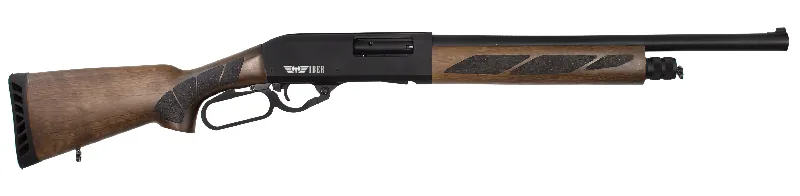
LEVER ACTION
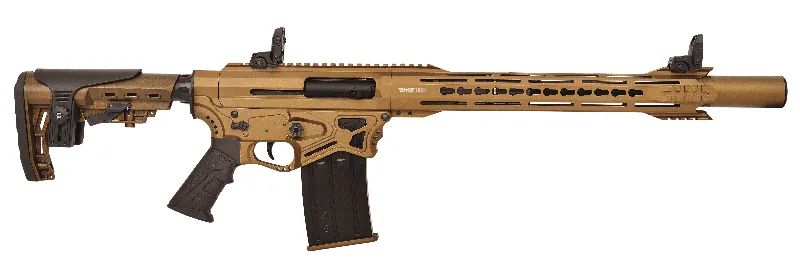
Magazine Fed